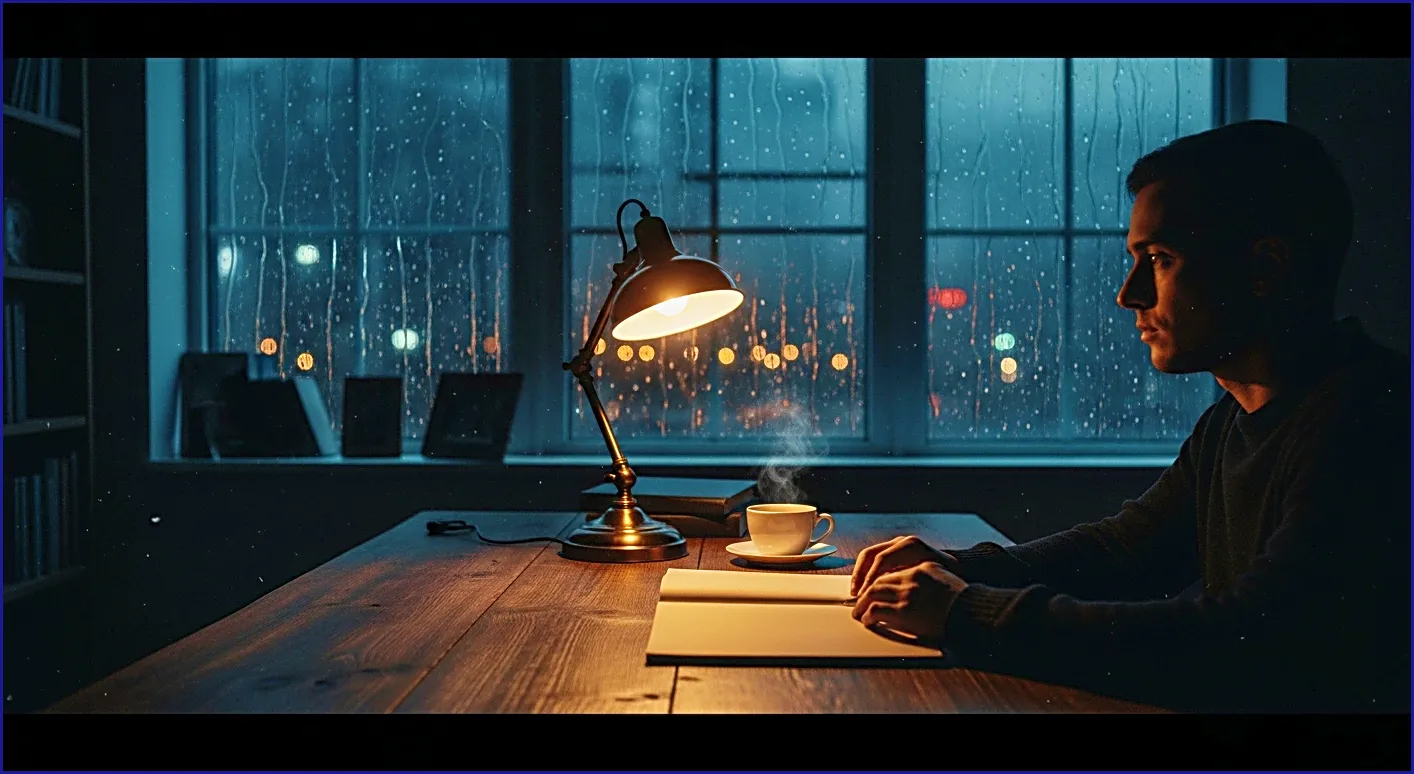
Day 1. Eight minutes.
Then I turned it off.
Not because it didn’t work. Because it worked too fast. The rain filled the room — and suddenly the email I’d been avoiding for three days felt manageable.
That unnerved me.
I make rain sound videos for a living. I wanted to know if what I was building actually did anything real. So I ran a test. Ninety days. Rain sounds during every single work session.
What followed surprised me more than I expected.
The First Two Weeks Were Wrong
Everyone assumes sound therapy is instant.
Find the right frequency. Press play. Enter the zone.
That’s not what happened.
Week one, my brain kept waiting for something to happen next. A melody. A lyric. A voice. Rain doesn’t offer any of that. It just continues — and that refusal to resolve felt almost aggressive.
My attention kept reaching for something to hold onto and finding nothing.
Week two, something shifted. The reaching slowed. I stopped waiting for the rain to do something. That’s when the first real session happened — ninety minutes, no interruptions, no phone, just work.
I’d forgotten what that felt like.
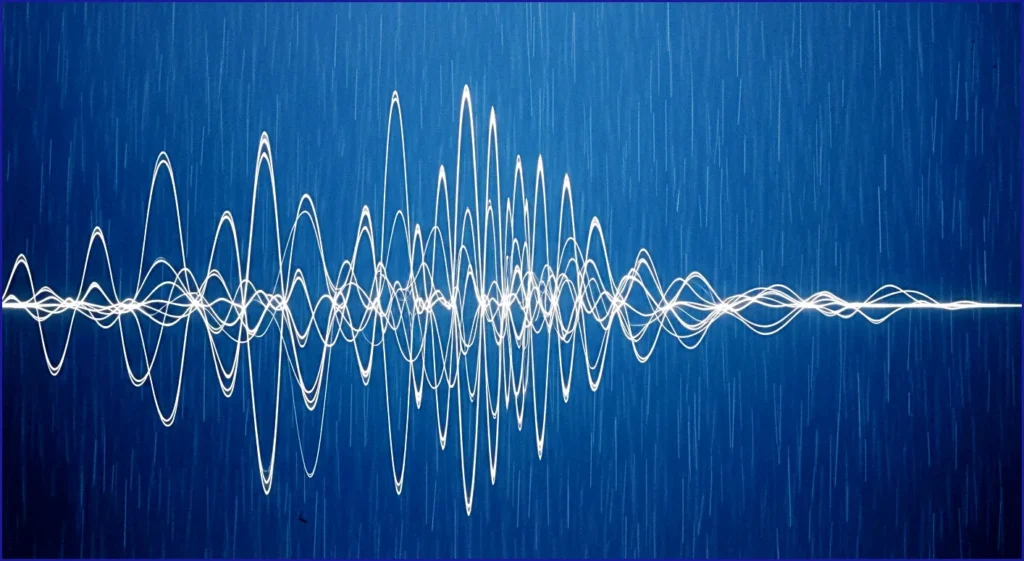
Rain Sounds Don’t Block Distraction. They Replace It.
This is the distinction most articles miss entirely.
White noise masks external sounds with a wall of frequency. It covers everything — good and bad. Rain is different.
Rain has rhythm. Texture. Variation. It gives the brain just enough input to stay occupied without demanding active engagement.
Cognitive neuroscientists call this “attentional anchoring.” Your brain’s default mode network — the part that generates mind-wandering — needs something to latch onto. Give it nothing, and it invents things to think about. Give it too much, and it gets pulled away.
Rain sits in the middle.
Enough to anchor. Not enough to hijack.
Month Two: The Side Effect Nobody Mentioned
I started sleeping better.
This wasn’t part of the plan. The experiment was work hours only.
But transitioning out of deep sessions felt smoother. Less of that wired, can’t-wind-down feeling that follows hours of screen time.
There’s a simple explanation. Rain sounds lower cortisol — the stress hormone that keeps your nervous system on alert. Working in a low-stimulation acoustic environment for eight hours a day matters at the biological level, not just the psychological one.
By day sixty, I was sleeping about forty minutes more per night than my baseline.
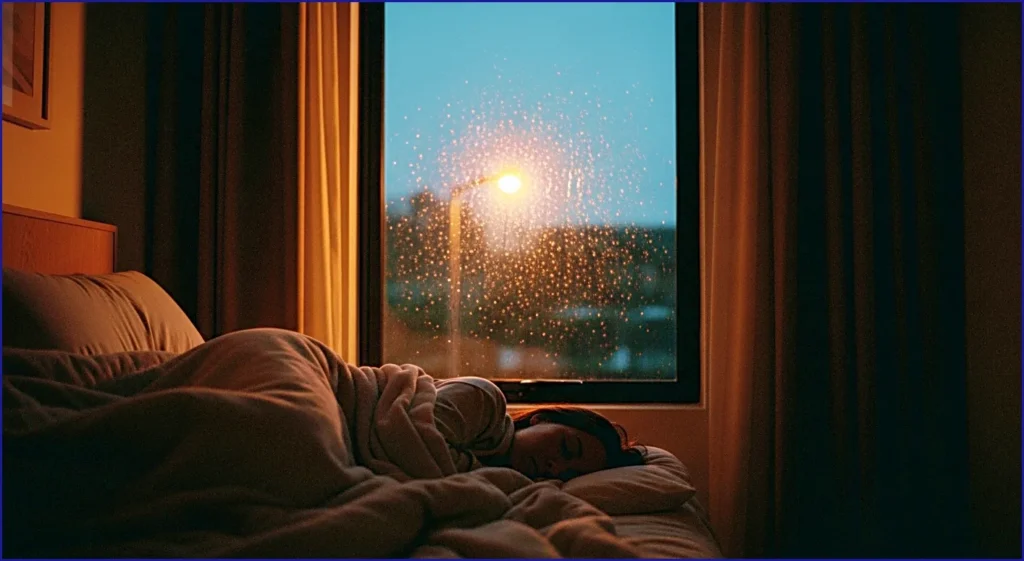
Day 90
I’m still using them.
Not as a ritual. Not as a brand.
Just as a tool. Something that works when I need to go deep on something difficult.
The screen opened. The rain started.
I got to work.
Most premium headphones are built for phone calls. Not cognitive isolation. Throwing money at popular brands is a costly illusion. You need a fortress, not just a speaker.
→[Read: The $400 Mistake – Why premium gear might be ruining your focus]
→ 8-Hour Heavy Rain Soundscape — CalmSori YouTube
Related FAQ
Check the actual friction first: sound, light, posture, screen distance, or visual clutter. rain sound volume helps only when it solves the part of the workspace that is breaking focus.
Check the actual friction first: sound, light, posture, screen distance, or visual clutter. rain sounds for studying helps only when it solves the part of the workspace that is breaking focus.
It can help when it makes the first minutes of work easier and reduces repeated distractions. It should support a calmer desk, not become another thing to adjust all day.
It can help when it makes the first minutes of work easier and reduces repeated distractions. It should support a calmer desk, not become another thing to adjust all day.
It belongs before the work becomes complicated. deep work environment should make it easier to start, continue, or recover from a session without adding more mental noise.
Before You Go
Paid links- Advertisement -