

Three hours.
That’s how long I sat at my desk without producing a single useful sentence.
The room was quiet. No notifications. No people. No noise.
Perfect conditions. Completely useless.
The Silence Wasn’t Helping
I’d read the advice. Everyone has.
Find a quiet space. Eliminate distractions. Create the ideal environment.
So I did. And my brain went somewhere else entirely.
Not to the work. To everything except the work.
The thought I forgot to finish yesterday. The email I should probably send. The sound of my own breathing, suddenly very loud.
Silence doesn’t empty the mind. It fills it with whatever was already waiting.
Then I Ended Up in a Café
No particular plan. I just needed coffee.
I opened my laptop to check one thing. An hour passed. The work was done.
Same brain. Same task. Completely different result.
The only variable was the noise.

What the Brain Actually Needs
There’s a concept in neuroscience called the optimal arousal level.
Too little stimulation — the brain goes searching. Daydreams. Distractions. Anything to fill the gap.
Too much stimulation — the brain shuts down. Overwhelm. Paralysis. Nothing gets through.
The middle point is where focus lives.
Silence sits too far on one end. A crowded open-plan office sits too far on the other.
A café — and more specifically, a certain kind of background sound — lands closer to the middle than most people expect.
This isn’t speculation. A study published in the Journal of Consumer Research found that moderate ambient noise improved creative cognitive performance compared to both silence and high-noise environments. The mechanism wasn’t mood. It was something closer to a gentle, sustained activation of the brain’s processing state.

Not All Background Sound Works the Same Way
This is where most people stop experimenting too early.
They try music. It helps for a while, then the lyrics pull focus away. The melody leads the brain somewhere else.
They try white noise. Better. But something about it feels flat after an hour. Like standing inside a machine.
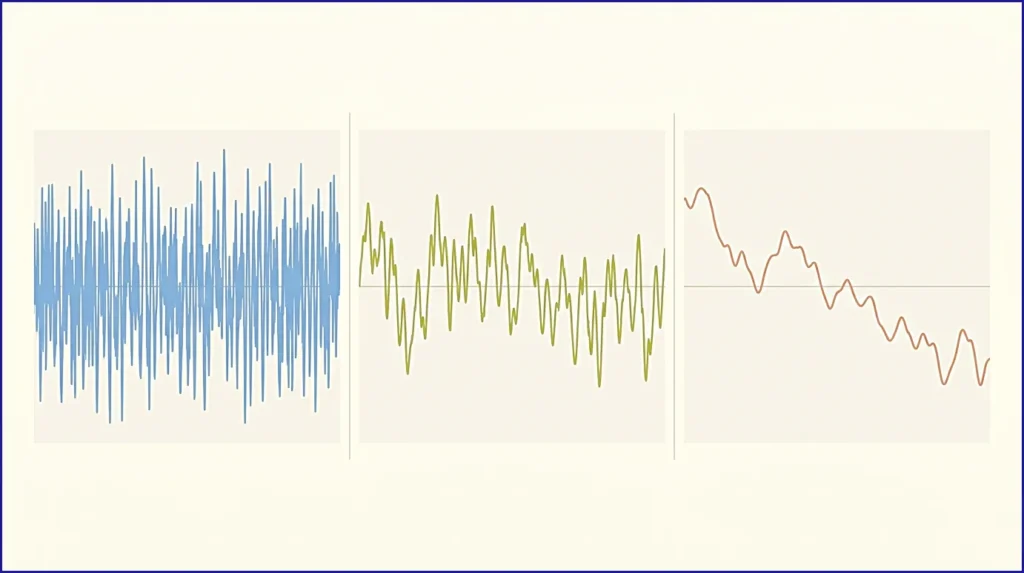
White noise — all frequencies at equal intensity. Good for blocking. Harder to sustain.
Pink noise — lower frequencies weighted more heavily. Rain falls here. Closer to natural patterns. Easier on the nervous system over time.
Brown noise — lower still. Slower. Heavier. Some brains — particularly those that run fast, scattered, or loud — find this the only sound that slows things down enough to work.
The difference isn’t small.
The frequency that helps one brain can actively distract another. The only way to know which one works for yours is to test it while working — not while listening, while working.
What I Actually Use
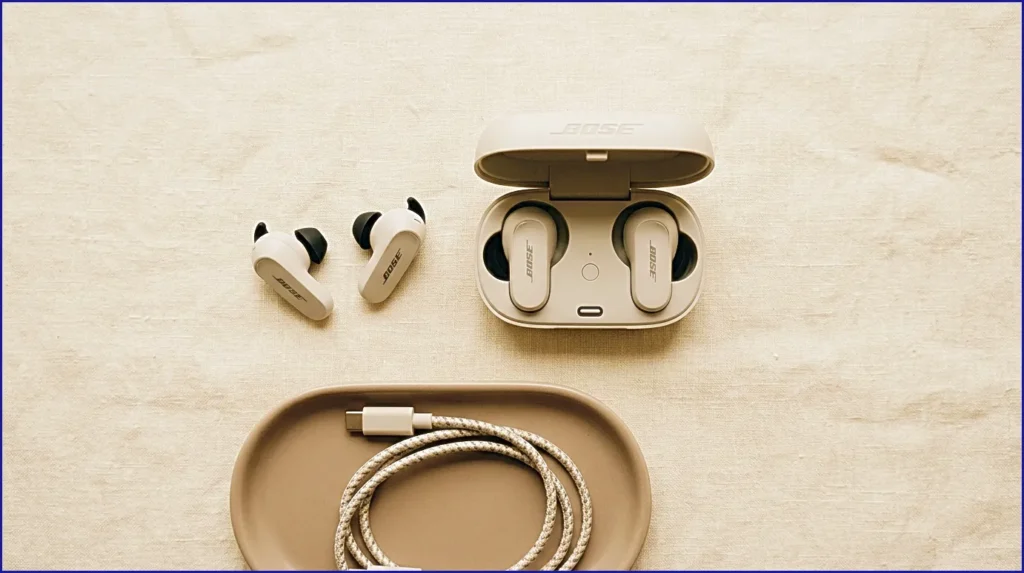
Bose QuietComfort Earbuds
The noise cancellation handles the room. The rain handles the rest.
Both running at once — that’s the setup that moved the needle.
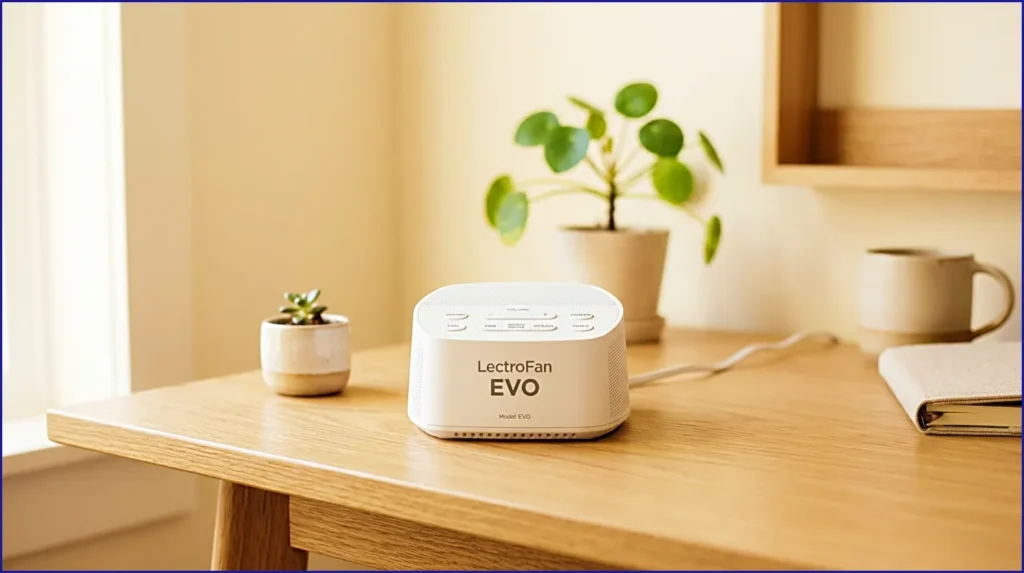
LectroFan EVO
For sessions where headphones aren’t an option.
No app. No loop. No setup. Just sound.
The Setup That Actually Works
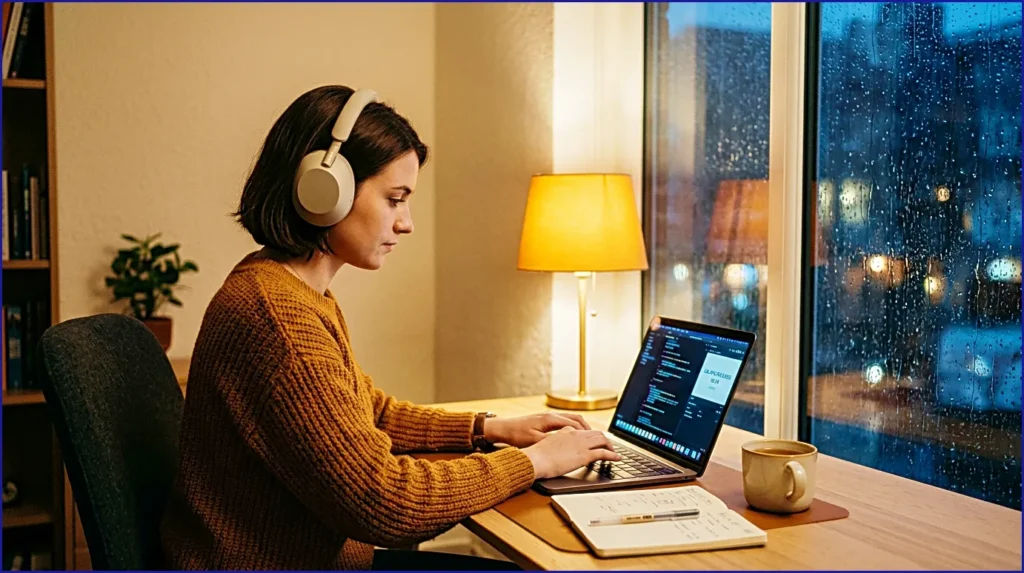
Headphones on. Rain sound running. Volume just high enough to cover the room.
Then start — without waiting to feel ready.
The focus doesn’t arrive first. The work does. The focus follows.
That’s the part nobody mentions. You don’t wait for the right state. You create the right conditions and let the state catch up.
Below is eight hours of rain. No loop. No ads. No interruptions.
Put it on. Start the work. See what happens in your own brain.
CalmSori · Now Playing
Heavy Rain on Tent
The sound of heavy rain hitting canvas — thick, unbroken, and impossibly steady. Eight hours of the exact frequency that tells your nervous system it’s safe to stop. No music. No loops. Just rain.
8 hours · No loops · Best with headphones or a Bluetooth speaker
Not Sure Which Sound Works for You?
Six questions. Five sound types. One result.
Each result connects directly to an audio session — built for the brain type it matches.
What Sound Does Your Brain Actually Need?
6 questions. No right answers. Just your frequency.
The quiet room wasn’t the problem.
The wrong kind of quiet was.
CalmSori — Sound that works while you do.