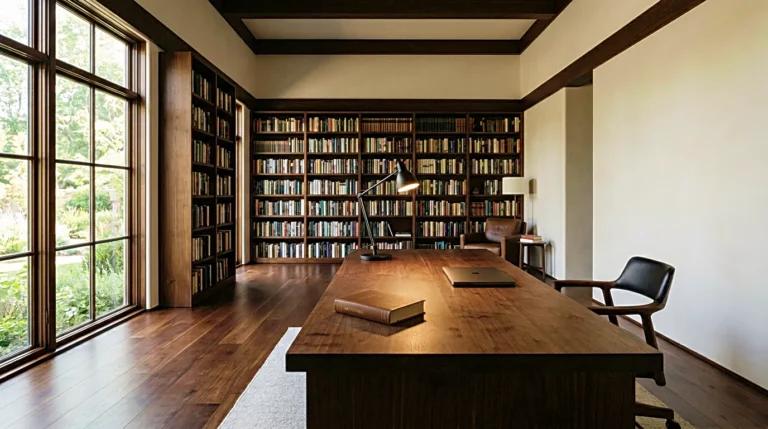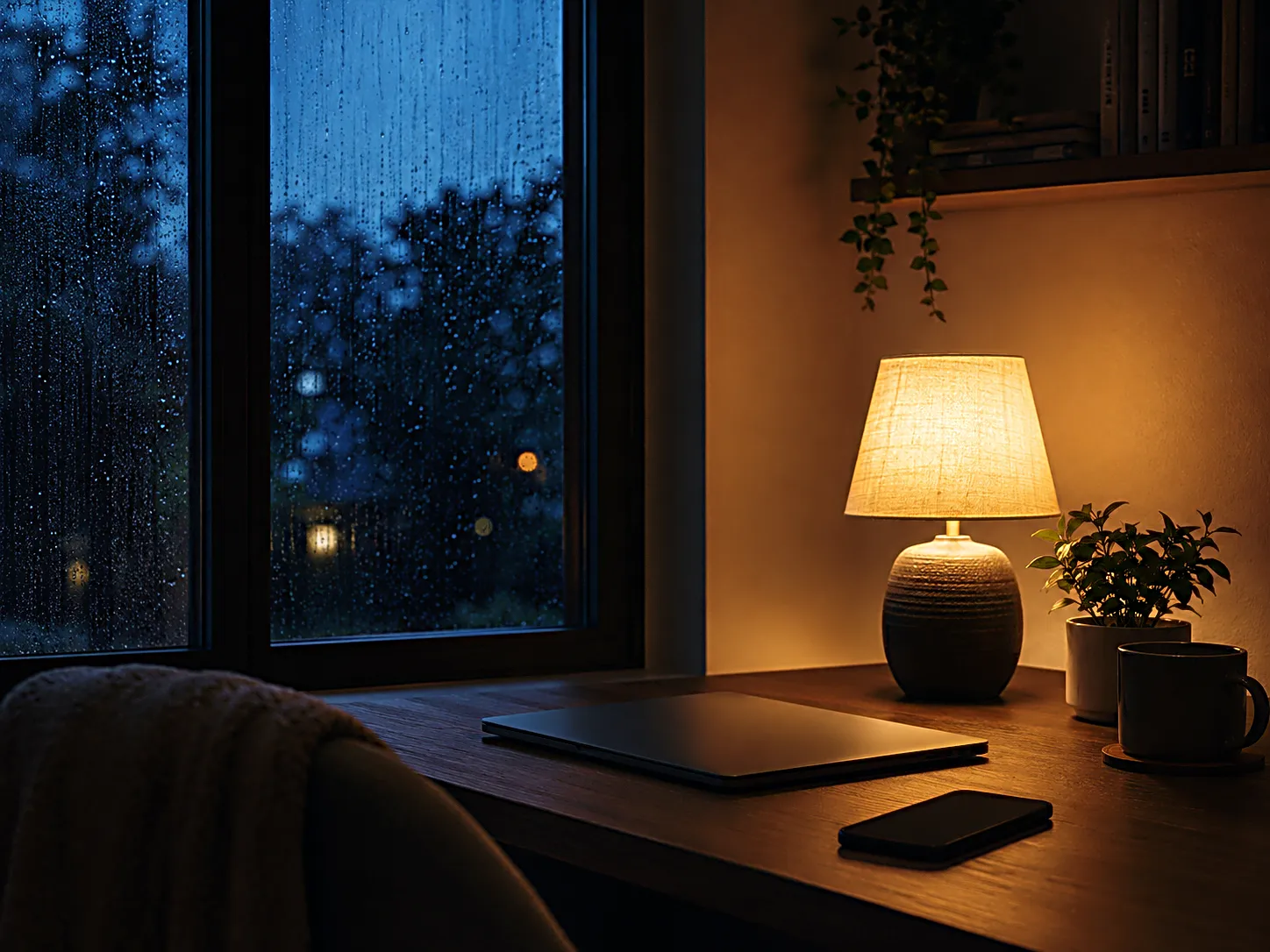
The day ends.
But the mind does not.
There are still messages in your head. Small decisions. Open tabs. Half-finished thoughts. A screen glow that seems to stay behind the eyes.
The body is home.
The room has not caught up yet.
Overstimulation is often ordinary
It does not always look dramatic.
Sometimes it looks like sitting down and still feeling busy. Opening your phone without knowing why. Feeling tired, but not calm. Wanting rest, but reaching for more input.
That is the strange part.
The mind is full, but it keeps asking for something else.
More scrolling. More sound. More tabs. More checking.
Rest becomes difficult because the room still feels like the day.
The goal is not perfect silence
A quiet room routine does not mean sitting in complete silence.
For some people, silence helps.
For others, silence makes thoughts louder.
The better question is not whether the room should be silent.
The better question is what kind of room gives your attention less to chase.
That can be silence. It can also be soft rain. Brown noise. A low room tone. A steady background that does not speak.
The sound is not there to fix you.
It is there to soften the room.

Step one — remove the sharp inputs
Start with what is closest.
The phone. The bright screen. The extra tabs. The overhead light. The notification sound that keeps the body half-ready.
You do not need to redesign your life.
Just lower the sharpest things first.
Dim the screen. Close the laptop. Put the phone across the room. Turn on one soft light.
A quiet room begins when the environment stops asking for quick answers.
Step two — choose one steady sound
Choose one sound before you are tired.
This matters.
If you start searching after the mind is already overstimulated, the search becomes another input. Another decision. Another small loop.
Pick one sound and let it be simple.
Soft rain works well because it has motion without language. It fills the room without adding a story. It can make the space feel less empty without becoming entertainment.
Keep it low.
If the sound asks for attention, it is already too much.
Step three — make the first five minutes easy
Do not try to recover perfectly.
That adds pressure.
Start with five minutes.
Sit near the window. Lie down without trying to sleep. Stretch once. Drink water. Write one sentence about what is still open in your head.
That is enough.
A quiet routine should feel repeatable on a bad day. If it only works when you have energy, it is not a real routine yet.
Step four — let the room become smaller
Overstimulation often makes the world feel too wide.
Too many options. Too many people. Too many things to answer.
A quiet room does the opposite.
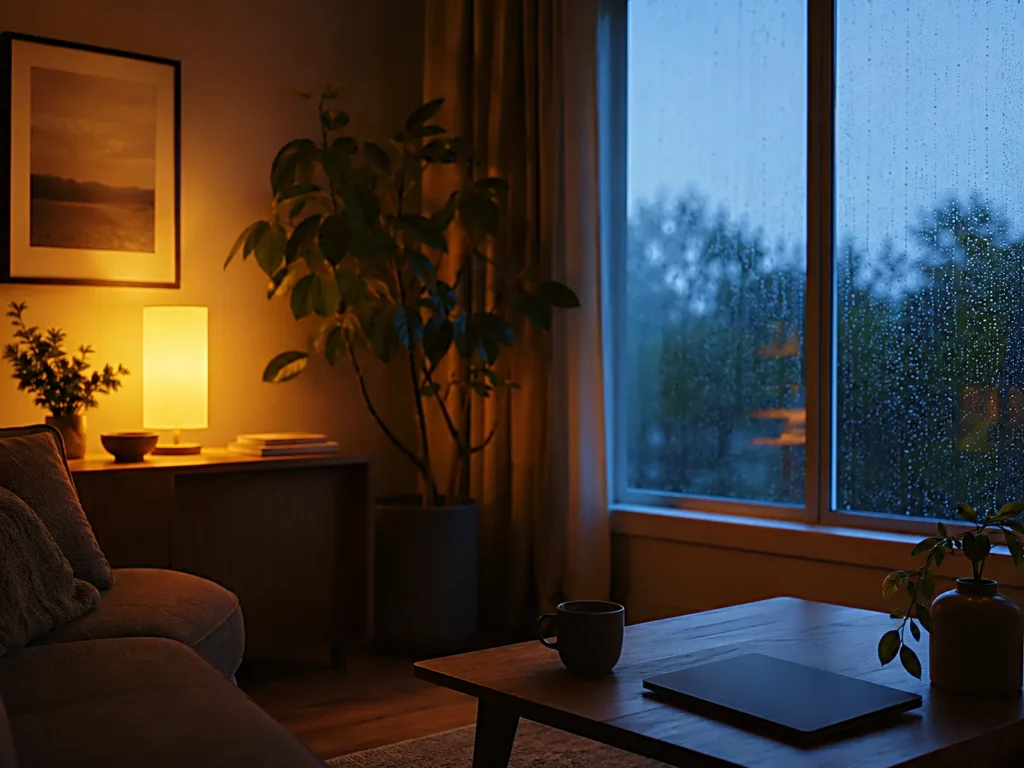
One light. One sound. One place to sit. One next breath.
This is not escape.
It is a temporary boundary.
Outside can wait.
Inside can become simpler.
When the routine does not work
Some days, five minutes will not feel like enough.
That is normal.
A quiet room routine is not a cure. It is not a treatment. It is a small way to stop adding more stimulation when the mind is already full.
That alone can help.
Not always.
But often enough to repeat.
A quieter standard
Rest does not always begin with doing more.
Sometimes it begins with taking away one sharp thing.
One screen. One notification. One loud sound. One unnecessary decision.
Then the room can start to feel like a room again.
Rain outside. Peace inside.
Try the CalmSori Focus Room for a simple timer and ambient sound reset, or explore Sleep Rain guides for more quiet routines.
Related FAQ
Comfort usually decides whether the setup is used consistently. Specs matter, but small room sound should first fit the body, room, and work session.
It may help when the problem is tied to light, sound, posture, or screen habits. If the fatigue comes from schedule or overload, the setup should be paired with a clearer break routine.
It belongs before the work becomes complicated. quiet desk setup should make it easier to start, continue, or recover from a session without adding more mental noise.
The quiet mistake is buying for the ideal desk instead of the real room. A useful setup starts with how the space sounds, feels, and behaves during actual work.
It belongs before the work becomes complicated. recovery after screen work should make it easier to start, continue, or recover from a session without adding more mental noise.
Before You Go
Paid links- Advertisement -