You’ve heard them all recommended.
White noise for sleep. Brown noise for ADHD. Rain sounds for focus.
The advice circulates endlessly — often with complete confidence and rarely with explanation.
Here’s what’s actually different between them. And more importantly, which one fits what you’re actually trying to do.
The Frequency Explanation
All three are broadband sounds. Meaning they contain energy across a wide range of frequencies rather than a single tone or melody.
The difference is how that energy is distributed.
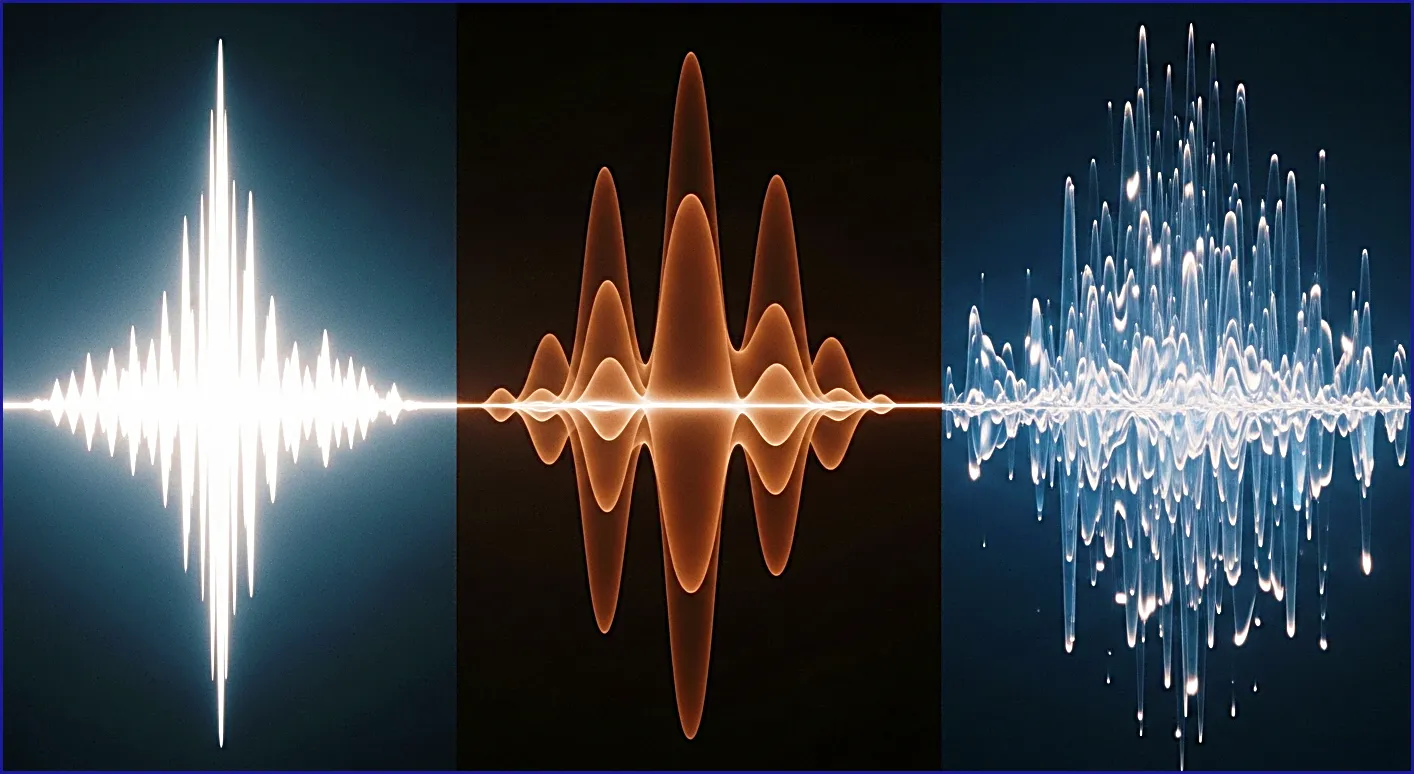
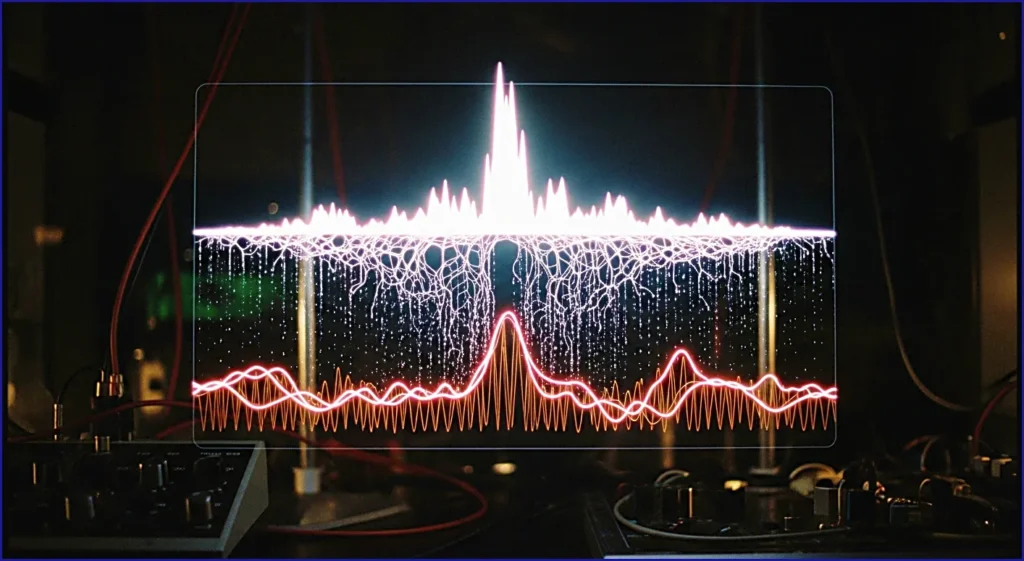
White noise distributes energy equally across all frequencies. Every frequency from 20Hz to 20,000Hz receives the same power. The result is a bright, hiss-like sound — static between radio stations, air conditioning close to your ear. Effective at masking external noise. Can also cause listening fatigue over extended sessions because high-frequency energy is persistent and harsh.
Pink noise reduces high-frequency energy as you move up the spectrum. Each octave receives half the power of the one below it. Warmer, more balanced. Natural environments — rainfall, rustling leaves, rivers — tend to follow a pink noise distribution. This is why natural sounds feel less fatiguing than white noise despite covering similar frequency ranges.
Brown noise continues this pattern more aggressively. Low frequencies dominate. The sound is deep, rumbling, almost oceanic. What you hear feels heavy and enveloping — more like standing inside a large engine room than sitting in a room with static.
White Noise: When to Use It
White noise performs best as a masking tool in noisy environments.
Open offices. Apartments with thin walls. Cafés.
Its uniform frequency coverage makes it efficient at reducing speech intelligibility in the surrounding environment. Your brain stops trying to decode conversations it can half-hear — a significant source of cognitive load in busy spaces.
The downside: extended listening at functional masking volumes causes ear fatigue for many people.
Best for: blocking external noise in unpredictable environments. Focused two to three hour sessions. Less comfortable as an all-day background.
Brown Noise: When to Use It
The research on brown noise and ADHD is newer and less settled than its reputation suggests.
But there’s a plausible mechanism.
ADHD brains often seek stimulation. When the environment is under-stimulating, the default mode network generates its own input — which manifests as distraction and difficulty sustaining attention. Brown noise provides a low-frequency, low-complexity stimulus that occupies just enough of the brain’s input-processing capacity to reduce self-generated distraction. Without being interesting enough to become a focal point.
It’s stimulation that doesn’t compete with the task.
Best for: quiet environments, ADHD focus sessions, anxiety-driven attention problems.
Rain Sounds: When to Use Them
Rain occupies the middle position.
The frequency distribution is pink-to-brown depending on intensity — heavier rain has more low-end body, lighter rain skews more pink. This variability is part of what makes rain less fatiguing than either white or brown noise over long sessions.
The more important distinction: rain is a natural sound environment.
Research from Brighton and Sussex Medical School found that listening to natural soundscapes activated the brain’s default mode network in an outward-directed, relaxed manner — as opposed to the inward-focused activation associated with stress and rumination.
Rain also adds temporal variation. Intensity shifts subtly. Drops change character. Distant thunder appears and recedes. This variation prevents the monotony fatigue that develops with purely static noise after several hours.
Best for: extended sessions, creative work, sleep, transitions between high-stress states.

The Honest Recommendation
There’s no universal answer.
But if you’re choosing a starting point: use white noise when external noise is the primary problem. Use brown noise when your own brain is generating the distraction. Use rain sounds when you’re in for the long session and need something sustainable.
Most people who use rain sounds for extended periods stop noticing them after fifteen to twenty minutes.
The sound becomes environment rather than content.
That’s the point.
The delivery system matters as much as the sound type.
Phone speakers cut the low-frequency body where most of the effect lives — especially for brown noise and rain. The right earbuds change what you actually hear.
→ Soundcore Space A40 — best value for extended listening
→ Bose QuietComfort Ultra — when acoustic isolation is the priority
→ Brown Noise & Rain Mix — CalmSori YouTube
Related FAQ
It belongs before the work becomes complicated. white noise for studying should make it easier to start, continue, or recover from a session without adding more mental noise.
It belongs before the work becomes complicated. background noise for work should make it easier to start, continue, or recover from a session without adding more mental noise.
It belongs before the work becomes complicated. deep work environment should make it easier to start, continue, or recover from a session without adding more mental noise.
Check the actual friction first: sound, light, posture, screen distance, or visual clutter. rain sound volume helps only when it solves the part of the workspace that is breaking focus.
Check the actual friction first: sound, light, posture, screen distance, or visual clutter. rain sounds for studying helps only when it solves the part of the workspace that is breaking focus.
Before You Go
Paid links- Advertisement -