The White Noise Myth
Everyone tells you to listen to white noise to focus. So you try it. But instead of calming down, your brain feels like it’s being scratched. It sounds like a broken TV static or a harsh hissing fan.
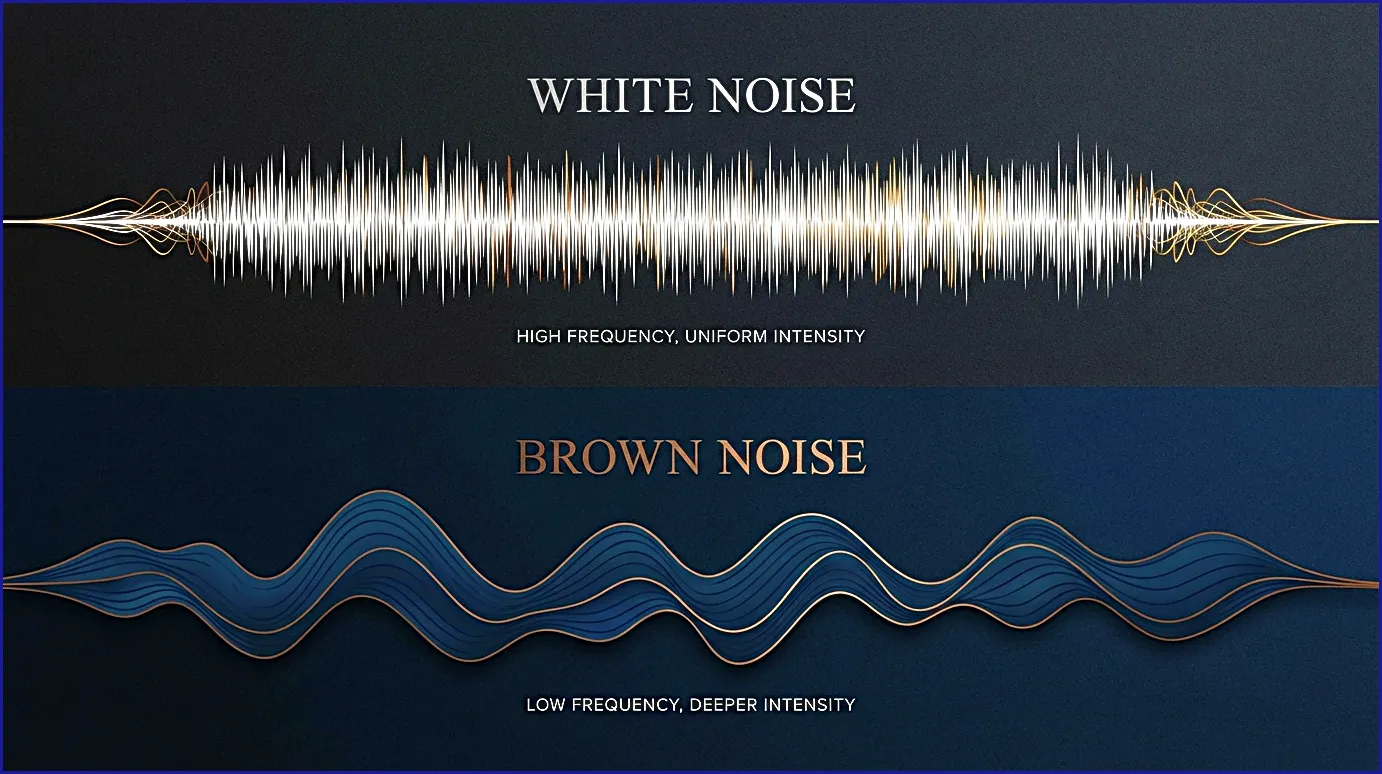
If you have a racing mind, anxiety, or ADHD traits, white noise isn’t helping you. It’s actually overstimulating you. White noise contains high-frequency energy—it is sharp, piercing, and clinical. When your brain is already running at 100 miles per hour, throwing a sharp hissing sound at it is like throwing gasoline on a fire.
Enter the Heavyweight: Brown Noise
You don’t need sharp static. You need a weighted blanket for your brain. Enter Brown Noise.
Unlike white noise, brown noise significantly reduces high frequencies and boosts the deep, low-frequency bass. Think of the heavy, continuous rumble of an airplane cabin, the distant roar of a waterfall, or the deep crash of ocean waves in a storm.
For the neurodivergent or highly anxious brain, this heavy frequency is a game-changer. It physically vibrates at a level that masks the “internal monologue”—the endless, exhausting chatter inside your own head. It grounds your prefrontal cortex, forcing your scattered thoughts to anchor down to one single task.

How to Apply the Anchor
Do not play Brown Noise through a cheap laptop or smartphone speaker. They physically cannot produce the low-frequency bass required to ground your brain. They will strip away the depth and leave you with cheap static.
The Director’s Prescription:
- The Audio Cure: Experience the Deepest Brown Noise Frequency Here (YouTube)
- The Right Gear: To actually feel the low-frequency rumble, you need earbuds engineered for deep, resonant bass without ear fatigue. 👉 View Soundcore Space A40 on Amazon (The perfect driver for heavy, grounding frequencies).
Related FAQ
It belongs before the work becomes complicated. white noise for studying should make it easier to start, continue, or recover from a session without adding more mental noise.
It should earn its space. On a small desk, brown noise machine needs to reduce friction without adding clutter, cable mess, or another maintenance task.
It belongs before the work becomes complicated. background noise for work should make it easier to start, continue, or recover from a session without adding more mental noise.
white noise machine is worth considering when the current setup creates a repeated problem that cannot be fixed by placement, volume, lighting, or a simpler routine.
It should earn its space. On a small desk, noise cancelling headphones for focus needs to reduce friction without adding clutter, cable mess, or another maintenance task.
Before You Go
Paid links- Advertisement -