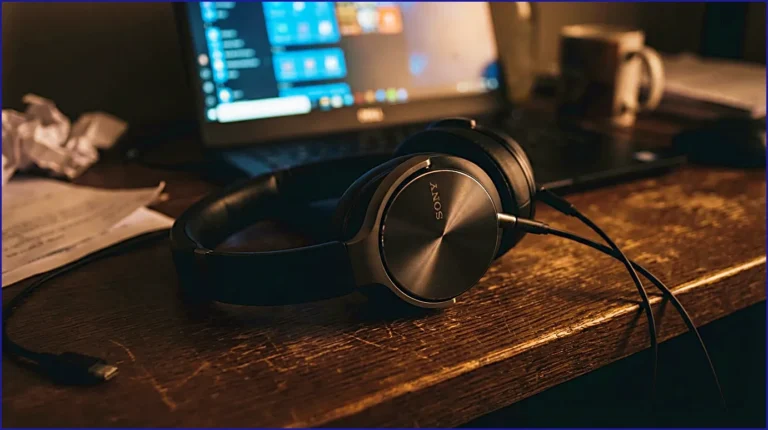
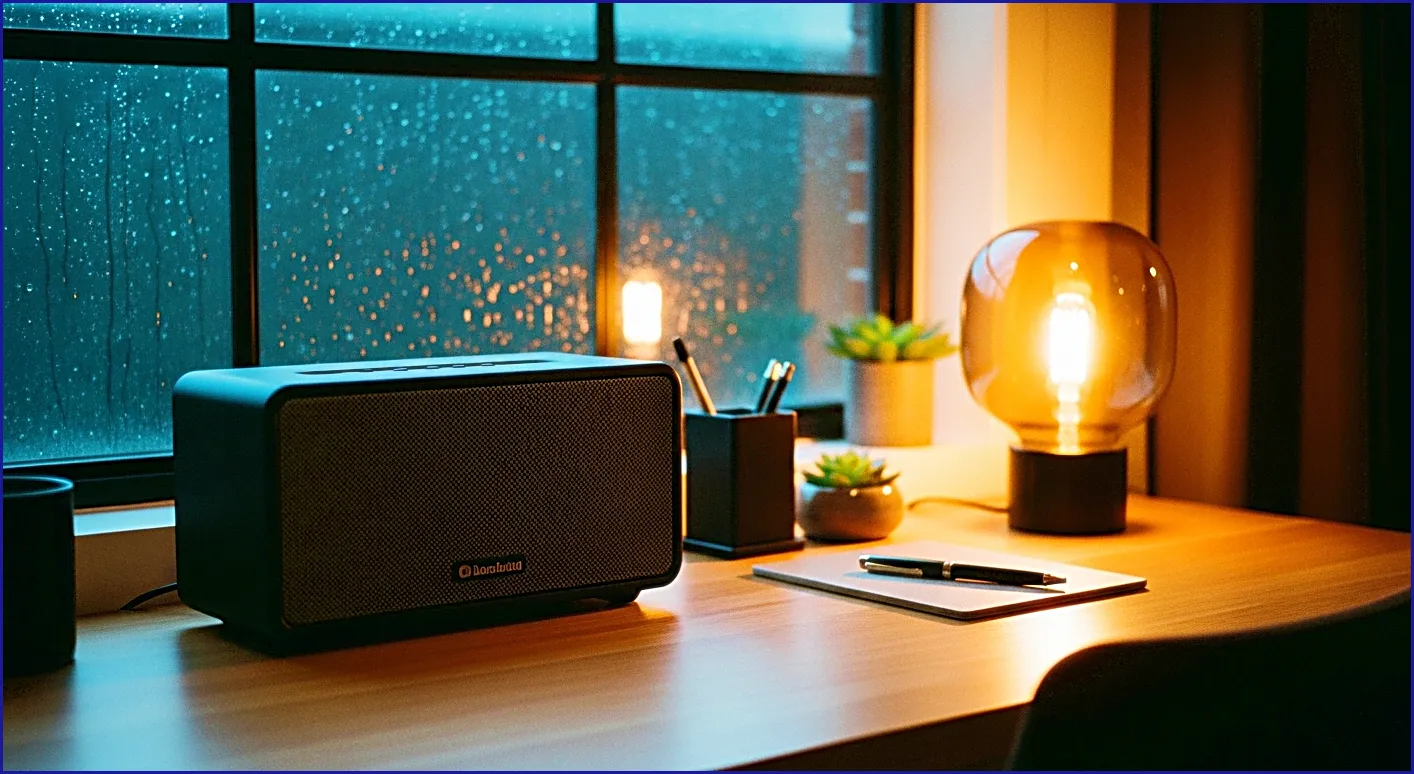
The problem isn’t your rain sounds.
It’s your speakers.
Most people discover ambient audio on laptop speakers or phone audio. It helps — slightly. They assume that’s as good as it gets. Then they hear the same content on a real speaker and understand why they’ve been leaving results on the table.
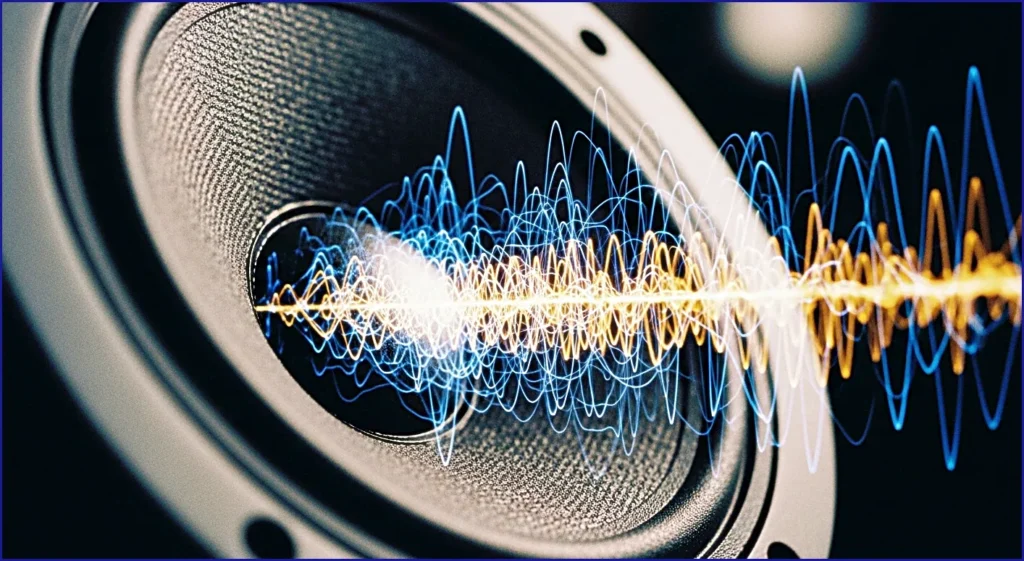
Rain sounds operate in a frequency range that small speakers cannot reproduce. The low-frequency body — the atmospheric weight that creates the sensation of being inside a storm — gets cut entirely below a certain threshold. What you hear on a laptop is the top third of the sound.
It works. But it’s not the full picture.
What Actually Matters
Frequency response is the first consideration.
Extended low-end response — ideally to 50Hz or below. Most Bluetooth speakers advertise “deep bass” while cutting off at 80Hz. For rain sounds, that’s a significant loss.
Driver size matters. Larger drivers move more air and produce more accurate low-frequency response. A 3-inch driver cannot physically reproduce what a 5-inch driver produces at 80Hz. Physics doesn’t negotiate.
Avoid speakers with heavy DSP bass boost. This creates boom, not depth. Rain warmth lives in the 100–300Hz range — the low-mids. That’s where you want accuracy, not artificial lift.
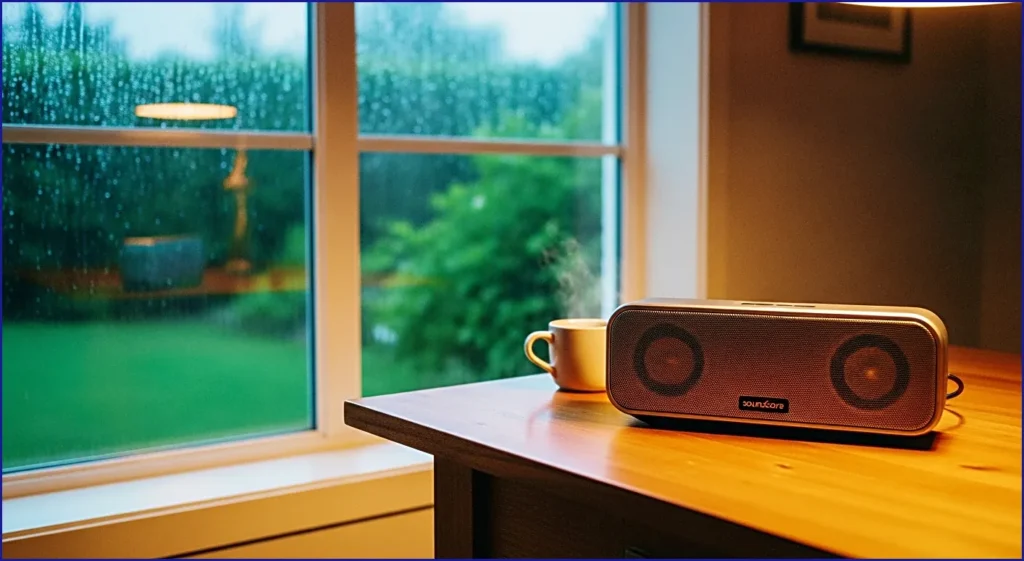
Entry Level: Soundcore Motion X600 (~$100)
Best for: bedroom or desk use, first serious speaker upgrade.
The Motion X600 uses a 5-driver array including a dedicated upward-firing tweeter. For rain sounds, this translates to a wide, diffuse soundstage — the rain surrounds you rather than coming from a single point.
Frequency response extends to 50Hz. The low end is present without artificial boost. That balance sustains listening comfort over eight hours. Battery life of twelve hours covers a full sleep session without recharging.
For the price, the soundstage width is genuinely impressive.
Mid-Range: Sonos Era 100 (~$249)
Best for: home office, dedicated focus space.
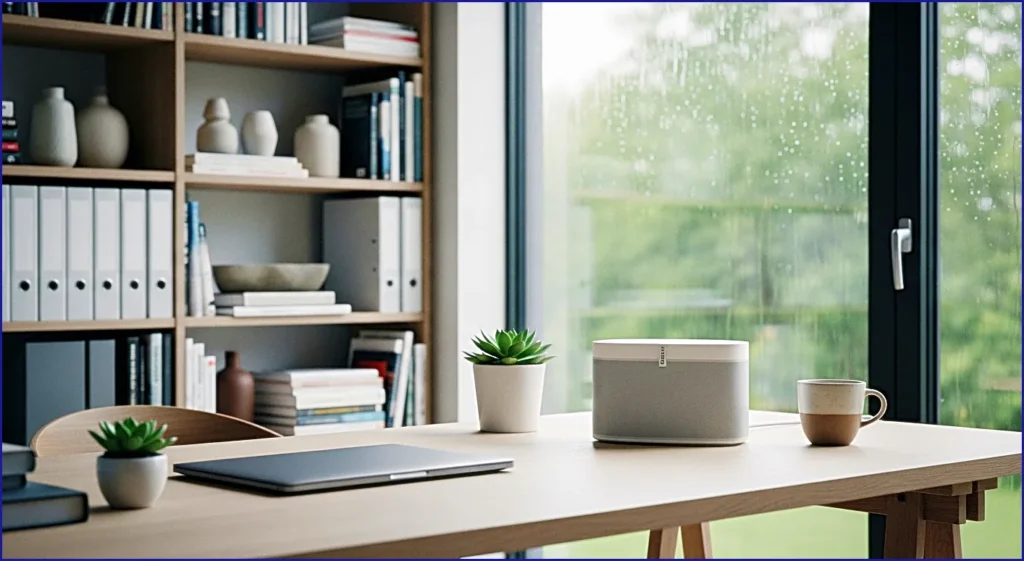
The Era 100 is a smart speaker with unusually accurate room acoustics. Trueplay — Sonos’s proprietary room calibration — uses the built-in microphone array to analyze how sound behaves in your specific space and adjusts output accordingly.
In practice: the speaker compensates for corner bass buildup, ceiling reflections, and hard surface brightness that most speakers ignore entirely.
For a home office where you’re listening at consistent moderate volume for hours at a time, the Era 100 produces a remarkably stable, natural sound without listener fatigue. Rain sounds become atmospheric rather than simply loud.
One limitation: no battery. Plugged in only. That rules out bedroom use for some setups.
The Honest Answer
The Soundcore Motion X600 covers ninety percent of the gap between phone audio and real sound for under a hundred dollars. Start there.
If you’re spending eight hours a day in a dedicated focus space — the Sonos Era 100 pays back in consistency and listening comfort over time.
Whatever you’re currently using probably isn’t the final form of what this could sound like.
For portable use — when the desk isn’t an option:
→ Soundcore Space A40 Earbuds — 50H playtime, ANC, wireless charge
→ Bose QuietComfort Ultra — premium isolation on the move
→ CalmSori Deep Focus Rain — 8 Hours, YouTube
- Advertisement -