You control what you see.
You manage what you eat.
You have almost no awareness of what your nervous system is hearing for the twelve hours you’re awake.
This is a significant gap in how most people think about wellness. And it has measurable consequences for stress levels, cognitive function, and sleep quality that are rarely discussed outside of specialist research.
The Auditory Threat System
The human auditory system never fully turns off.
Even during sleep, the brain continues monitoring the acoustic environment for threat-relevant sounds — sudden changes in volume, frequencies associated with human distress, patterns that indicate proximity of danger.
This system evolved before we lived in cities, open offices, or apartments above restaurants.
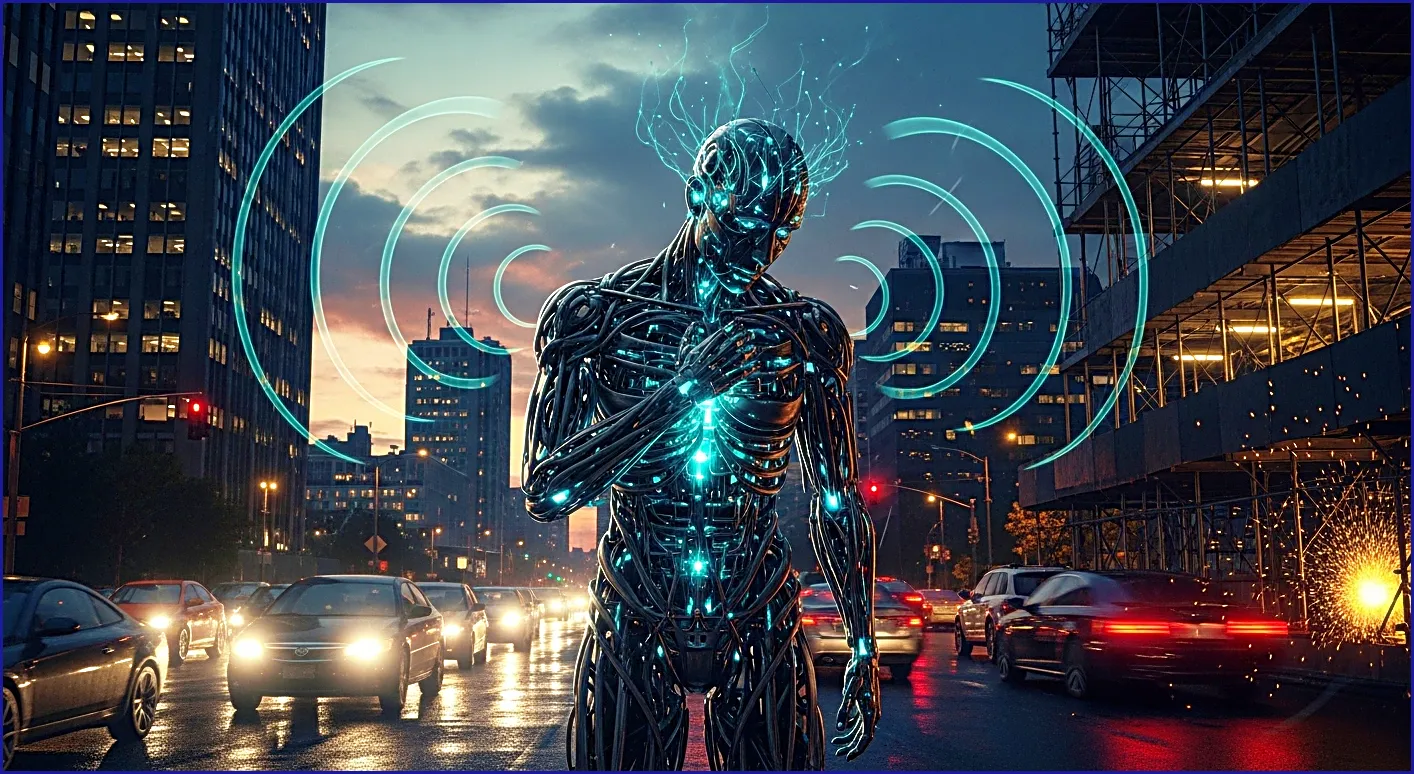
The problem: it can’t easily distinguish between a car alarm, a screaming child, and an actual emergency. Any sudden, high-frequency, irregular sound activates the amygdala and triggers a mild cortisol response.
Depending on your environment, this happens dozens to hundreds of times per day.
Each activation is small. The cumulative effect across a year of urban living is not.
Research published in the Journal of the Acoustical Society of America has linked chronic exposure to unpredictable environmental noise — traffic, construction, HVAC, office chatter — to elevated baseline cortisol, reduced heart rate variability, impaired sleep architecture, and increased rates of anxiety independent of other lifestyle factors.
The noise isn’t causing acute stress. It’s preventing the nervous system from ever returning to baseline.

What Recovery Actually Requires
The parasympathetic nervous system — the “rest and digest” counterpart to the stress response — needs specific conditions to engage fully.
Absence of perceived threat. Physical safety signals. And critically: an acoustic environment the brain classifies as non-threatening.
Natural sounds are the most reliable signal.
Moving water, wind through trees, rainfall, birdsong — these are sounds that historically accompanied environments free from predators, storms, and human conflict. They signal one thing: nothing is happening. You can rest.
This isn’t metaphorical.
A 2017 study from Brighton and Sussex Medical School used fMRI imaging to compare brain responses to artificial sounds versus natural sounds. Natural sounds produced outward-directed attention and reduced activity in the default mode network’s ruminative circuits. Artificial sounds produced inward-directed attention and increased fight-or-flight markers.
The participants weren’t trying to relax. They were simply listening.
The neural response was automatic.

The Acoustic Recovery Window
Most people have a consistent gap between sustained demands.
The transition from work to evening. The thirty minutes before sleep. This window is when the nervous system attempts to shift from sympathetic to parasympathetic dominance.
Filling it with television, social media, or continued work extends sympathetic activation. The transition doesn’t complete. Sleep onset delays. Sleep architecture shallows.
Filling it with natural sound environments — rain being the most accessible — removes acoustic threat signals and accelerates the parasympathetic transition. The nervous system stops scanning for danger. Cortisol drops more quickly. Body temperature follows. Sleep onset moves earlier, and slow-wave sleep — the most restorative phase — increases.
This isn’t a supplement. Not a new protocol.
It’s thirty minutes of acoustic environment your nervous system already knows how to respond to.
A Note on Volume
This matters more than most people realize.
Rain sounds at high volume don’t produce the same nervous system response as rain sounds at low to moderate volume. The auditory threat system responds to acoustic intensity as well as frequency pattern.
Keep background sound at a level where it’s clearly present but not demanding attention. Around 50 to 60 decibels — roughly the volume of a quiet conversation in another room.
Loud enough to register as environment. Quiet enough to stop being content.
That threshold is where the acoustic environment stops being something you listen to and starts being the space you inhabit.
Your nervous system will notice the difference.
The acoustic recovery window works better with the right hardware.
Laptop speakers cut the low-frequency content where the safety signal lives. The right earbuds deliver what phone speakers cannot.
→ Soundcore Space A40 — 50H playtime, ANC, wireless charge
→ Bose QuietComfort Ultra — deeper isolation for the recovery window
→ CalmSori Evening Rain — 8 Hours for Sleep Recovery, YouTube
- Advertisement -