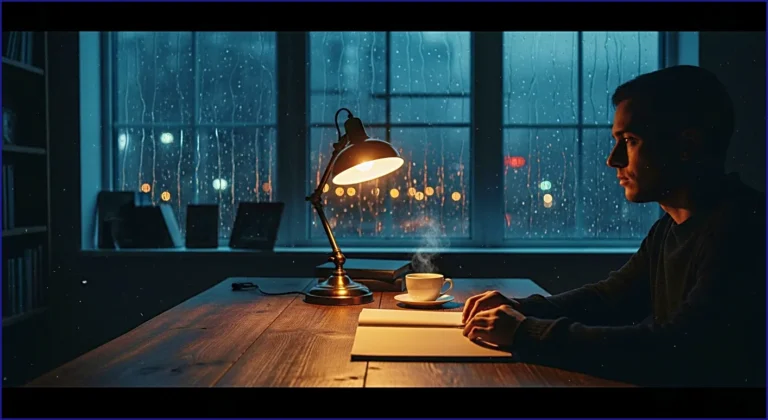
It is 4AM.
The room is dark. The body is tired. But the mind is awake.
That is the strange part of early morning wake-ups. You are not fully rested, but you are also not fully asleep. A thought appears. Then another. Then the phone starts to feel close.
This is usually where the night changes.
Not because you woke up. Because of what you do next.
Waking up at 4AM is not always the real problem
Waking during the night can happen.
The harder part is what comes after. Some people check the time. Some open their phone. Some start wondering why it keeps happening. The mind turns a small wake-up into a full conversation.
The goal is not to force sleep immediately.
The goal is to keep the room from becoming daytime.
If you wake up at 4AM, the first few minutes matter. Not in a dramatic way. Just enough to decide whether the room stays quiet or turns into another screen-lit hour.
Do not check your phone first
This sounds simple.
It is not.
When you wake up too early, the phone offers certainty. Time. Messages. Weather. News. A small reason to stay awake.
But the screen changes the room. The light changes your eyes. The information changes your thoughts. Even if you only check one thing, the mind now has something new to hold.
So the first rule is low-tech.
Do not check. Do not scroll. Do not solve the day at 4AM.
If you need to know the time, use a dim clock placed away from the bed. If that still makes you anxious, turn it away. The body does not need a bright report every time it wakes.

Keep the same rain sound
At 4AM, searching is risky.
Searching for a better sound can wake you more than the original wake-up did. One rain track becomes five. One volume adjustment becomes a small decision loop.
A better routine is to keep the same rain sound you used before sleep.
The same texture. The same distance. The same quiet room.
Rain sounds work best here when they become familiar. They do not need to impress you. They need to tell your body: this is still night.
That is why a steady rain sound is better than a dramatic one. No thunder. No sudden drops. No big shift in intensity.
Just rain outside the window. Still there.
Lower the volume slightly
If you wake up and notice the rain too much, lower it.
Not off. Lower.
At the beginning of the night, you may need enough sound to cover silence. At 4AM, the room is different. Your hearing may feel sharper. A sound that felt soft at midnight can feel closer after waking.
The goal is not to hear every detail.
The goal is to let the sound sit behind you.
A quiet rain layer can give the mind somewhere to land without becoming another thing to listen to. If the rain feels like it is asking for attention, it is too loud.
Think of it as a blanket, not a speaker.
Use a small reset instead of trying hard to sleep
Trying hard to sleep often keeps the mind awake.
So make the routine smaller.
Stay in bed if the body feels calm. Relax your jaw. Drop your shoulders. Let your hands rest open. Then breathe slowly enough that the rain becomes the main rhythm in the room.
If you feel tense, sit up for a minute without turning on bright lights. Drink a small sip of water. Keep the room dim. Then return.
No big routine. No full reset. Just enough to tell the body that nothing urgent is happening.

What if thoughts keep coming?
Do not argue with every thought.
That usually gives the mind more work.
Instead, use a simple label. “Tomorrow.” “Not now.” “Back to the room.”
Then return to the sound.
This is not a trick. It is a boundary. The thought may come back. That is okay. The rain stays there each time you return.
Some nights will still be difficult. Caffeine, stress, room temperature, late screens, or health issues can all change sleep. If early morning waking becomes frequent or severe, it may be worth talking with a healthcare professional.
But for ordinary restless nights, the routine can stay simple.
A 4AM rain sound routine
Keep the room dark. Do not check the phone. Lower the rain slightly. Keep the same sound. Let the body return slowly.
That is enough.
You are not trying to win the night. You are trying not to wake the whole room inside your head.
Rain outside. Peace inside.
Read more: Why Rain Sounds Feel Safer Than Silence at Night · Sleep Rain guides
Related FAQ
Check the actual friction first: sound, light, posture, screen distance, or visual clutter. rain sound volume helps only when it solves the part of the workspace that is breaking focus.
Comfort usually decides whether the setup is used consistently. Specs matter, but small room sound should first fit the body, room, and work session.
Check the actual friction first: sound, light, posture, screen distance, or visual clutter. early morning wake up routine helps only when it solves the part of the workspace that is breaking focus.
Check the actual friction first: sound, light, posture, screen distance, or visual clutter. rain sounds for studying helps only when it solves the part of the workspace that is breaking focus.
Check the actual friction first: sound, light, posture, screen distance, or visual clutter. morning work routine helps only when it solves the part of the workspace that is breaking focus.
Before You Go
Paid links- Advertisement -