It doesn’t make obvious sense.
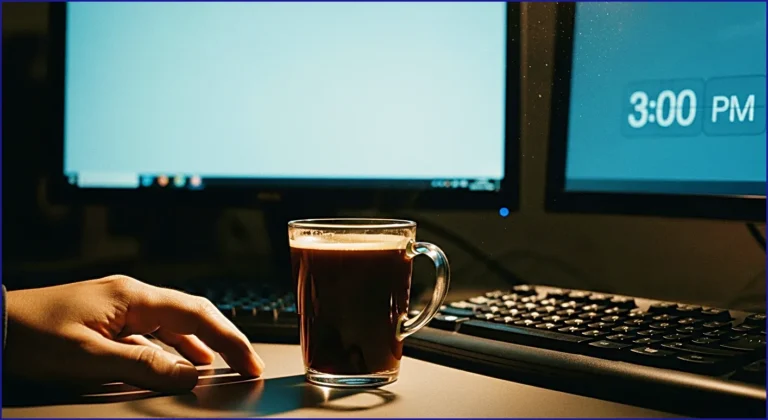
Coffee shops are loud. Strangers walk past. Someone’s espresso machine fires every few minutes. And yet — the document gets written, the problem gets solved, the hour disappears without effort.
At home, in silence, none of that happens.
The Noise Is Not the Problem. It’s Part of the Answer.
There’s a term for it: the coffee shop effect.
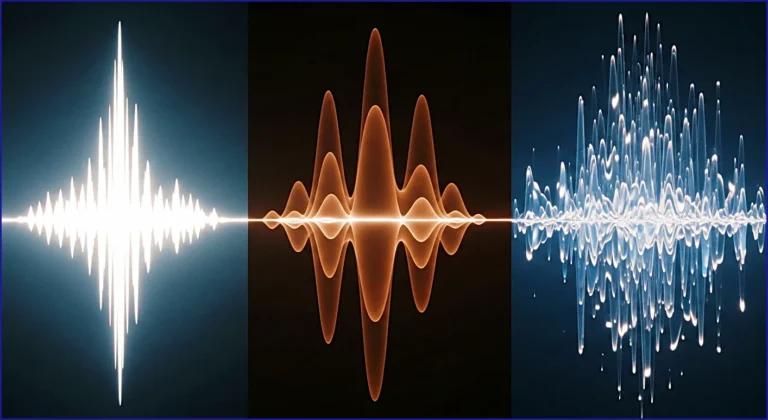
A 2012 study published in the Journal of Consumer Research found that moderate ambient noise at around 70 decibels was optimal for boosting creativity and cognitive performance — significantly better than quieter environments at 50 decibels or loud ones at 85 decibels.
The sound isn’t distracting you. It’s calibrating you.
Your Home Has a Different Problem
The coffee shop is a neutral space. Home is not.
Every corner of a home carries an association. The couch is for rest. The kitchen is for meals. The bedroom is for sleep. When you sit down to work in a space the brain has categorized as off-duty, there’s a low-grade resistance that doesn’t announce itself — it just makes focus feel harder than it should.
The coffee shop carries no such weight. It’s a place where strangers work. The brain picks up on that social context and matches it.
This is sometimes called the environmental cuing effect. Context shapes behavior before you’ve made a single conscious decision.
The Other Factor: Being Seen
Working alone at home, no one knows if you’ve spent 40 minutes on the same paragraph.
In a coffee shop, the social visibility — even among strangers who don’t know you and don’t care — creates a mild accountability pressure. Psychologists call it evaluation apprehension. It’s a low-level awareness that you are in public, doing something, and that doing nothing is a visible choice.
It’s not shame. It’s just enough friction to keep the work moving.
The Best Ambient Sounds for Studying at Home
The coffee shop effect is reproducible. The variables are just noise, context, and a small amount of social pressure.
Generally, white noise works better for focus and concentration, while ambient noise tends to foster creativity. For deep work — writing, coding, analysis — a consistent ambient track around 65 to 70dB is the target. For creative tasks, layered café noise or nature sounds with more variation tend to perform better.
Free options worth trying: myNoise offers hundreds of customizable ambient soundscapes including rain, café, and forest sounds. Flocus is a productivity dashboard with layered sound options including gentle rain, city ambience, and café noise. Both run in-browser without an account.
For rain specifically, calmsori.com’s Focus Room runs continuous ambient tracks designed for extended work sessions — no setup required.

How to Focus at Home Like a Coffee Shop
Three changes. That’s all it takes.
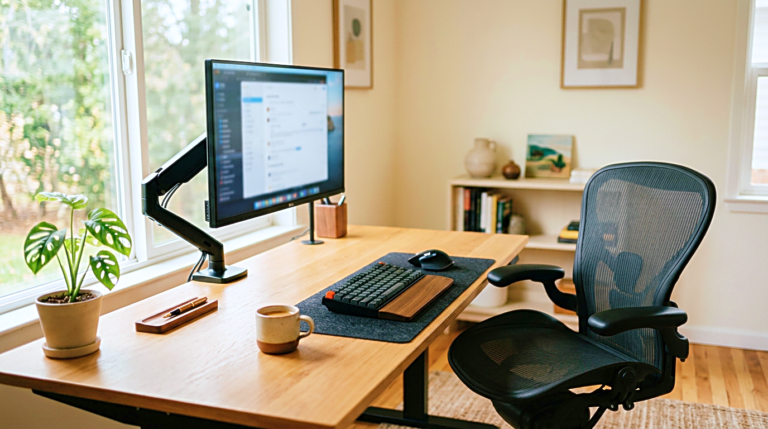
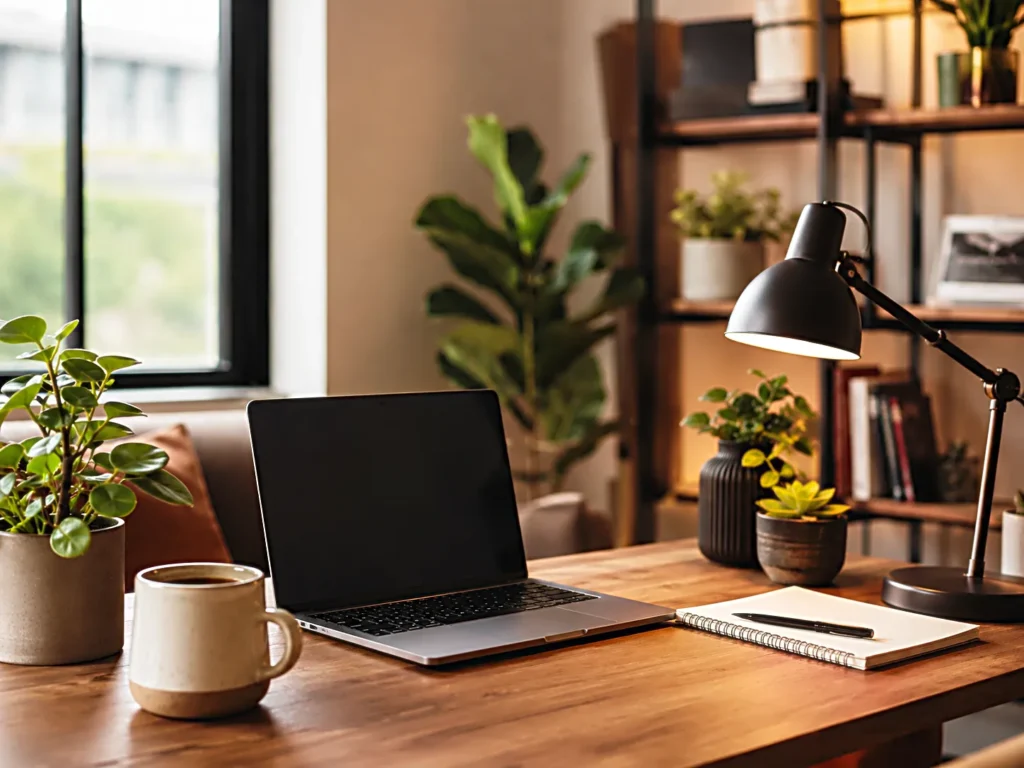
Sound first. A rain track or café noise playlist at 65 to 70dB recreates the acoustic environment. Context second — a dedicated desk used only for work builds the environmental cue over time. The brain starts to recognize the space as a work space rather than a rest space. Accountability third — a visible timer running on the desk adds a version of the social pressure loop without requiring an audience.
The coffee shop works because of what it is. A home workspace works for the same reasons — once the conditions are built deliberately.
That’s the whole difference.
Related FAQ
It belongs before the work becomes complicated. deep work environment should make it easier to start, continue, or recover from a session without adding more mental noise.
It belongs before the work becomes complicated. background noise for work should make it easier to start, continue, or recover from a session without adding more mental noise.
Comfort usually decides whether the setup is used consistently. Specs matter, but coffee shop focus should first fit the body, room, and work session.
It belongs before the work becomes complicated. recovery after screen work should make it easier to start, continue, or recover from a session without adding more mental noise.
It belongs before the work becomes complicated. white noise for studying should make it easier to start, continue, or recover from a session without adding more mental noise.
Before You Go
Paid links- Advertisement -