The 3 PM Wall
3 PM strikes. You hit the wall, feeling utterly drained. You blame that heavy pasta you had for lunch, or maybe last night’s restless sleep.
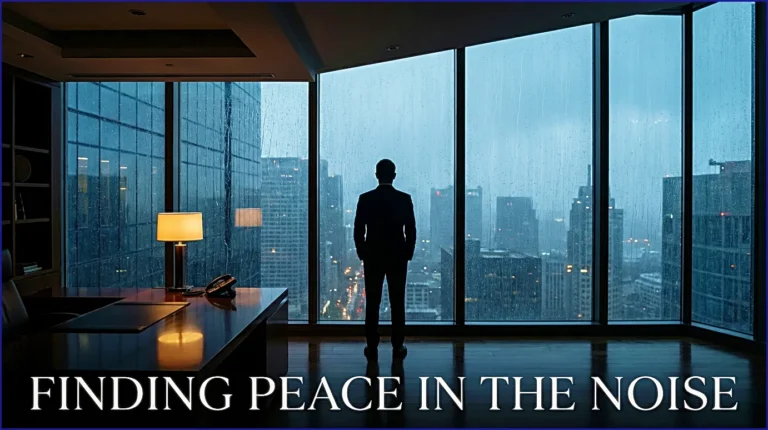
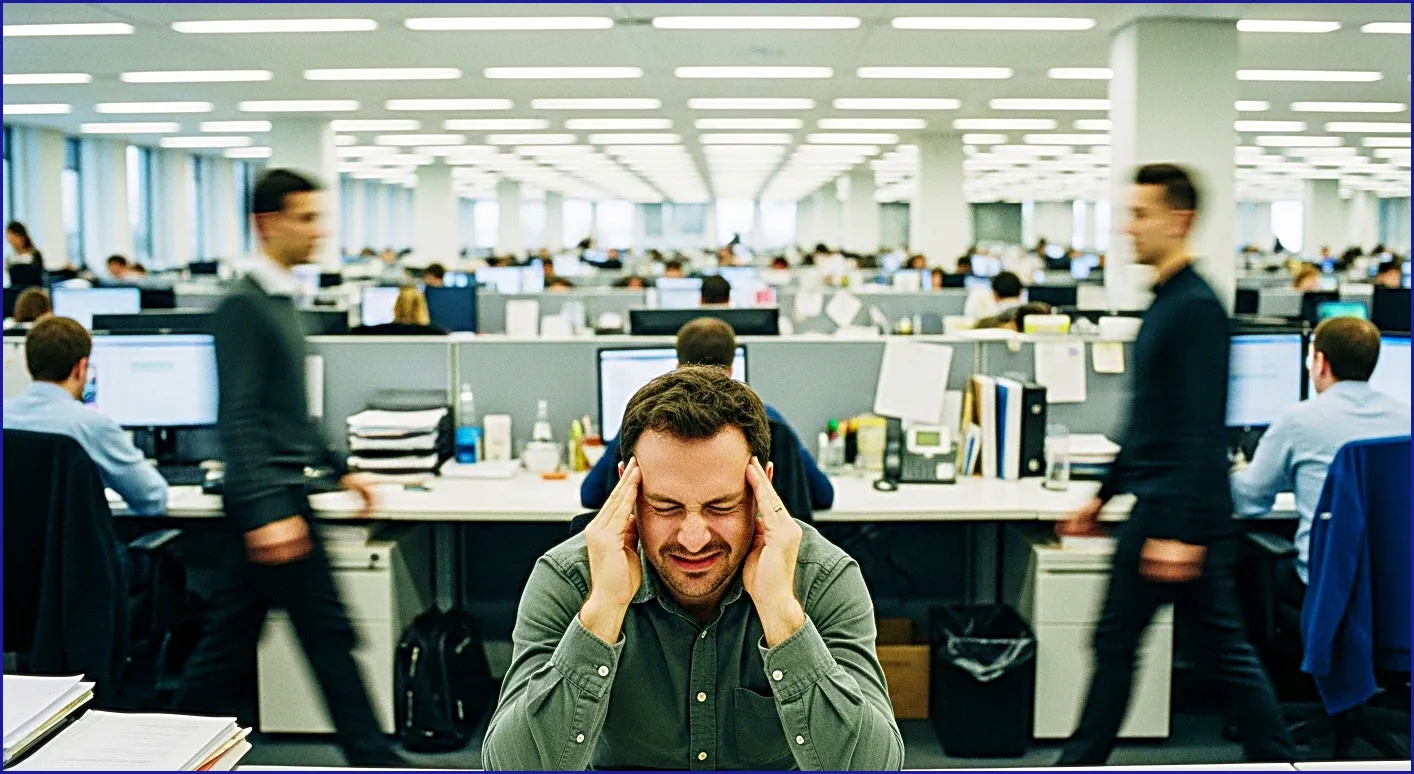
You’d be wrong. The real enemy is the room you are sitting in. Just listen. Twenty keyboards clacking endlessly. Three overlapping phone calls. Footsteps pacing right behind your chair. Your eyes might be focused on the screen, but your auditory cortex is desperately trying to process all of it. The open office was sold as a hub for collaboration. Instead, it became a factory for sensory overload.
Acoustic Fatigue
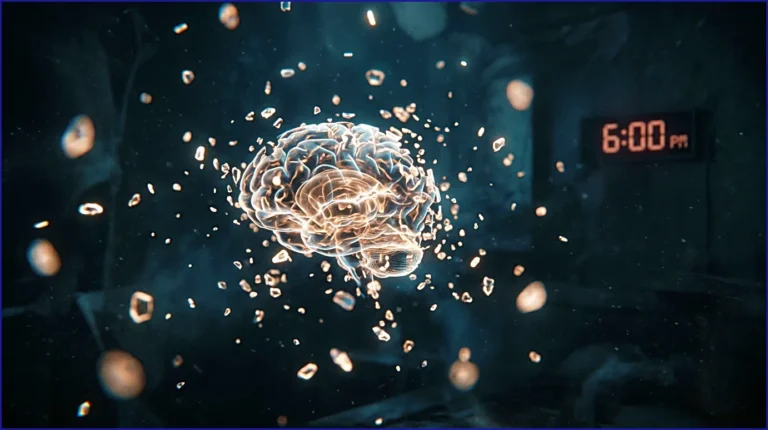
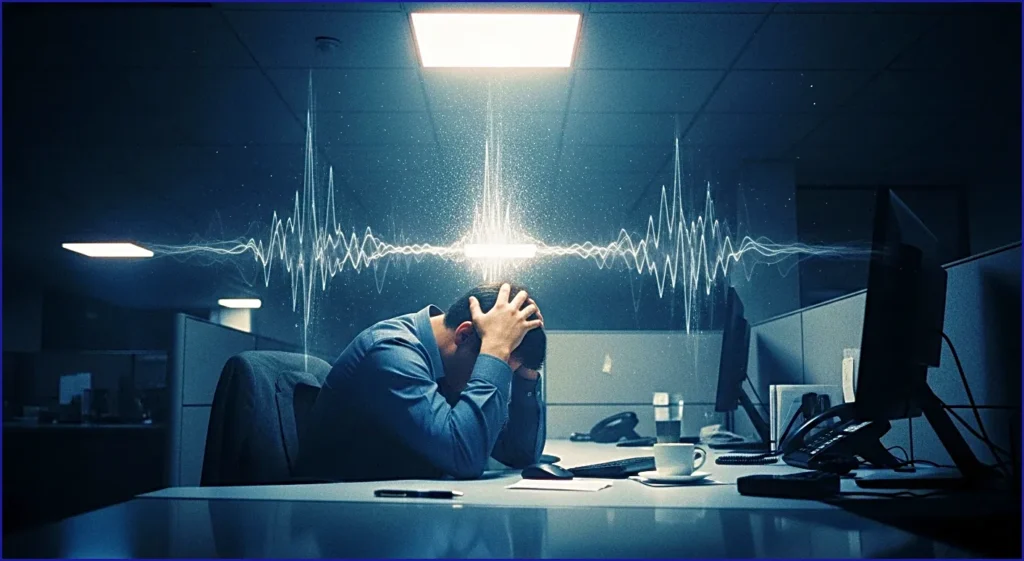
You aren’t ignoring the noise. You are fighting it. Your brain is working overtime to filter the chaos, leading directly to acoustic fatigue. Your body quietly enters a mild, continuous fight-or-flight state.
Exhaustion sets in because your mind is constantly defending its perimeter. Human voices are particularly lethal to concentration. We are biologically wired to decode language. When your coworker talks about their weekend, your brain is secretly transcribing the conversation against your will. Taking up 30% of your energy just to exist in that room, it’s no wonder your cognitive battery is dead by mid-afternoon.
The Neural Reset
Pop music only makes it worse. Adding lyrical data for your brain to process is just pouring gas on the fire. You don’t need entertainment right now. You need a neural reset.
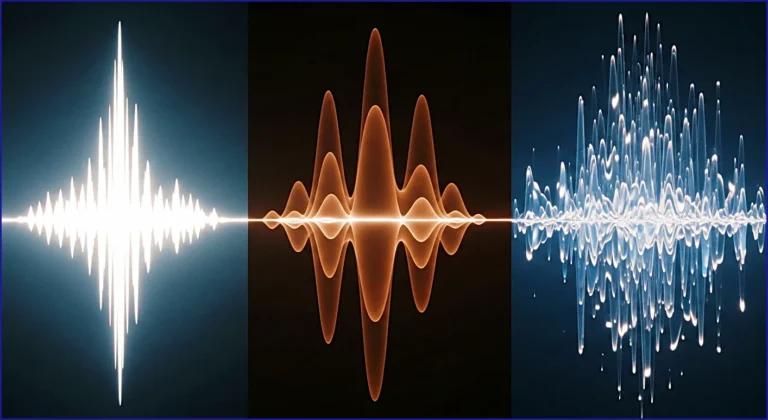
A steady, low-frequency soundscape stabilizes your nervous system. It acts as a sonic blanket, effectively smothering the sharp voices and mechanical clicks. It tells your brain that the environment is safe, lowering your heart rate and giving your energy back. You stop reacting to the room, and start focusing on your work.
The Invisible Player
Your boss is watching. Having a YouTube video playing on your screen is a terrible look. Visuals distract you and signal to others that you aren’t working. You need a background tool that operates completely in the shadows.
A 10-hour black screen audio feed is the perfect corporate hack. It runs invisibly in another tab. No flashing ads. No moving visuals. Just pure, uninterrupted acoustic armor for your entire workday, protecting your focus without ever drawing attention.
The Director’s Prescription
Silence in a modern office is a myth. Turning up the volume to drown out the chaos only damages your hearing. It leaves you exhausted. We tore apart the marketing lies to find the tools that actually protect your attention. →[Read: The $400 Mistake – Why premium gear might be ruining your focus]
Related FAQ
It belongs before the work becomes complicated. recovery after screen work should make it easier to start, continue, or recover from a session without adding more mental noise.
It belongs before the work becomes complicated. background noise for work should make it easier to start, continue, or recover from a session without adding more mental noise.
Check the actual friction first: sound, light, posture, screen distance, or visual clutter. rain sound volume helps only when it solves the part of the workspace that is breaking focus.
It belongs before the work becomes complicated. deep work environment should make it easier to start, continue, or recover from a session without adding more mental noise.
Check the actual friction first: sound, light, posture, screen distance, or visual clutter. rain sounds for studying helps only when it solves the part of the workspace that is breaking focus.
Before You Go
Paid links- Advertisement -