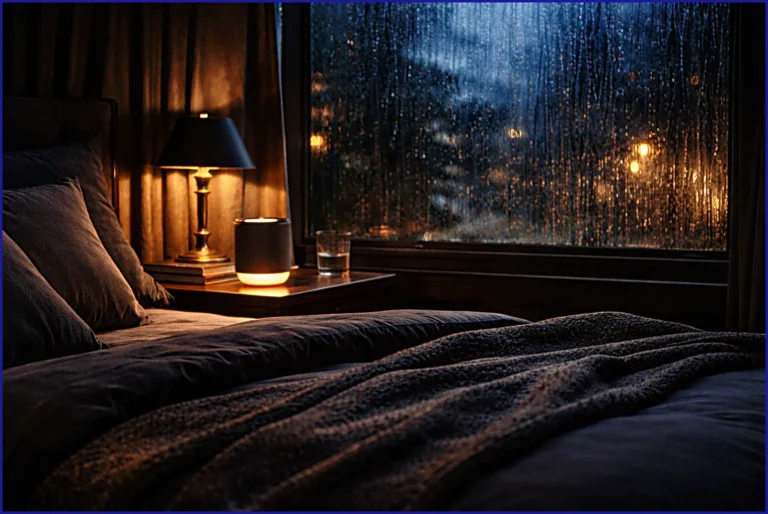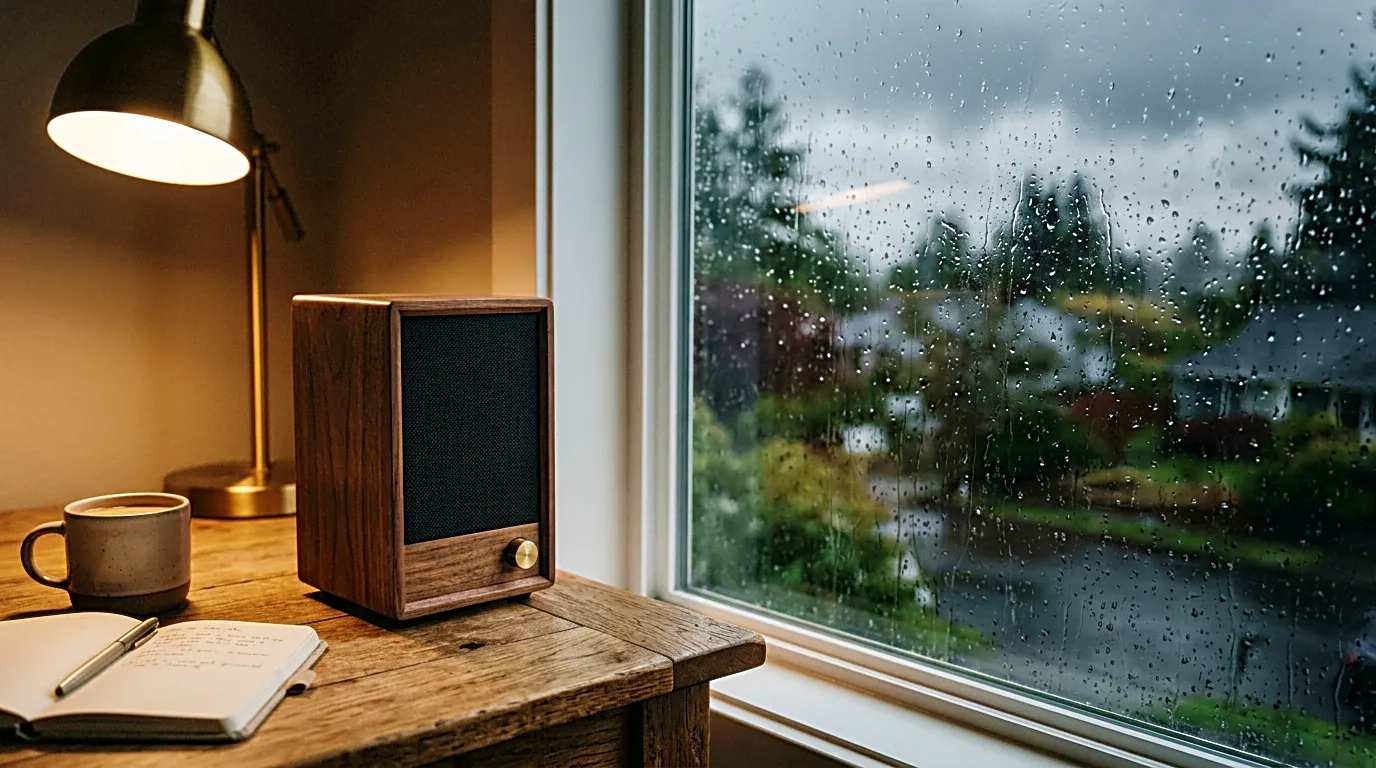
Rain sounds do not need loud speakers. That was the first thing I had to understand. I used to think better sound meant more bass, more volume, and a speaker that could fill the whole room.
But rain is not music in the usual sense. It does not need to perform. It works best when it stays behind the work, soft enough to forget and steady enough to change the feeling of the room.
That is why desk speakers for rain sounds and deep work need a different standard. The best choice is not always the loudest speaker or the most expensive one. It is the speaker that can make a desk feel calmer at low volume.
For rain sounds and deep work, the speaker to look for is not the one that impresses you quickly, but the one you can forget after ten minutes.
Rain sounds need balance more than power
Rain audio has small details. Window drops, soft room tone, low background texture, and repeated water patterns can all disappear when the speaker is too thin. They can also become muddy when the speaker pushes too much bass.
A good speaker for rain sounds should feel stable at low volume. It should not make the high frequencies sharp. It should not turn soft rain into a heavy rumble. The sound needs enough body to fill the desk area, but not so much that it becomes the center of attention.
This is different from buying speakers for movies or music. A speaker that sounds exciting in a short demo may feel tiring during a three-hour writing session. Deep work usually needs calm, not drama.
Phone speakers are fine for a moment, but not for a work routine
A phone can play rain sounds anywhere. That convenience is useful. But for long work sessions, phone speakers often make the sound feel narrow and small.
The rain comes from one tiny point. The lower texture disappears. The upper sound can feel sharp if the phone is too close. Instead of becoming part of the room, the sound feels like it is coming from a device.
Desk speakers change that. They do not need to be loud. They simply let the sound sit in the space instead of sticking to the phone.
For a creator, writer, or remote worker, that difference can matter. The sound is not only audio. It becomes a boundary between the outside day and the work in front of you.
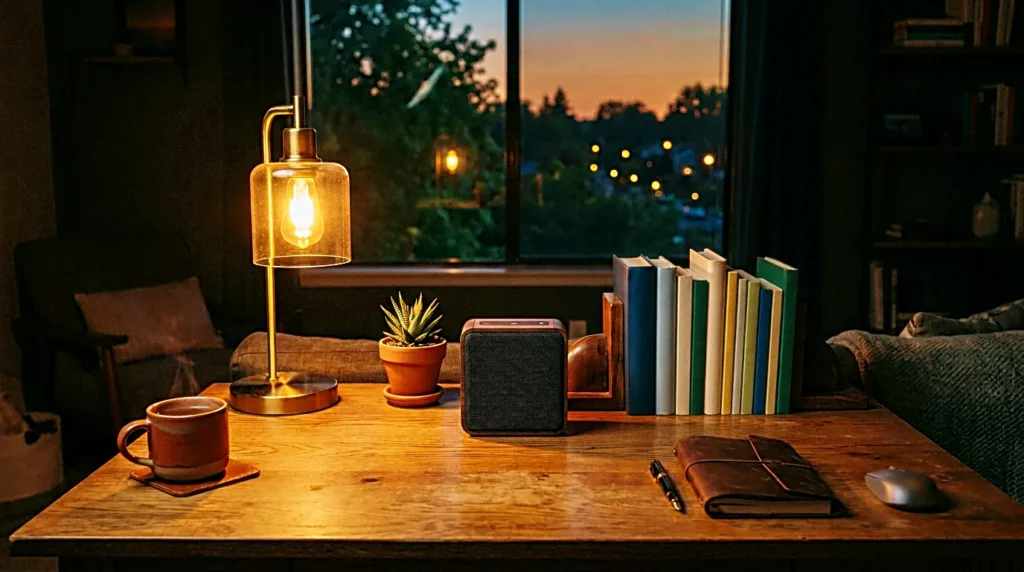
Low-volume clarity is the first thing to check
Many speaker reviews focus on how powerful a speaker can get. For rain sounds, I would check the opposite.
How does it sound when the volume is low?
If the speaker only sounds good when it is loud, it is not ideal for deep work. A focus speaker needs to stay clear when the room is quiet. It should hold enough texture at low volume that you do not keep turning it up.
This is also where cheap speakers can become tiring. If the sound feels thin, the listener often raises the volume to compensate. After a while, the rain stops feeling calm and starts becoming another layer of noise.
A good desk speaker should make low volume feel complete.
Wired or Bluetooth depends on the room
Bluetooth is convenient. It keeps the desk clean and makes it easy to play sound from a phone, tablet, or laptop. For a flexible setup, Bluetooth may be enough.
Wired speakers have a different advantage. They are stable. There is no pairing issue, no battery anxiety, and no surprise disconnection in the middle of a work session.
For a fixed desk, wired speakers can make sense. For a room that changes throughout the day, Bluetooth may feel easier. The right choice depends less on the technology and more on the routine.
The best speaker is the one that fits the room where it will actually be used.
A calm speaker also has to look calm
This may sound less technical, but it matters on a desk. A speaker can sound good and still feel visually wrong for a quiet workspace.
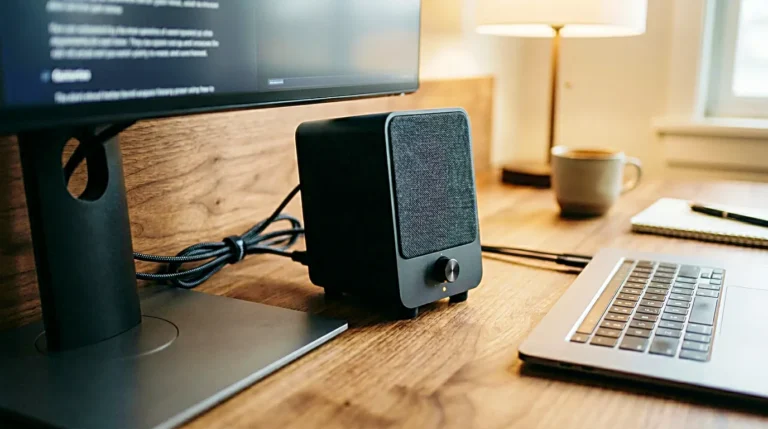
Bright lights, aggressive shapes, large branding, or too much size can make the desk feel busier. For deep work, I prefer tools that do not ask for attention. The speaker should support the room, not compete with the monitor, notebook, keyboard, or lamp.
This is especially true for a small desk. A speaker that takes over the workspace may solve one problem and create another. The desk starts to feel crowded, and crowded desks rarely help long sessions.
What to check before buying desk speakers for rain sounds
Before buying, I would check five things.
First, low-volume clarity. The speaker should sound full enough when quiet.
Second, sound character. Avoid harsh treble and overdone bass if the main use is rain sounds or focus audio.
Third, desk size. The speaker should fit the space without making the setup feel heavy.
Fourth, control. A simple volume knob or easy control can matter more than another app feature.
Fifth, connection. Choose Bluetooth for flexibility and wired for stability.
These checks are simple, but they prevent the wrong kind of purchase. A speaker can be popular and still be wrong for a quiet work routine.
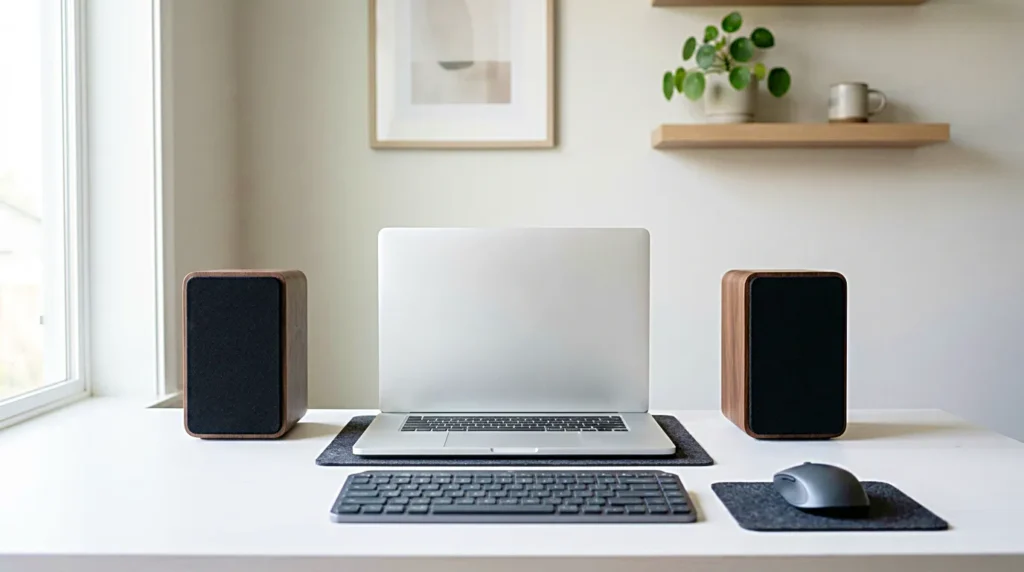
Who desk speakers are best for
Desk speakers make the most sense if you work alone, listen to rain sounds often, and do not want headphones on your head all day. They are also useful if silence feels too sharp but music pulls too much attention.
Speakers leave the ears open. They let the sound become part of the room. They are easier for long sessions when isolation is not the main goal.
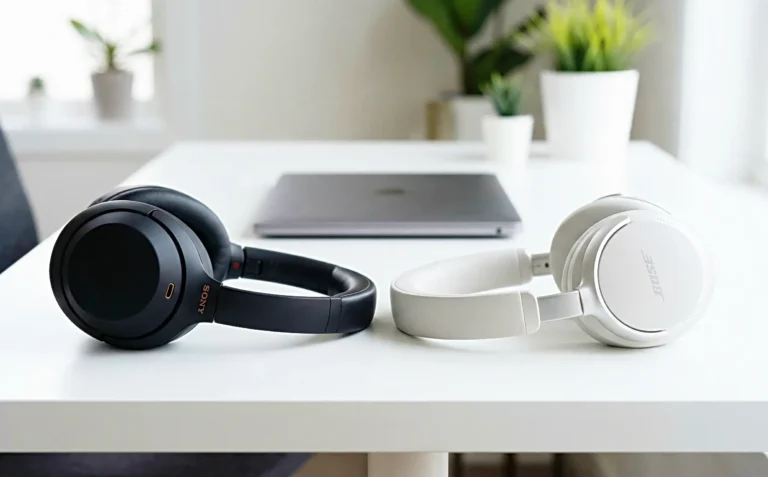
Headphones are better for noisy offices, shared spaces, cafés, or travel. Speakers are better when the room itself needs a softer background.
That distinction matters more than brand.
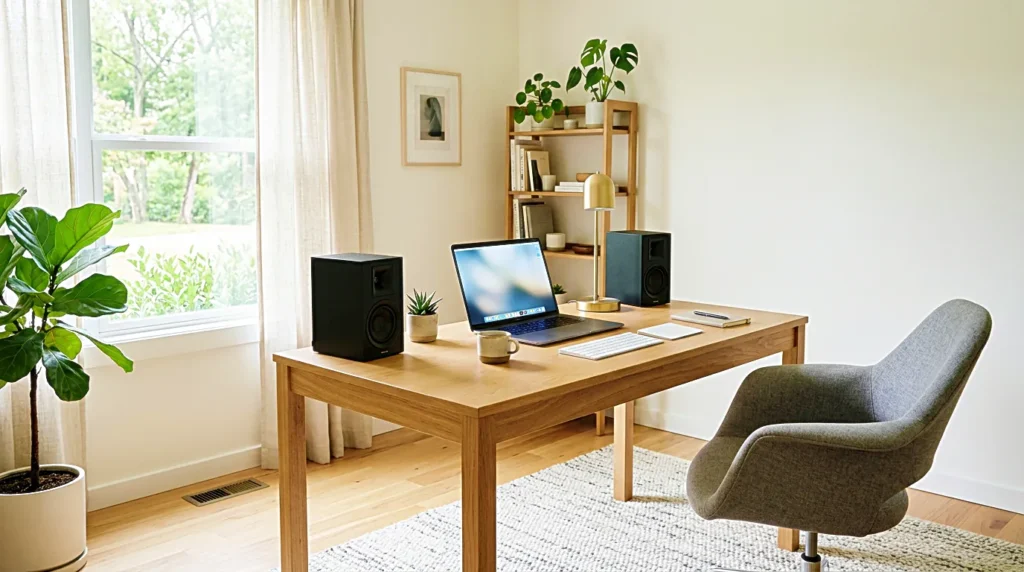
The quieter choice
The best desk speakers for rain sounds do not need to make the room louder. They need to make the room steadier.
For deep work, that is the point. The sound should not keep asking to be noticed. It should make the space feel a little less empty and the work a little less exposed.
Rain sounds work best when they stay in the background.
The right speaker lets them stay there.
Related FAQ
Check the real use case first. best desk speakers should solve a repeated work, focus, recording, or rest problem before specs or discounts decide the purchase.
It can help when it supports the work session without adding clutter or complexity. The product should make the desk easier to use, not harder to maintain.
Avoid buying from a list before defining the problem. small desk speakers should be chosen after the room, desk, workflow, and budget are clear.
Often, yes. Room size, desk depth, lighting, noise, and how long the item is used can matter more than a general top rating.
It is a good topic when it connects to focus, creator workflow, desk comfort, sound, or rest. The guide should help the reader choose more calmly.
Before You Go
Paid links- Advertisement -