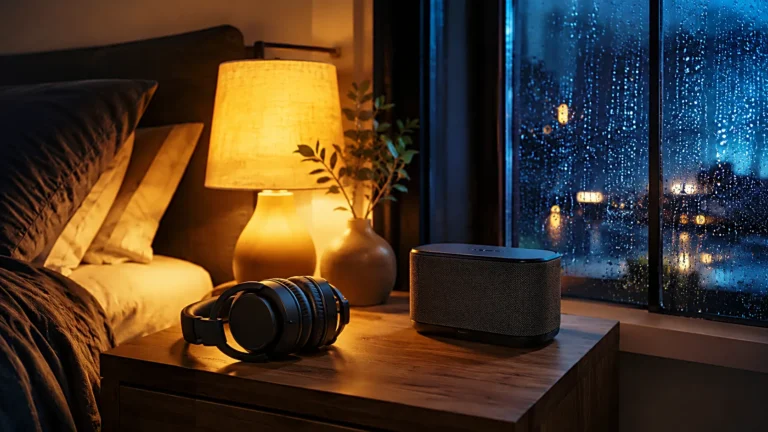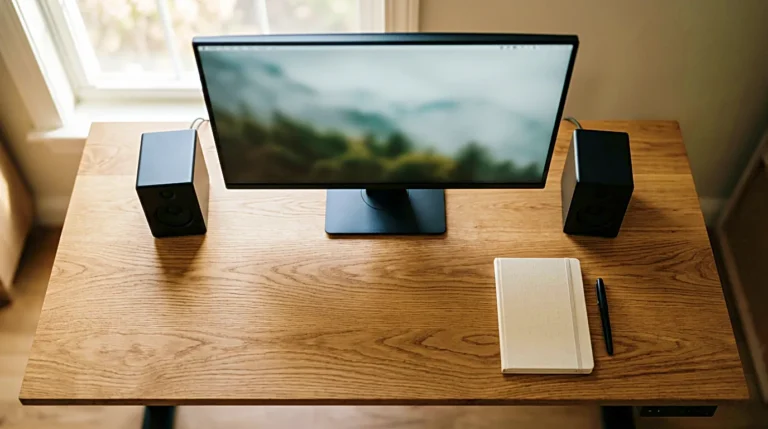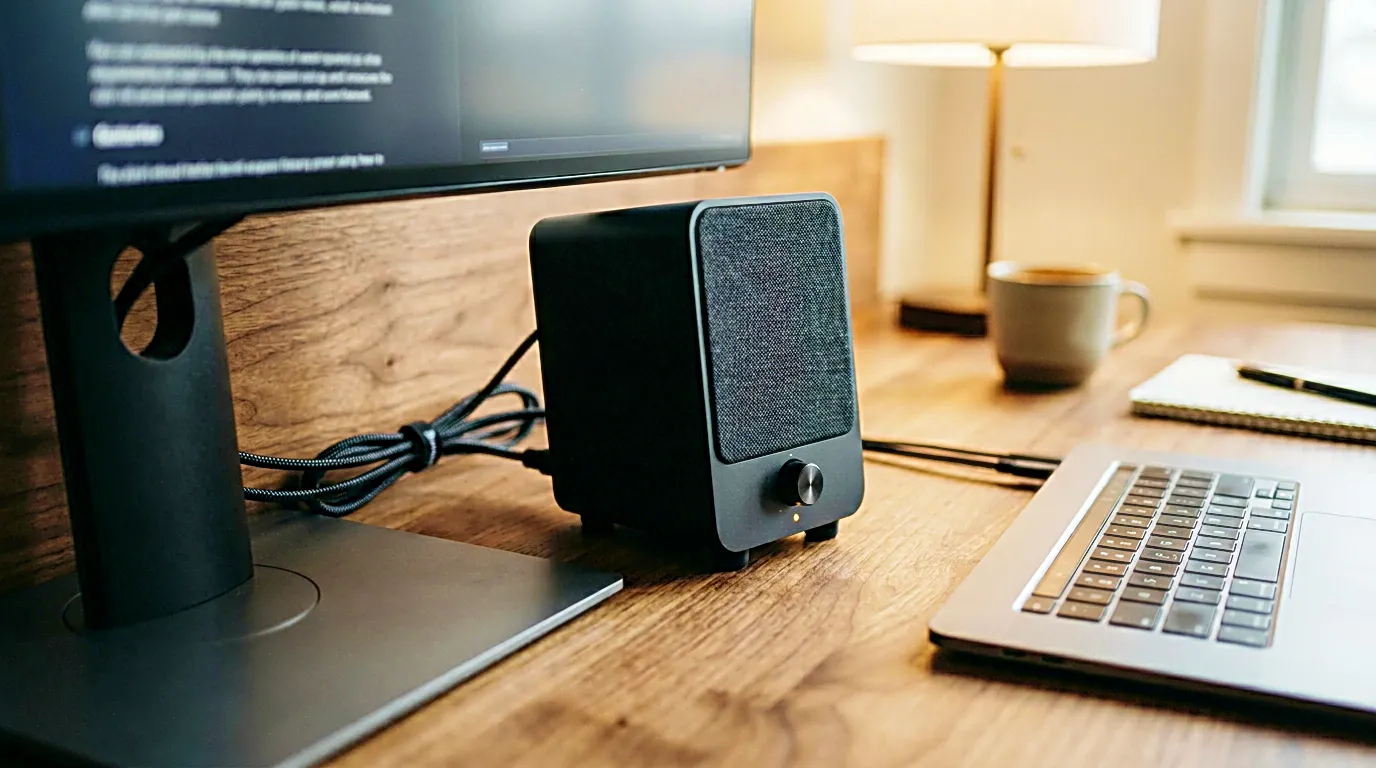
Desk speakers and computer speakers sound like the same thing.
They sit near a monitor. They play sound from a laptop or desktop. They make music, rain sounds, calls, videos, and background audio easier to hear without wearing headphones.
But they are not always the same choice.
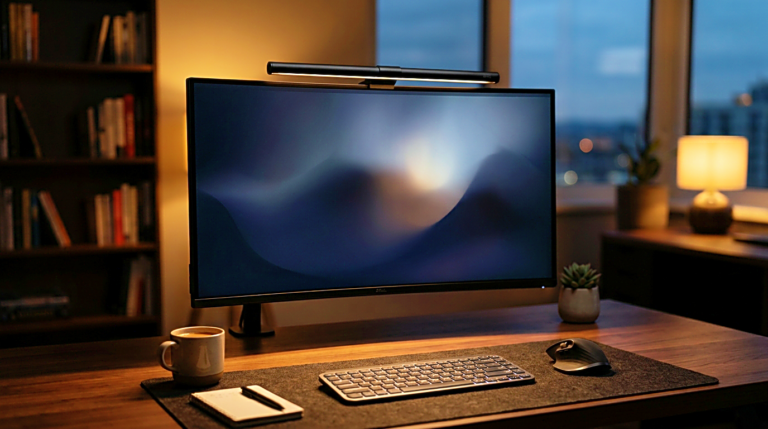
A computer speaker is often chosen because the computer needs sound. A desk speaker is different. It has to live on the desk. It has to fit the monitor, keyboard, lamp, notebook, coffee cup, cables, and the small movements that happen during work.
That changes the buying decision.
The question is not only how good the speaker sounds.
The question is whether the speaker makes the desk feel easier to work at.
Desk Speakers Start With the Space Around the Monitor
Desk speakers should start with space.
That sounds too simple, but it matters. A speaker can look small in a product photo and still feel large on a real desk. Once it sits beside a monitor, the scale changes. Add a keyboard, mouse, notebook, phone, and a cup, and the desk can feel crowded quickly.
A desk speaker has to fit the working surface.
It should not push the monitor too far back. It should not block the laptop screen. It should not make the mouse area smaller. It should not force every other object into a tighter corner. If the speaker improves sound but makes the desk feel cramped, it may not be the right choice for daily work.
This is why desk speakers should be judged by layout first.
Width matters. Depth matters. Cable direction matters. The position of the volume knob matters. Even the shape can matter if the speaker sits close to the edge of the desk.
Good desk audio begins before the sound plays.
It begins with whether the speaker belongs on the desk.
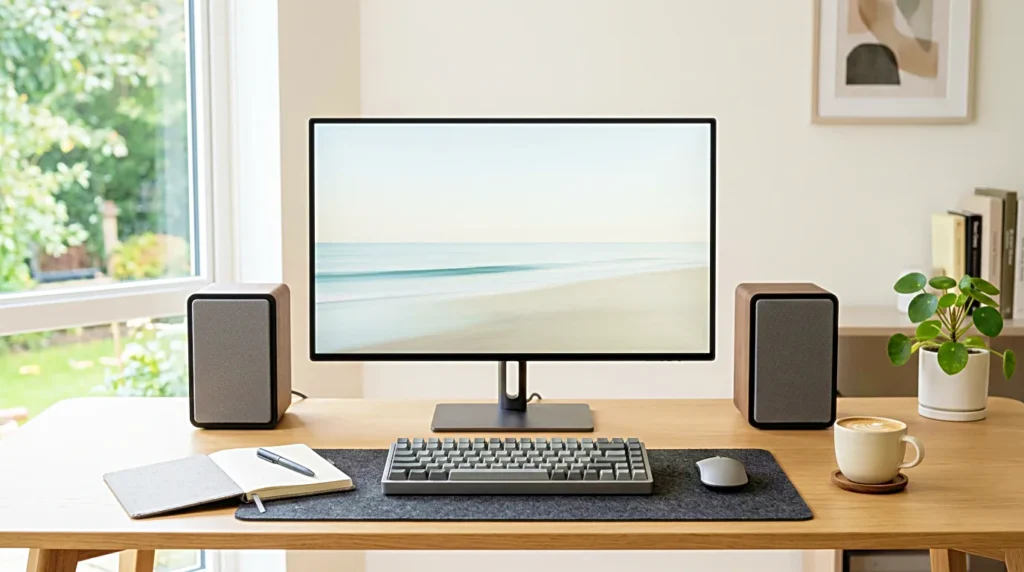
Computer Speakers Are Often Chosen for Convenience
Computer speakers are often chosen for a simple reason.
The computer needs sound.
That is not a bad reason. Many people do not need a complicated audio setup. They need something that connects quickly, plays clearly enough, and does not require much thought. For that use, basic computer speakers can be enough.
Convenience matters.
A simple USB speaker, compact powered speaker, or small desktop speaker can make everyday audio easier. Calls become clearer than laptop speakers. Videos feel less thin. Rain sounds or brown noise can fill the room more naturally. A speaker can also reduce the need to wear headphones all day.
But convenience has a limit.
If the speaker is too weak at low volume, it may sound thin. If the cable is awkward, it may clutter the desk. If the controls are hidden, it may become annoying. If the sound is too bright, long work sessions can feel tiring.
A convenient computer speaker is useful when it stays simple.
It becomes less useful when small annoyances repeat every day.
Small Desk Speakers Can Be Better for Long Sessions
Bigger speakers are not always better for a desk.
A large speaker can sound fuller, but it also asks for more space. It may need more distance from the wall. It may look heavy beside a laptop. It may make a small room feel visually crowded. For long work sessions, that can matter more than expected.
Small desk speakers can be easier to live with.
They leave more room for movement. They fit near a monitor without taking over the setup. They are easier to reposition. They can provide enough sound for background music, rain sounds, videos, and focused work without turning the desk into an audio station.
The point is not to buy the smallest speaker.
The point is to match the speaker to the way the desk is used.
If the desk is used for writing, planning, editing, studying, or remote work, the speaker should support that rhythm. It should not become the main object on the desk unless audio work is the main task.
For most desk setups, balance matters more than size.
Low Volume Clarity Matters More Than Loudness
Desk speakers are often used at low volume.
That makes low volume clarity more important than loudness.
A speaker can be impressive when turned up and still feel poor during work. Many work sessions do not need room-filling sound. They need soft audio that remains clear without becoming sharp. Rain sounds should feel steady. Voices should be understandable. Background music should not fight the task.
This is where desk speakers and computer speakers can feel very different.
Some computer speakers are designed to be small and loud enough. That may be fine for quick listening. But for long desk sessions, harsh treble or muddy low volume sound can become tiring. A speaker that sounds calm at low volume can be more useful than one that sounds powerful for a few minutes.
Low volume is where work speakers prove themselves.
If the sound disappears when quiet, you keep turning it up. If the sound becomes sharp, you keep turning it down. Both create friction.
A good desk speaker should be easy to leave alone.
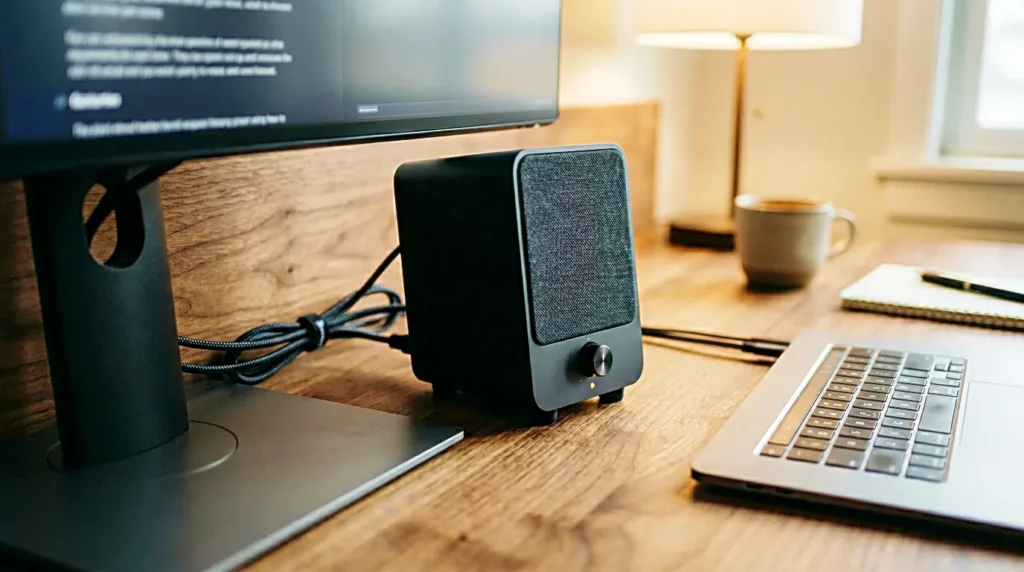
Placement Can Change the Sound More Than the Specs
Speaker placement changes the listening experience.
Even simple speakers can sound better or worse depending on where they sit. Too close to the wall, the sound can feel thick. Too far apart, the center can feel empty. Too low, the sound may feel like it is coming from the desk surface. Too close to the ears, the speaker can feel more direct than comfortable.
This is why the desk matters.
A speaker is not only a product. It becomes part of the room. The monitor, wall, shelf, window, and desk surface all affect how the sound feels. A small speaker placed well can be more pleasant than a larger speaker placed poorly.
For work, perfect placement is not necessary.
But basic placement helps.
The speakers should sit in a way that feels balanced from where you actually work. They should not be hidden behind a monitor. They should not be blocked by books or a laptop stand. If possible, they should point toward the listening position without becoming visually aggressive.
Better placement often costs nothing.
It just requires looking at the desk before blaming the speaker.
Desk Speakers and Headphones Solve Different Problems
Desk speakers and headphones should not be judged as direct replacements.
They solve different problems.
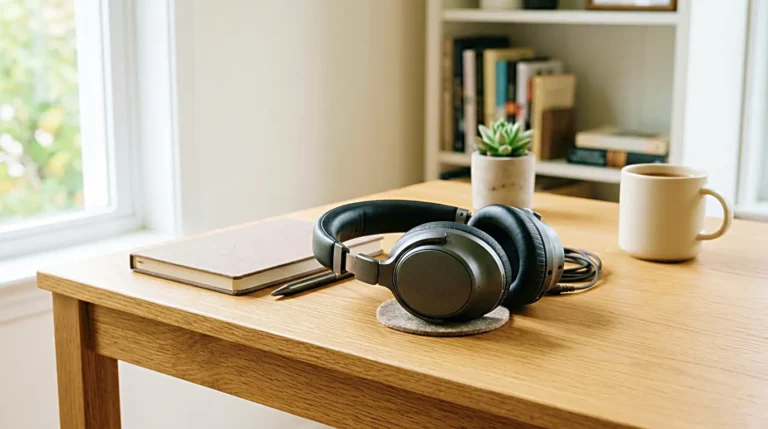
Headphones create a private space. They are useful when outside noise needs to be controlled, when other people are nearby, or when sound should not fill the room. Noise cancelling headphones can help focus in a shared office or noisy environment.
Desk speakers create an atmosphere.
They make sound part of the room instead of placing it directly on the ears. That can feel easier during long work sessions. There is no pressure on the head. No ear heat. No battery concern. No feeling of being sealed off from the room.
This difference matters for daily work.
If the goal is isolation, headphones are usually better. If the goal is a softer room, desk speakers may be better. If the room is already quiet, speakers can make background sound feel more natural. If the room is unpredictable, headphones may give more control.
The better choice depends on the interruption.
Not the product category.
Desktop Speakers Should Not Make the Desk Feel Busier
A desk can become busy quickly.
The speaker is only one object, but it changes the whole surface. It adds cables, controls, visual weight, and another thing to clean around. If the desk already feels crowded, adding speakers can make the setup feel less calm even if the sound improves.
This is why visual quiet matters.
A good desktop speaker should fit the desk without calling too much attention to itself. It should not look like it belongs in a studio unless the desk is actually used that way. It should not create cable clutter that makes the setup feel unfinished.
This is especially important for small desks.
A compact speaker with clean cable routing may be better than a larger speaker with better specifications. A speaker that sits neatly beside the monitor may be more useful than one that makes every object shift around it.
Sound is not the only thing a speaker brings to the desk.
It also brings presence.
That presence should feel calm enough to keep.
Work Desk Audio Should Stay in the Background
Work desk audio has a different job from entertainment audio.
It should support the task.
That means it should not be too dramatic. It should not pull attention away from reading or writing. It should not make every sound feel important. For many people, work audio is best when it becomes a quiet layer behind the task.
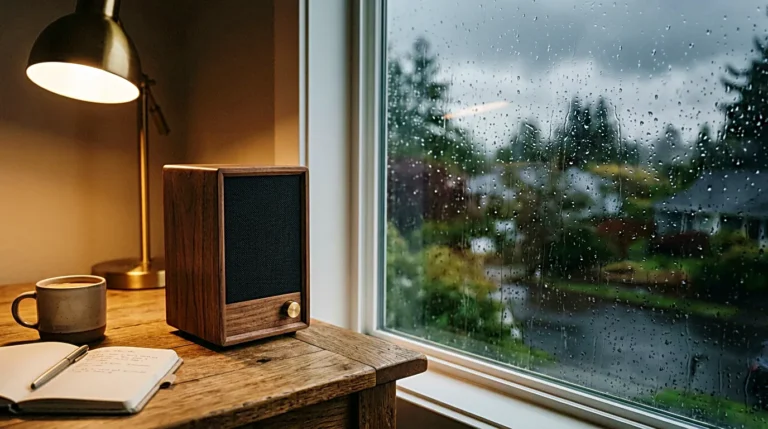
Rain sounds, brown noise, soft music, or low ambient sound can help make the room feel less empty. A good desk speaker can make those sounds feel natural. The audio does not need to be impressive. It needs to be steady enough that the mind stops checking the room.
This is where small speakers can work well.
They do not have to shake the room. They do not have to create deep bass. They simply need to make low volume audio feel smoother than laptop speakers.
For work, sound quality is not only about detail.
It is about how little the sound interrupts.
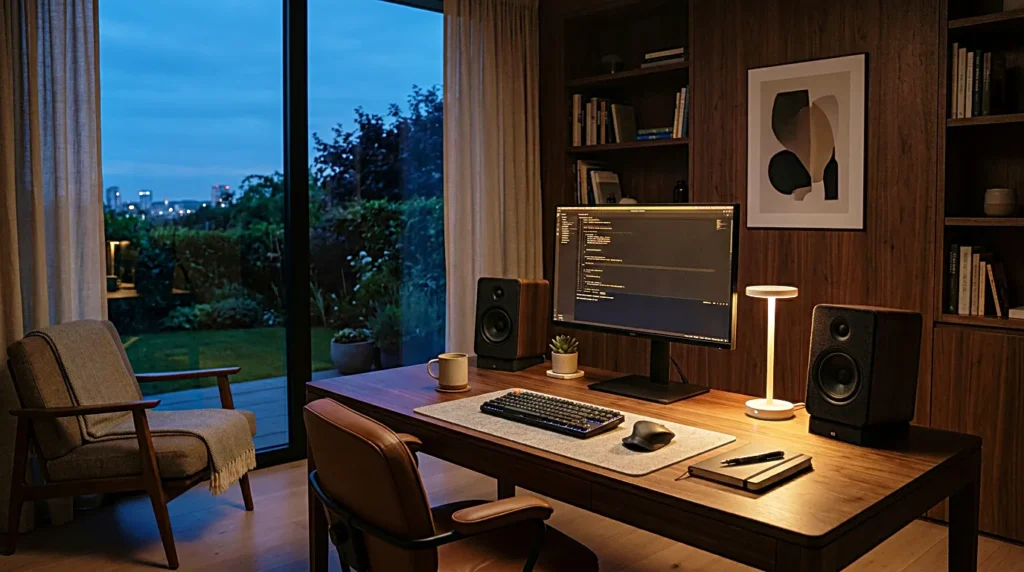
What to Check Before Buying Desk Speakers
Before buying desk speakers, check the desk first.
Look at the monitor width, keyboard position, wall distance, cable path, and how much empty space remains on both sides. If the speaker does not fit that layout, the setup may feel worse even if the sound improves.
Then check listening distance.
Speakers that work across a room may not feel right when they sit close to a monitor. Desk speakers need to sound comfortable at a short distance. They should not feel too sharp when you are sitting directly in front of them.
Check low volume performance.
If the speaker will be used for work, low volume matters more than loudness. Voices should stay clear. Rain sounds should stay soft. Background audio should not become harsh or muddy when quiet.
Check controls.
A volume knob on the front can be easier than a hidden control on the back. Simple input switching can matter if you move between a laptop, desktop, or tablet. If the speaker adds too many small decisions, it may become less useful.
Finally, check whether speakers are the right tool.
If you share the room, headphones may be better. If you need silence, speakers may not help. If the desk is too small, a single compact speaker or headphones may make more sense.
A good desk speaker should fit the desk, the room, and the work.
Not just the spec sheet.
The Better Speaker Is the One That Makes the Desk Easier
Desk speakers and computer speakers can overlap.
But they are not always the same choice.
A computer speaker solves the need for sound. A desk speaker has to solve that need while living inside the workspace. It has to fit the desk. It has to sound clear at low volume. It has to avoid adding clutter. It has to make long sessions feel easier, not busier.
That is a quieter standard.
It is also the more useful one.
The better speaker is not always the louder one. It is not always the larger one. It is not always the one with the most impressive product page.
For a desk, the better speaker is the one that makes the room feel easier to work in.
And if it can do that without asking for attention, it is already doing enough.
Related FAQ
Avoid buying from a list before defining the problem. small desk speakers should be chosen after the room, desk, workflow, and budget are clear.
It can help when it supports the work session without adding clutter or complexity. The product should make the desk easier to use, not harder to maintain.
Check the real use case first. best desk speakers should solve a repeated work, focus, recording, or rest problem before specs or discounts decide the purchase.
It can help when it supports the work session without adding clutter or complexity. The product should make the desk easier to use, not harder to maintain.
It can help when it supports the work session without adding clutter or complexity. The product should make the desk easier to use, not harder to maintain.
Before You Go
Paid links- Advertisement -