Do noise cancelling headphones work without music?
It sounds like a small question, but it usually comes from a real situation.
You do not always want music. Sometimes you just want the room to feel quieter. You may be working, reading, studying, sitting on a train, or trying to lower office noise without adding another sound on top of it.
So the question makes sense.
Can noise cancelling headphones help even when nothing is playing?
In many cases, yes. But the result is not the same as turning the world off. Noise cancelling can reduce certain kinds of background noise without music, but it works better on some sounds than others.
That difference matters.
Because if you expect silence, you may be disappointed.
If you expect less friction, the headphones may still be useful.
Noise Cancelling Can Work Without Music
Noise cancelling headphones can work without music if the active noise cancelling mode is turned on.
Music is not always required.
Active noise cancelling uses microphones and processing to reduce parts of the outside sound. That system can run even when no song, podcast, or white noise is playing. In that situation, the headphones are not playing audio for entertainment. They are simply trying to lower some of the room.
This can be useful during work.
A noisy air conditioner may feel softer. Distant traffic may drop. A low office hum may become less noticeable. A train or airplane cabin may feel less sharp. The room may still exist, but it asks for less attention.
That is the practical value.
Noise cancelling without music is not about creating perfect silence. It is about reducing part of the background so your mind does not keep checking it.
For focus, that can be enough.
Active Noise Cancelling Is Different From Just Wearing Headphones
There are two different things happening when you wear noise cancelling headphones.
One is active noise cancelling. The other is passive isolation.
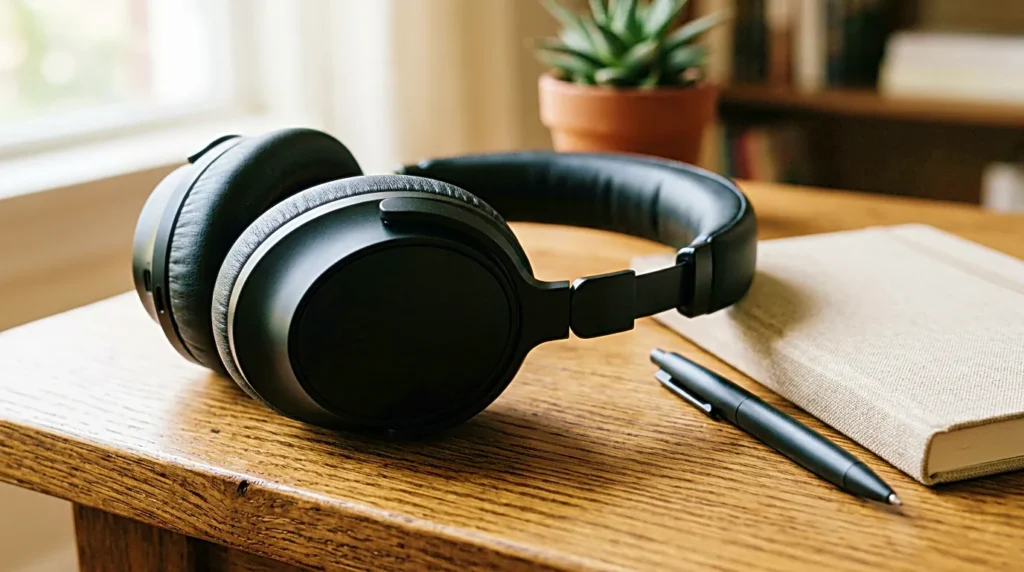
Passive isolation is the physical blocking created by the ear cups, ear pads, seal, and fit. Even when the headphones are turned off, some outside sound may be reduced because your ears are covered.
Active noise cancelling is different.
It uses electronics. The headphones listen to part of the outside noise and try to reduce it. That is why many noise cancelling headphones need battery power for ANC to work. If the battery is dead, the headphone may still block some sound physically, but active noise cancelling may stop.
This distinction matters because people often say “noise cancelling” when they mean two things at once.
A headphone can feel quieter because it covers the ears well.
It can also feel quieter because ANC is actively reducing steady background noise.
The best result usually comes from both working together.
ANC Usually Works Better on Steady Noise
Active noise cancelling tends to work best on steady, predictable sounds.
That is why it often feels useful on airplanes, trains, buses, fans, air conditioners, distant traffic, or low office hum. These sounds have patterns. They do not change as sharply as speech or sudden movement.
When the sound is steady, ANC has more room to help.
The headphone can lower part of that background and make the environment feel flatter. It may not remove everything, but it can reduce the sense that the room is pressing into the work.
That is why noise cancelling headphones can feel effective without music in some situations.
If you sit near a fan, an air purifier, a laptop hum, or distant street noise, the difference can be noticeable. You may not hear silence, but you may feel less pulled away.
For focus, steady noise is often the easiest problem for ANC to soften.
Voices Are Still Harder to Block
Voices are different.
A nearby voice is not just sound. It carries meaning. The brain tries to catch words, tone, and rhythm even when you do not want to listen. That is why speech can interrupt work faster than a fan or low traffic noise.
Noise cancelling headphones can reduce voices, but they usually do not erase them completely.
This is especially true when people are close. A conversation across the room may become softer. A voice beside you may still cut through. Sudden laughter, chair movement, keyboard noise, or a door closing may also remain noticeable.
This does not mean noise cancelling headphones are useless for voices.
They can still make the room less sharp. They can reduce the edge of office noise. They can help a conversation feel farther away. But if your main problem is speech, expecting full silence without music may be too much.
In that case, some people add a low background sound.
Soft brown noise, white noise, rain sounds, or very quiet instrumental audio can help cover the remaining speech layer. The goal is not to make the sound loud. The goal is to reduce the contrast that keeps pulling attention away.
Noise cancelling lowers part of the room.
A gentle background sound can sometimes smooth what remains.
Silence May Feel Different With Noise Cancelling On
Noise cancelling without music can feel strange at first.
The room becomes quieter, but not naturally silent. Some sounds drop. Others stay. You may notice a light pressure feeling. You may become more aware of your own breathing, keyboard, or small internal sounds.
For some people, that feels calm.
For others, it feels too closed.
This is one reason noise cancelling headphones are personal. The technology can be useful, but the feeling is not the same for everyone. A quiet room created by ANC can feel different from a naturally quiet room.
That does not make it bad.
It just means the best setting may not be maximum noise cancelling all the time. Some headphones allow adjustable ANC. Some have transparency mode. Some let you choose a softer level that reduces the room without making it feel sealed.
For work, that flexibility can matter more than the strongest possible blocking.
A headphone should make focus easier, not make the day feel trapped.
Battery and Mode Settings Matter
Noise cancelling without music usually depends on the headphone being powered on.
That sounds obvious, but it is easy to overlook.
Some headphones can be worn passively when the battery is empty, but active noise cancelling may not work. Some models turn off ANC automatically after a period of inactivity. Some require a specific mode in the app. Some switch between ANC, transparency, and normal mode.
If noise cancelling does not seem to work without music, check the mode first.
Make sure ANC is turned on. Make sure the battery is charged. Make sure transparency mode is not active. Make sure the headphones are seated correctly. If the ear cups are not sealed well, the effect can feel weaker.
Small settings can change the experience.
A headphone may work well, but the wrong mode can make it feel like nothing is happening.
For work headphones, simple controls are useful because you do not want to manage settings every time you need quiet.
Fit and Passive Isolation Still Matter
Fit matters even when active noise cancelling is strong.
If the ear cups do not seal well, outside sound can leak in. Glasses, hair, ear shape, pad wear, and head size can all change the seal. A small gap can reduce the effect, especially with higher or sharper sounds.
This is why comfort and fit are not separate from noise cancelling.
They are part of it.
A headphone with strong ANC but poor fit may feel less effective than a slightly weaker model that seals well and feels comfortable. A headphone that presses too hard may block more noise, but become tiring. A headphone that is too loose may feel comfortable, but let more sound through.
For long work sessions, the balance matters.
The best noise cancelling headphones are not only the ones with the strongest ANC. They are the ones that reduce enough sound while staying comfortable enough to keep wearing.
If you remove the headphones after twenty minutes, the feature does not matter much.
Noise Cancelling Without Music Can Help Focus
Noise cancelling without music can be useful for focus.
It can lower the room without adding another layer of audio. That is helpful when music feels distracting, podcasts feel too active, or white noise feels unnecessary. Sometimes you just want less room, not more sound.
This can work well for reading, writing, planning, coding, editing, or any task where language and thought need space.
The benefit is usually subtle.
You may not feel a dramatic switch. Instead, the room may become easier to ignore. Small noises may feel less sharp. The task may become easier to restart. The environment may stop demanding quite as much attention.
That is a quieter kind of productivity.
Noise cancelling headphones do not create focus by themselves. They simply reduce one kind of interruption. The work still needs a clear next step, a manageable task, and fewer digital distractions.
But when outside noise is the friction, ANC without music can help.

When Music or Background Sound Still Helps
Music is not required for noise cancelling headphones to work.
But background sound can still help in some situations.
If voices are the main problem, gentle background audio may cover the remaining speech better than ANC alone. If the room feels too empty, rain sounds or brown noise can make the quiet feel softer. If silence makes you more aware of small noises, a low sound layer may feel easier.
The key is volume.
The background sound should not become the new distraction. It should sit low enough that you stop following it. If the sound has lyrics, sudden changes, or strong emotion, it may pull attention instead of supporting it.
For many work sessions, simple sound is better.
Soft rain. Low brown noise. Gentle white noise. A steady ambient layer.
The sound should not ask for attention.
It should make the remaining noise less important.
When Noise Cancelling Without Music May Not Be Enough
Noise cancelling without music may not be enough when the noise is close, sharp, or meaningful.
Nearby voices can still cut through. Sudden sounds can still startle. Keyboard clicks, doors, dishes, movement, and short interruptions may remain. If the room is unpredictable, ANC alone may feel limited.
It may also be less useful if the main problem is not sound.
If you are tired, unclear about the task, overloaded with tabs, or checking notifications constantly, headphones will not solve the root issue. They can make the room quieter, but they cannot organize the work.
That distinction keeps expectations honest.
Noise cancelling headphones are useful when sound is part of the problem.
They are less useful when the problem is decision fatigue, unclear priorities, or digital distraction.
Before buying, it helps to ask whether noise is truly the main friction.
What to Check Before Using Noise Cancelling Without Music
Before using noise cancelling headphones without music, check a few things.
First, turn ANC on and confirm the mode. Normal mode and transparency mode are not the same as active noise cancelling.
Second, check the fit. The ear pads should sit evenly around the ears. If you wear glasses, see whether the seal changes.
Third, test the noise type. Steady sounds are usually easier for ANC. Voices and sudden sounds are harder.
Fourth, notice comfort. If ANC pressure feels uncomfortable, try a lower setting if the headphones allow it.
Fifth, compare with a quiet background sound. Sometimes ANC alone is enough. Sometimes low brown noise or rain sounds works better with it.
The right setup is not always silent.
It is the one that makes the room easier to stop monitoring.
Noise Cancelling Works Best When Expectations Are Clear
Noise cancelling headphones can work without music.
But they do not turn every room into silence.
They are better at steady background noise than close voices. They usually need battery power and ANC mode turned on. They still depend on fit. They may feel different from natural quiet. For some people, they are enough by themselves. For others, they work better with soft background sound.
That is the useful answer.
Noise cancelling without music can help when you want less noise without adding more content.
It can make a work session feel calmer. It can soften a room. It can reduce one layer of friction before the task begins.
But the best result comes from knowing what the headphones are actually doing.
They are not removing the world.
They are lowering part of it.
And sometimes, that smaller change is enough to make the next hour easier.
Related FAQ
Often, yes. Room size, desk depth, lighting, noise, and how long the item is used can matter more than a general top rating.
Test it in the actual routine it was bought for. A useful product should make work, focus, recording, or rest easier without needing constant adjustment.
It is a good topic when it connects to focus, creator workflow, desk comfort, sound, or rest. The guide should help the reader choose more calmly.
It belongs in a buying guide only when the article explains the decision before the product. Readers should understand why the category matters before seeing recommendations.
Check the real use case first. headphone stand should solve a repeated work, focus, recording, or rest problem before specs or discounts decide the purchase.
Before You Go
Paid links- Advertisement -