Noise cancelling headphones look like the obvious answer when work keeps getting interrupted. The room is loud, the office is open, the neighbor is moving, or the café is full of voices. Buying better headphones feels like closing a door.
Sometimes that door helps. The outside world becomes softer, the desk feels more private, and the mind has one less thing to fight. Good noise cancelling can make a difficult workday feel more manageable.
But headphones are not always the first thing to buy. They solve some kinds of noise better than others, and they can create new friction if the fit, pressure, or sound is wrong for long work sessions.
Before buying noise cancelling headphones for work, the first thing to check is not the strength of the noise cancelling, but the kind of noise you are trying to escape.
Noise cancelling works better on steady noise
Active noise cancelling is usually better with steady, low, repeated sounds. Air conditioning, train noise, traffic hum, fan noise, and distant engine sounds are the kind of background noise that headphones can soften well.
Work distractions are often different. A nearby conversation, keyboard clicks, sudden laughter, a door closing, or someone calling your name can still cut through. Human voices are especially difficult because the brain tries to understand them, even when you do not want to listen.
That difference matters. If the main problem is steady background noise, noise cancelling headphones may help a lot. If the main problem is voices and interruptions, headphones may need help from a sound layer, a room change, or a different work routine.
Buying the most expensive model will not always solve the wrong noise problem.
Silence is not always the goal
Many people buy noise cancelling headphones because they want silence. But focus does not always come from silence.
For some people, complete silence makes every small sound more noticeable. The room becomes quiet, but the mind feels louder. In that case, noise cancelling alone can feel strange or even tiring after a while.
A stable sound layer can help more than empty silence. Rain sounds, brown noise, soft fan noise, or low ambient audio can make the environment feel less random. The goal is not to erase the world completely. It is to reduce the sharp edges of the day.
That is why I would not judge work headphones only by how much they block. I would ask how they feel after an hour.

Comfort decides whether you will actually use them
Specs are easy to compare. Battery life, microphones, ANC level, transparency mode, app features, and codecs all look useful on a product page.
Work happens differently. If headphones feel heavy after 40 minutes, the specs become less important. If the ear cups get hot, the pressure feels uncomfortable, or the headband starts to bother you, the product becomes hard to use every day.
For work, comfort is not a small detail. It is the condition that decides whether the headphones stay on your head or return to the drawer.
Before buying, I would check weight, ear cup size, clamping force, heat buildup, glasses comfort, and pressure feeling with noise cancelling turned on. A premium headphone can still be wrong for a long writing session.
Transparency mode matters if you work around people
Isolation is useful until the room needs you again. A delivery arrives, someone speaks, a call starts, or a timer rings. If you work at home or around other people, switching between private focus and real-world awareness matters.
That is where transparency mode becomes important. A good transparency mode lets you return to the room without removing the headphones every few minutes. A poor one can sound sharp, thin, or unnatural.
This may not matter as much for travel. It matters at a desk.
A work tool should not create another interruption every time the environment changes.
Do not buy only for music quality
Music quality is important, but work headphones are not only music headphones.
For focus, the better questions are different. Can I wear them for two hours? Can I play rain sounds at low volume without harshness? Can I take calls clearly? Can I switch devices without frustration? Can I use them without opening an app every time?
A headphone with exciting bass and bright detail may sound impressive in a short demo. During long work sessions, that same sound can become tiring. For writing, editing, or deep work, calm tuning can be more useful than dramatic sound.
Premium sound is not always the same as work-friendly sound.
Headphones are not always better than desk speakers
Before buying noise cancelling headphones, it helps to ask whether headphones are really the right tool.
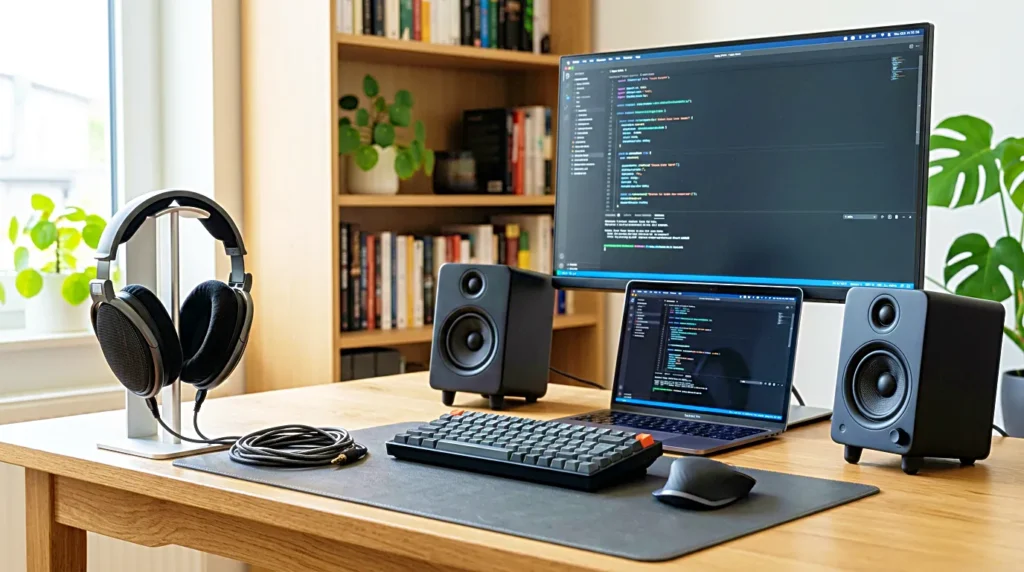
If you work alone in a quiet room, desk speakers may be more comfortable. They keep the ears open, make rain sounds feel like part of the room, and avoid the sealed feeling that some headphones create after long sessions.
Headphones make more sense in shared spaces, offices, cafés, travel, or homes where other sounds cannot be controlled. They are better when isolation is the main problem.
Speakers are better when the room needs a calm background. Headphones are better when the outside world needs to be reduced.
That distinction can save money.
What to check before buying
Before buying noise cancelling headphones for work, I would check five things.
First, the noise type. Steady background noise and nearby voices are not the same problem.
Second, long-session comfort. A headphone that feels good for ten minutes may not feel good after two hours.
Third, pressure and fatigue. Some people feel uncomfortable with strong noise cancelling.
Fourth, transparency mode. If you work around people, this can matter every day.
Fifth, the real use case. If you work alone at home, speakers may solve the problem more naturally.
These checks are less exciting than a product ranking, but they are more useful before spending money.

The quieter purchase
Noise cancelling headphones can help with work. They can make a noisy day softer and create a small private space around the desk.
But they are not magic. The wrong pair can feel heavy, sealed, sharp, or unnecessary. The right pair depends on the kind of noise, the length of the work session, and whether you need isolation or a stable sound layer.
The best work headphones are not the ones that block the most noise.
They are the ones that help you keep working with less friction.
Related FAQ
Check the real use case first. headphone stand should solve a repeated work, focus, recording, or rest problem before specs or discounts decide the purchase.
Check the real use case first. headphones for sleeping should solve a repeated work, focus, recording, or rest problem before specs or discounts decide the purchase.
Often, yes. Room size, desk depth, lighting, noise, and how long the item is used can matter more than a general top rating.
Test it in the actual routine it was bought for. A useful product should make work, focus, recording, or rest easier without needing constant adjustment.
It is a good topic when it connects to focus, creator workflow, desk comfort, sound, or rest. The guide should help the reader choose more calmly.
Before You Go
Paid links- Advertisement -