A white noise machine is easy to like for thirty seconds and much harder to live with at two in the morning. For sleep, the better model is not necessarily the one with the longest sound list. It is the one that can settle quietly into the room, stay dark, and keep running without asking you to reach toward the nightstand again.
That answer changes the way the product page should be read. Maximum volume gives way to small volume steps. A glowing clock may matter more than another rain track, while placement can improve the balance before a more powerful speaker does. The useful features are the ones that disappear with the machine after the lights go out.
If you are still deciding whether steady sound belongs in the room at all, start with how white noise changes a bedroom that feels too quiet. Once that question is settled, choosing a machine becomes less about collecting sounds and more about fitting one sound to one room.
The first test is whether the sound can disappear
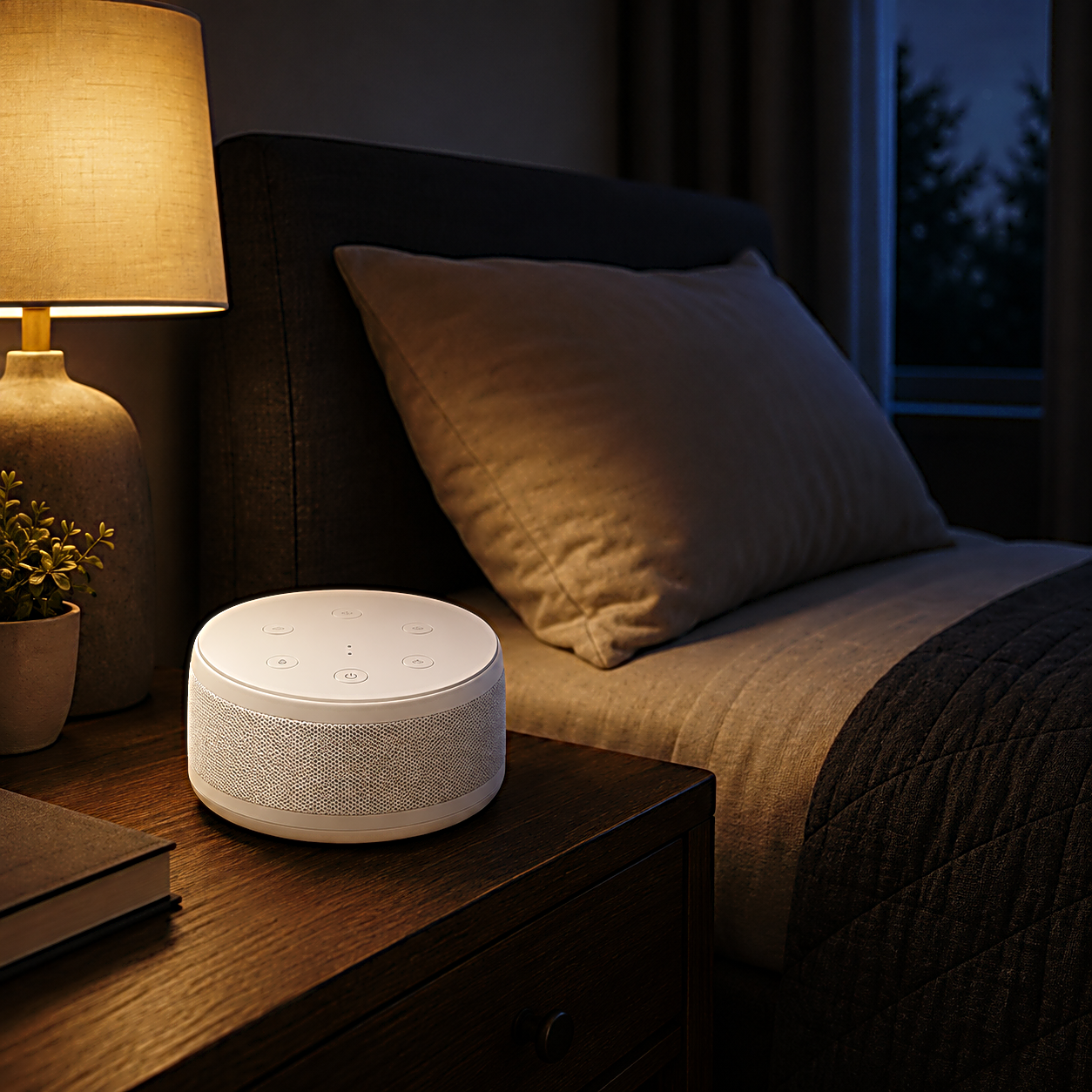
A sleep sound does not have to be impressive. It has to become ordinary enough that passing traffic, a closing door, or water moving through the building no longer arrives as a separate event.
This is why the labels on the sound menu are only a starting point. White noise often feels brighter and more hiss-like. Pink or brown noise may sound lower, while fan sounds replace a broad electronic texture with the familiar movement of air. None is automatically the right choice for sleep; the useful one is the sound you stop following.
The machine itself also changes the character of that sound. A mechanical model moves real air through an adjustable housing and usually stays within a narrower family of fan-like tones. A speaker-based model can offer white, pink, and brown noise alongside rain, waves, and other recordings. The first may suit someone who wants the same neutral sound every night. The second leaves more room to find a tone that fits different rooms.
A short online sample will tell you whether a track is pleasant. It will not reveal whether a raindrop pattern becomes obvious after fifteen minutes or whether a soft hiss begins to feel sharp in a quiet bedroom. Listen long enough for the sound to lose its novelty. If it keeps pulling attention back, the library is large but the usable part of it is small.
Beside the bed, low-volume control becomes the real specification
A white noise machine for sleep needs enough output for the room, but maximum loudness is rarely the setting that decides whether it stays there. The difficult adjustment is usually at the other end.
One setting may be too faint to soften the changes outside the door. The next may make the machine itself the loudest object in the room. Fine volume steps leave more space between those two points, especially when a small nightstand places the speaker close to the pillow.
The aim is not to bury every outside sound under a louder one. It is to lower the contrast enough that each passing sound does not stand alone. Starting low and moving up only as far as the room requires is a more useful routine than choosing a machine for the highest number beside its speaker output.
Controls belong to the same decision. A row of physical buttons can be found by touch; an app usually asks for a bright screen and one more unlocked device. Memory sounds like a minor feature in daylight, yet it removes the same choice from every evening by returning to the sound and level already chosen.
Move the machine before asking the speaker to work harder
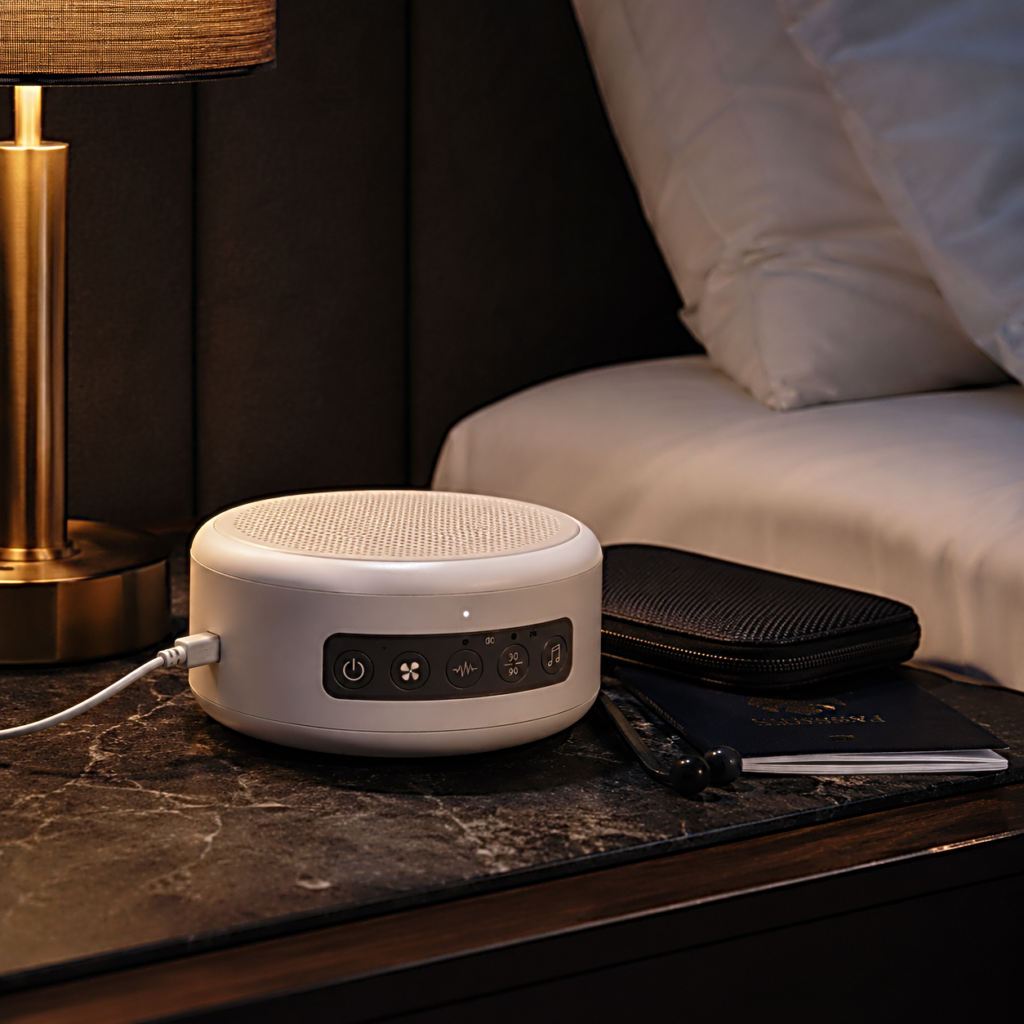
When the volume never feels quite right, placement is the next control. The same setting can feel intrusive beside the head and much calmer from a dresser several feet away.
Where the unwanted noise enters matters as well. If most of it comes through one window or a hallway-facing wall, placing the machine somewhere between that side of the room and the bed can soften the contrast differently from putting it beside the pillow only because the outlet is convenient. Distance allows the sound to spread; direction keeps it from feeling like a small speaker aimed at one ear.
Nearby surfaces can change the result again. A hard corner may make the sound feel concentrated, while an open shelf or dresser can let it sit more evenly in the room. There is no universal best position, but there is an inexpensive test: move the machine before buying a louder one.
Use this order before comparing extra features: room noise, possible placement, lowest useful volume, dark-room controls, playback time, then power.
That sequence also exposes practical limits early. A distant position may require a longer cable or rechargeable power. A close position makes fine volume control more important. The room begins choosing the specification before the product page does.
After the lights go out, light and repetition join the noise
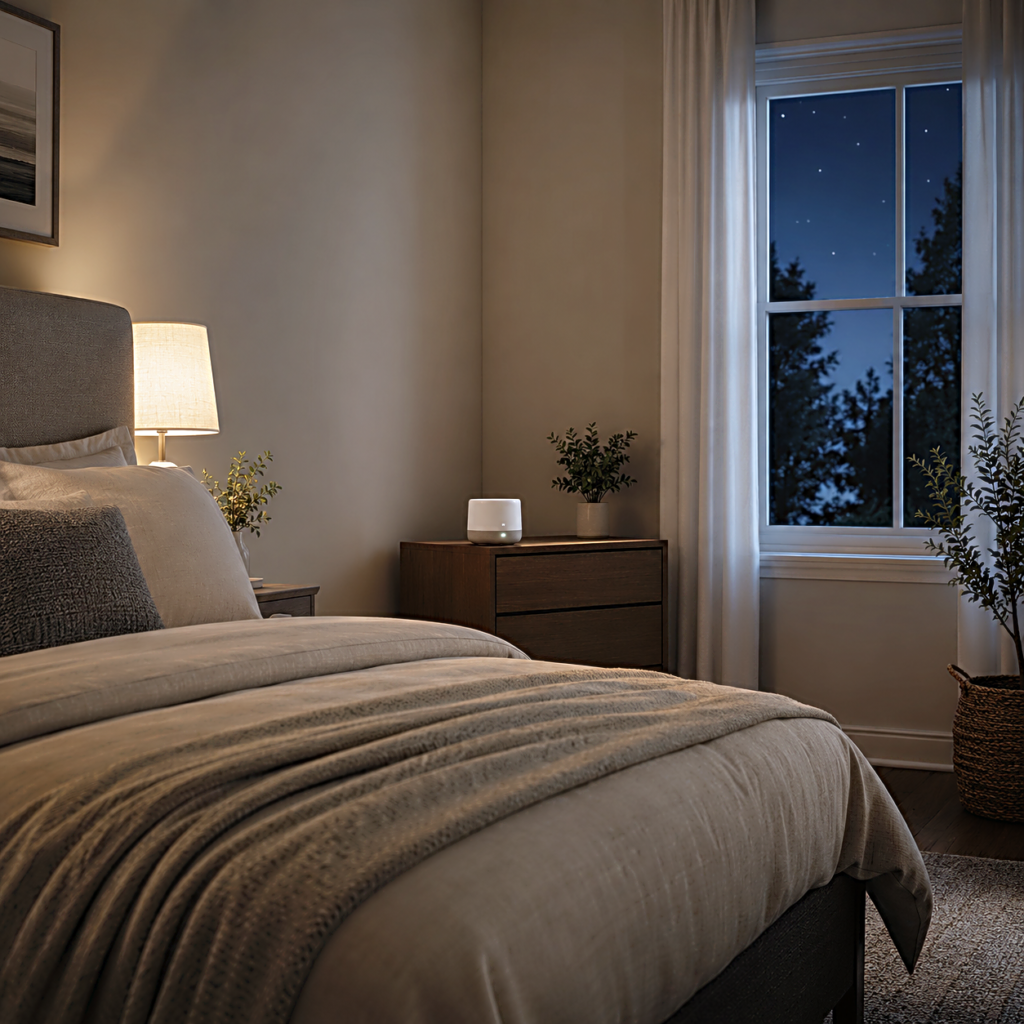
A display that looks restrained in a store photograph can become the brightest point in a dark bedroom. Status LEDs, clocks, touch panels, and charging indicators all remain in the room after the sound has faded into the background.
Look for a display that dims far enough or switches off completely. A built-in night light may earn its space in a child’s room or during a bedtime routine, but it is not an upgrade for someone who wants the room properly dark. Here, the ability to remove a feature matters as much as having it.
Recorded nature sounds need a similar test. Rain, surf, and birds can feel natural at first, then reveal the same splash or swell when the recording loops. Once the pattern is heard, the background has created an appointment: attention begins waiting for the familiar moment to return. Continuous generated noise or a well-made recording with no obvious seam is easier to leave alone.
The timer changes the room in another way. If sound is only part of falling asleep, a short shutoff may fit. If traffic or hallway noise continues all night, the timer removes the steady background while the original problem remains. Continuous play and timed play are not competing luxuries. They answer different nights.
Travel turns a bedroom feature into a power decision
A machine that stays home can live beside the same outlet for years. A portable white noise machine has to work before you know where the hotel socket is, how thin the wall will be, or whether the only flat surface sits next to the pillow.
Rechargeable power becomes useful because it preserves placement when the convenient outlet is in the wrong part of the room. USB charging can remove a separate adapter from the bag, though battery life still needs to match the routine. A timer asks for less endurance than continuous overnight use.
Smaller is not always easier. A compact body packs well, but tiny buttons can be frustrating in an unfamiliar dark room. A slightly larger unit may take more space and still be the better travel companion if its controls are obvious by touch. Portability is not the smallest measurement on the page; it is the fewest problems after check-in.
If the machine will never leave the bedroom, battery size and travel weight can fall away. That money and space may be better spent on finer volume control, a display-off option, or a speaker that sounds smoother from the position available at home. A useful buying guide should remove features as confidently as it adds them.
The right machine leaves nothing else to manage
Return to the first minutes after the lights go out. A car passes, the hallway changes for a moment, and the machine stays where it was placed. Its sound is present without becoming the center of the room. The display is dark. The previous setting has returned. No hand reaches toward the nightstand.
That scene is a better comparison tool than twenty sounds against thirty. A larger library may help you find the right tone, a battery may matter on every trip, and a timer may suit the way you fall asleep. Each feature earns its place only when it reduces attention after the machine starts.
The room will still contain traffic, pipes, doors, and the occasional change beyond the wall. A well-chosen white noise machine does not promise to erase them. It simply stops becoming one more thing you have to manage before sleep.
Related FAQ
Avoid buying from a list before defining the problem. white noise machine should be chosen after the room, desk, workflow, and budget are clear.
Often, yes. Room size, desk depth, lighting, noise, and how long the item is used can matter more than a general top rating.
Often, yes. Room size, desk depth, lighting, noise, and how long the item is used can matter more than a general top rating.
Often, yes. Room size, desk depth, lighting, noise, and how long the item is used can matter more than a general top rating.
Often, yes. Room size, desk depth, lighting, noise, and how long the item is used can matter more than a general top rating.
Before You Go
Paid links- Advertisement -