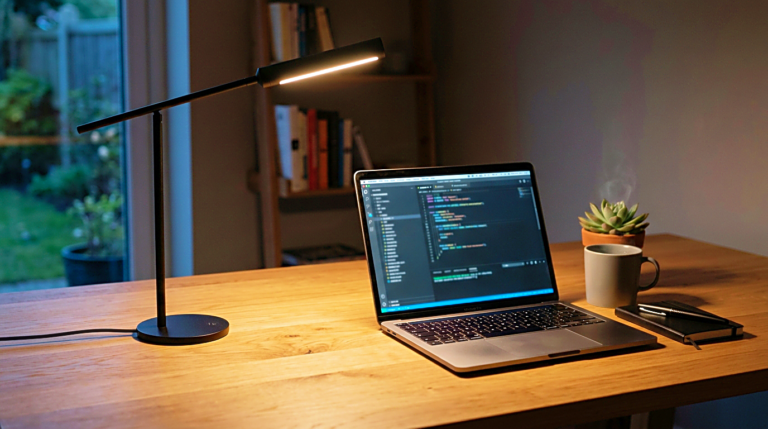
A sunrise alarm clock can look bright enough on a product page and still feel wrong from the pillow. The best sunrise alarm clock for one bedroom is not necessarily the brightest one. It is the clock that can begin quietly, reach the sleeper from the space available on the nightstand, and disappear again when the room is supposed to be dark.
The real test starts before the alarm sound. A low glow appears beside the bed, travels past a headboard or water glass, and builds while your eyes are still closed. If the first step feels like a lamp switching on, or the clock is hidden at the wrong angle, a longer feature list will not repair the morning.
That makes the buying order shorter than it first appears: room darkness, starting brightness, bedside distance, sunrise timing, nighttime display, alarm sound, then schedule and power. Everything else has to earn its place around those conditions.
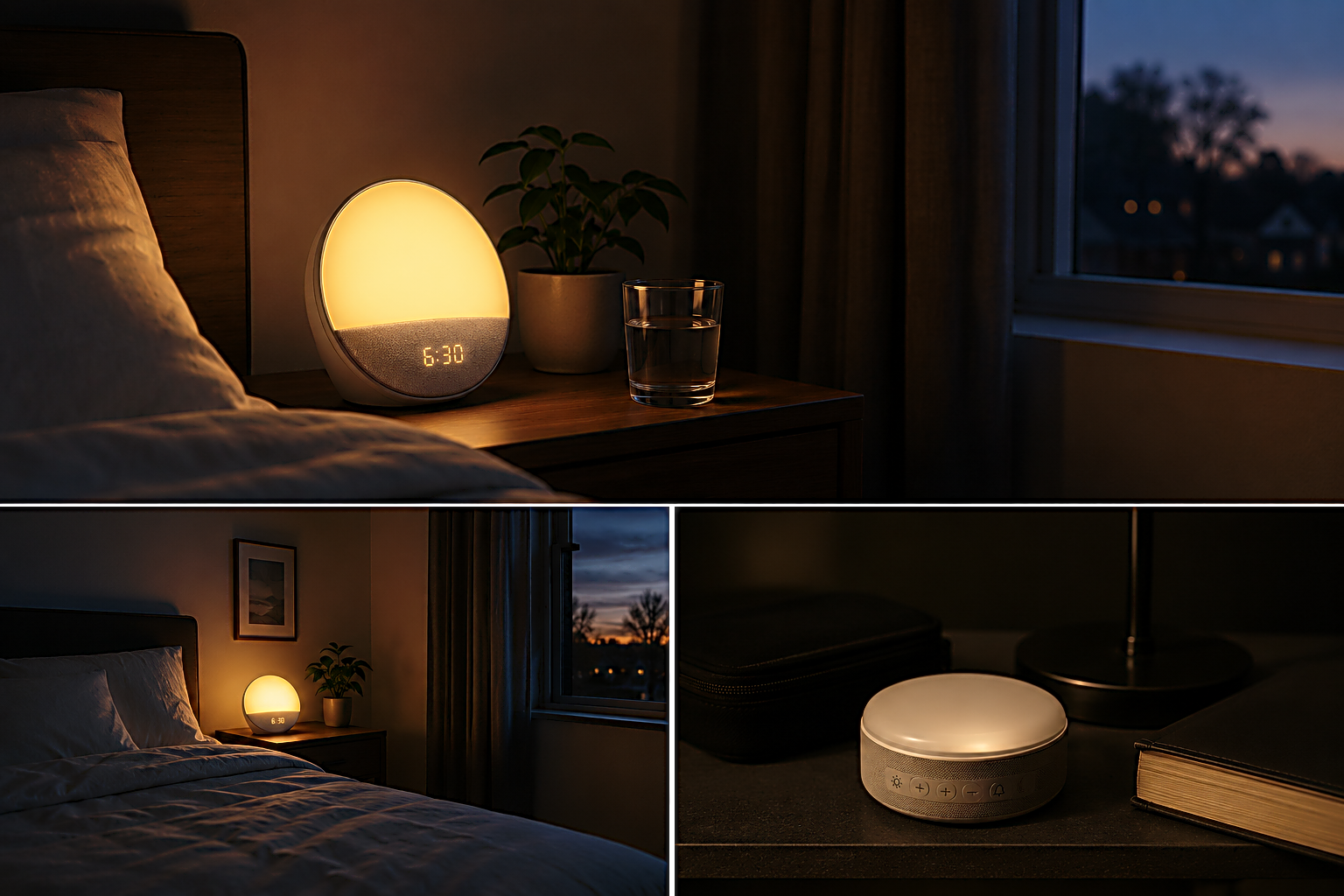
The room decides how much light the clock has to create
A room with blackout curtains gives a sunrise clock nearly the whole job. A room facing east may already be changing by the time the alarm is due, especially in summer. The same clock can feel central in the first room and almost unnecessary in the second.
Look at the bedroom around your normal wake time rather than judging it only at bedtime. Window direction, curtain coverage, season, and work schedule decide how dark the room remains during the final half hour of sleep. Someone waking at 5:30 a.m. may depend on the full light sequence for much of the year. A later sleeper may be buying a clock that competes with daylight several months at a time.
This changes what brightness means. In a nearly black room, the bottom of the range matters because the first visible step should have room to grow. In a room that already receives dawn light, the upper usable range matters more because the clock still has to be noticeable from the bed.
Maximum brightness cannot explain either situation by itself. Light reaches the sleeper from a particular height and distance, against whatever the window is already doing. The room writes the first half of the specification.
A gentle sunrise begins at the bottom of the range
A longer sunrise is not automatically a gentler sunrise. If the lowest setting is already obvious in a dark room, stretching the sequence only makes that obvious light last longer.
The first usable level deserves more attention than the final one. A clock that begins near darkness has space to move from barely present to clearly bright. One that enters halfway up its visual range may wake a light-sensitive sleeper early, even when the advertised sequence lasts thirty or forty minutes.
The transition between levels matters for the same reason. Ten or twenty brightness settings describe the controls, not necessarily the curve. Several small steps can still feel abrupt if most of the visible change happens near the beginning. A simpler clock may feel smoother when the progression itself is better balanced.
Duration then becomes a scheduling choice. A thirty-minute sunrise begins changing the bedroom thirty minutes before the alarm time, including the side of the bed occupied by someone who may not share your schedule. Choose enough time for the light to build gradually, but not so much that the clock starts another person’s morning first.
Distance changes the light before any setting does
A sunrise alarm clock almost never sits directly in front of the sleeper. It stays beside the bed, sometimes below mattress height, partly hidden by a lamp, or angled away by the narrow shape of the nightstand.
That position changes how much light reaches the pillow. A broad illuminated face may remain visible from the side. A directional design can seem much weaker once it moves to the far edge of the table. Turning the brightness higher may compensate, but it also sends more light toward the wall and the other side of the room.
Before opening another comparison page, lie where your head normally rests and look toward the available surface. Estimate the distance and height difference. Check whether a lamp, headboard, phone stand, or water bottle will interrupt the light. Product dimensions matter here because a clock needs enough clear space to face the bed and enough room around its controls to be used without moving everything else.
A shared bedroom makes moderate output more valuable than brute force. If the clock can create a visible change from your side at a middle setting, there is more room to adjust the angle without illuminating the entire room. Distance is not printed as a feature, yet it becomes part of the product every morning.
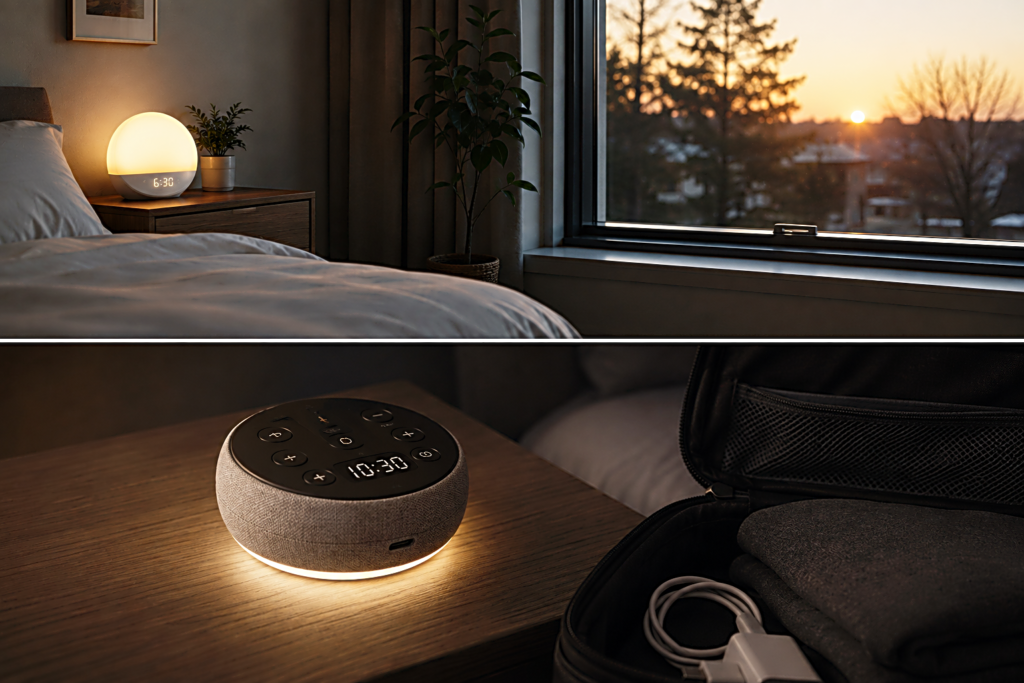
The clock still has to disappear during the night
The sunrise sequence lasts part of the morning. The clock face, status lights, and controls remain beside the bed all night.
A large time display can be useful during the day and distracting after the room goes dark. Dimming helps only when the lowest setting becomes genuinely subtle. A display-off option gives the clearest control, provided the alarm remains armed and the sunrise can begin normally while the clock face is dark.
Small lights deserve the same inspection. Wi-Fi indicators, charging lights, alarm icons, and illuminated buttons may disappear in a bright product photograph. Beside a pillow, one permanent point of light can be easier to notice than the much larger display it was meant to support.
There is a useful compromise between darkness and control. A raised snooze button can be found by touch without remaining lit. Essential status can appear briefly when a button is pressed, then fade. The sunrise should be the first light feature that asks for attention in the morning; the clock does not need to announce itself for the previous eight hours.
Sound, schedule, and power take over when the light is not enough
The light and the audible alarm perform different jobs. The light begins the transition. The sound remains the backup when the alarm time arrives and you are still asleep.
That makes independent volume control more useful than a large sound library. Check whether the alarm starts at full volume or rises gradually, how low its first usable level is, and whether the sound can be changed without rebuilding the sunrise settings. A gentle track is not gentle when its minimum volume is louder than the room requires.
Physical controls matter in the first seconds after waking. A familiar button is easier to find than a touch panel that changes function by mode. Snooze may fit one routine and prolong another, but its location should be deliberate rather than something discovered by pressing across the top of the clock.
Separate alarms become valuable when weekdays and weekends differ, two people share the clock, or work does not begin at the same time every day. Memory matters just as quietly. If the clock retains light level, duration, sound, and volume, most evenings require no new setup. More features are useful only when they remove decisions instead of creating another menu to manage.
Power is the final practical boundary. Confirm what the clock needs for normal operation and what a backup battery actually preserves. Some backup systems keep the time and alarm settings but cannot run the full light sequence without wall power. Cable length and adapter size may be less exciting than color choices, yet they decide whether the clock can stay in the position that made its light useful.
A sunrise clock is built to change waking, not falling asleep. If the unresolved problem is a bedroom where every small nighttime sound stands apart, white noise belongs to a different bedside decision. Keeping those jobs separate prevents one device from being judged by a problem it was not designed to solve.
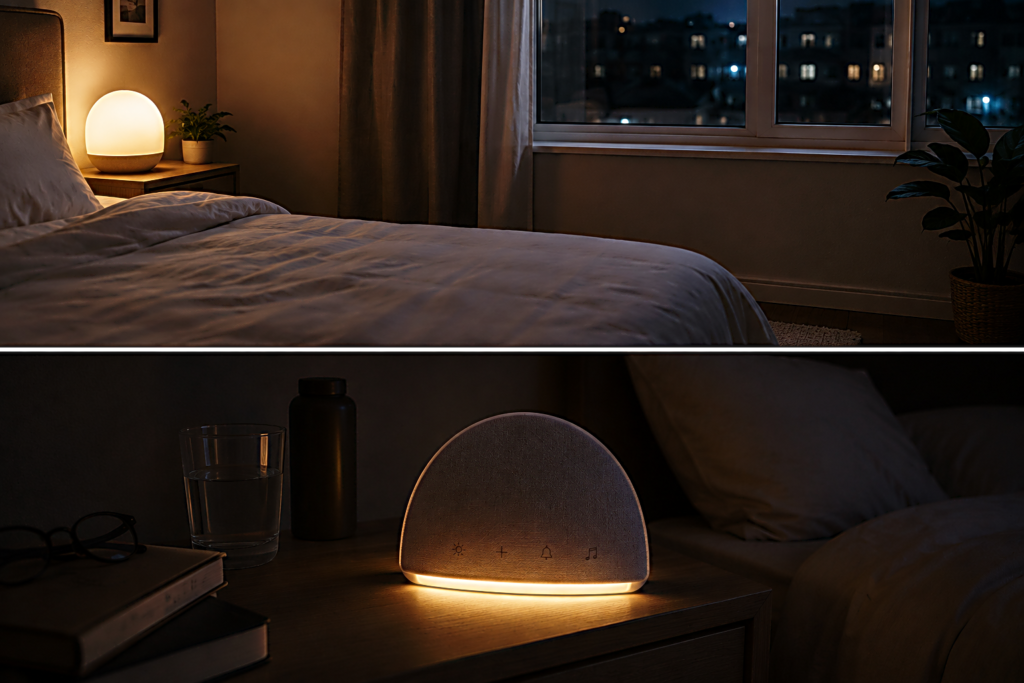
Rehearse two mornings before comparing more clocks
The bedroom can narrow the field before you buy. Use one workday morning and one weekend morning as a paper test. The point is not to simulate the light; it is to expose the settings the room and schedule will actually require.
- Stand beside the bed at your usual wake time and note whether the room is black, dim, or already receiving daylight.
- Mark the only realistic clock position, then look at it from the pillow to judge distance, height, angle, and obstructions.
- Decide when the light may begin without waking a partner or starting the weekend too early.
- Choose whether the nighttime display must dim, disappear, or remain readable across the room.
- Count the alarm schedules used in a normal week and decide whether sound is the main alarm or a backup after the light.
- Confirm the available outlet, cable route, and the exact function of any battery backup.
These answers rearrange the product page. Maximum brightness becomes meaningful only after distance and existing daylight are known. Two alarms matter only when the week contains two schedules. Dozens of sounds fall behind one alarm that begins at a usable volume and stops with a button you can find.
Research on simulated dawn offers promising but not universal results, so no feature list can guarantee an easier morning. The practical goal is narrower: give gradual light a fair chance in the room while keeping a dependable sound alarm for the mornings when light does not finish the job.
The right clock changes the morning without owning the night
Return to the nightstand before dawn. The display is dark, the room remains quiet, and then the first low level of light appears from the position chosen beside the bed. It does not need to flood the room because the distance and angle are already working with it.
The light builds. If it is enough, the morning begins before the sound. If it is not, one familiar alarm takes over at the time you set. The settings stay where they were, the cable reaches the outlet, and another person in the room has not been asked to wake forty minutes early for a feature you never needed.
That is a more useful definition of fit than the brightest lamp or the longest list of sounds. A sunrise alarm clock earns its place when it changes the first minutes of morning and leaves the rest of the bedroom alone.
Related FAQ
Avoid buying from a list before defining the problem. softbox light should be chosen after the room, desk, workflow, and budget are clear.
Price matters, but comfort and fit decide whether best monitor light bar will be used every day. A cheaper item that solves the real problem can be better than a premium product that does not fit the setup.
Often, yes. Room size, desk depth, lighting, noise, and how long the item is used can matter more than a general top rating.
Often, yes. Room size, desk depth, lighting, noise, and how long the item is used can matter more than a general top rating.
Often, yes. Room size, desk depth, lighting, noise, and how long the item is used can matter more than a general top rating.
Before You Go
Paid links- Advertisement -