A quiet room can feel peaceful.
But not always.
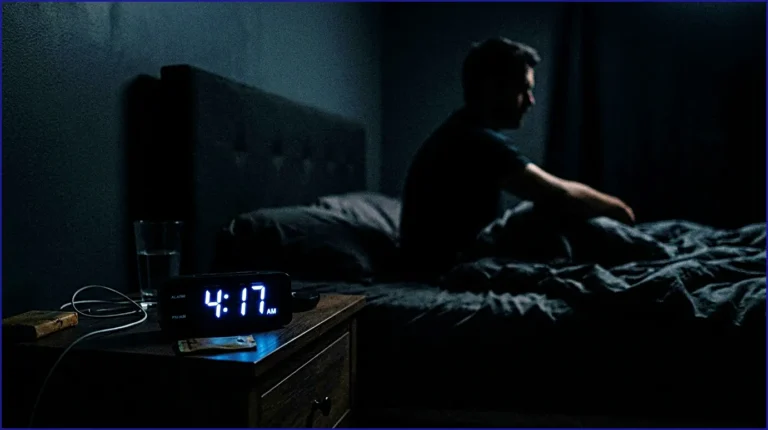
At night, silence can become too open. The room may look calm, but the mind does not always settle with it. Small sounds become clearer. A refrigerator hum, a car outside, a footstep in the hallway, even the space between thoughts can feel sharper than expected.
That is why white noise for sleep can help some people. It creates a steady background where silence used to feel empty. It does not need to be loud. It does not need to be interesting. It simply gives the room one stable layer of sound.
For some nights, that is enough.
Why White Noise for Sleep Can Feel Easier Than Silence
White noise for sleep works best when silence makes the room feel too exposed.
In a quiet bedroom, the mind may keep checking the environment. It notices tiny changes because there is nothing else in the background. One small sound can feel bigger than it really is because it appears against total silence.
White noise changes that contrast. Instead of silence followed by sudden noise, the room has one even background. Small sounds may still happen, but they do not stand out in the same way.
This is the main reason white noise can feel useful at night. It does not erase the world. It softens the edges of the room.
The best white noise should be easy to stop noticing. If it becomes something you keep listening to, it is probably too loud, too sharp, or too close.
White Noise Works Best When It Stays Even
White noise is not meant to entertain you. That is what makes it different from music, podcasts, or detailed ambience.
Music can carry emotion. Podcasts carry words. Even some nature sounds can carry small changes that the mind follows. White noise is more neutral. It gives the room a steady texture without a story.
That can be helpful when the goal is not to feel inspired, moved, or entertained. The goal is to make the night simpler.
But even sound can become too much if the setting is wrong. White noise should stay low enough that it blends into the room. If it feels like a wall of sound, it may create tension instead of comfort.
A sleep sound should not take over the bedroom. It should make the bedroom easier to rest in.
White Noise and Rain Sounds Feel Different at Night
White noise and rain sounds for sleep can both fill silence, but they do it in different ways.
White noise feels even and direct. It can be useful when you want one steady sound with very little variation. Some people like that because there is nothing to follow. It is simple, flat, and predictable.
Rain sounds feel more natural. They have texture and movement. A soft rain track can make the room feel covered without sounding mechanical. For people who find white noise too sharp, rain may feel easier.
Neither one is automatically better.
White noise may work better in a room where small noises keep breaking attention. Rain sounds may work better when the problem is not noise itself, but the feeling of an empty room. One covers. The other softens.
If you are testing this tonight, do not switch sounds every few minutes. Choose one white noise track, set the volume low, and give it a full night or at least one full wind-down session before deciding.
Brown Noise for Sleep May Feel Softer Than White Noise
Brown noise for sleep often feels deeper than white noise.
That difference matters. White noise can feel bright because it has an even, high-texture sound. Brown noise feels lower and heavier. Some people describe it as smoother or warmer because it does not have the same bright edge.
If white noise feels too sharp at night, brown noise may be worth testing. It can create a steady background while feeling less intense. It may also feel easier through small speakers or headphones because the sound is less piercing.
Rain sounds sit somewhere else. They are not as flat as white noise and not as low as brown noise. They feel more like an environment.
That gives you three different directions.
White noise if you want even coverage.
Brown noise if you want a deeper background.
Rain sounds if you want something natural but still steady.
The right choice is the one your mind releases first.
When White Noise Feels Too Sharp at Night
White noise does not help everyone.
For some people, it feels clean and steady. For others, it feels like pressure. It can sound too bright, too close, or too artificial. This often happens when the volume is too high or the speaker is too near the bed.
If white noise feels irritating, the first fix is not to change the whole routine. Lower the volume. Move the speaker farther away. Try a softer sound profile if the app or device offers one.
If it still feels sharp, switch to rain sounds or brown noise. The goal is not to prove that white noise works. The goal is to find a sleep background that makes the room easier to ignore.
A sound that creates tension is not a good sleep sound, even if many people recommend it.
How to Use White Noise Without Making It Distracting
Start with low volume.
White noise should be audible, but not dominant. You should know it is there when you first start it, then slowly stop noticing it. If you keep checking the sound, adjusting it, or thinking about whether it is working, the setup is too active.
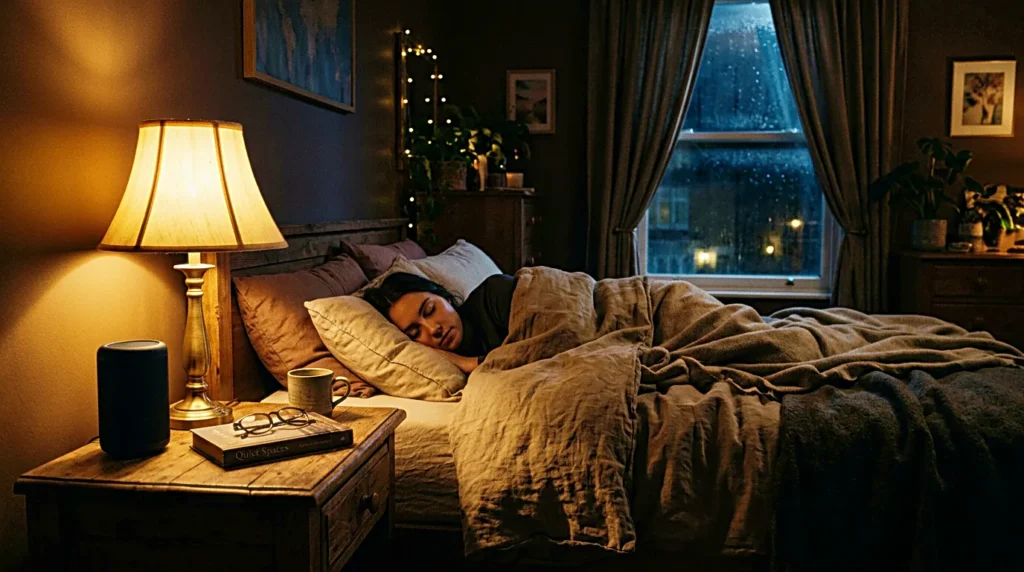
Speaker placement matters too. A phone speaker beside your pillow can make white noise feel thin or sharp. A small speaker placed farther away may feel more natural because the sound becomes part of the room.
A timer can help if you only need white noise while falling asleep. All-night playback can work for some people, but only if the sound remains comfortable and does not wake you later. There is no single setting that fits every room.
The better setup is the one that asks for the least attention.
White Noise Is Useful When the Room Has Small Interruptions
White noise for sleep can be especially helpful when the room is not truly quiet.
Apartment sounds, distant traffic, hallway movement, air conditioners, and small household noises can feel more noticeable at night. White noise may reduce the contrast between those sounds and the room.
This does not mean it blocks everything. Voices, sharp impacts, or very loud sounds may still stand out. But for smaller interruptions, a steady background can make the room feel less jumpy.
That is why white noise is often useful in shared spaces, small apartments, and rooms where silence never stays silent for long.
It gives the night a base layer.
White Noise Should Not Become Another Bedtime Decision
One quiet problem with sleep sounds is choice.
There are too many tracks, too many apps, too many labels, and too many versions of the same sound. White noise, pink noise, brown noise, rain noise, fan sounds, air conditioner sounds, sleep ambience. The search itself can become part of the problem.
A better routine is simpler.
Choose one sound. Keep the volume low. Use it for several nights. Notice whether it helps the room feel easier, not whether it feels perfect.
Perfect sleep audio is not the goal. A repeatable bedtime cue is more useful.
If the same white noise track helps you stop searching, that may matter more than finding a technically better sound.
A Quiet Room Does Not Always Need Silence
Silence is not wrong. Some nights, silence is exactly what the room needs.
But when silence feels too empty, white noise for sleep can make the space feel more stable. It gives small sounds somewhere to disappear. It gives the mind less contrast to react to. It turns the room from open and sharp into something more contained.
White noise is not magic. It does not force sleep. It does not fix every restless night.
But it can make the room easier to be in.
And sometimes that is the first step toward rest.
Related FAQ
It belongs before the work becomes complicated. white noise for studying should make it easier to start, continue, or recover from a session without adding more mental noise.
It belongs before the work becomes complicated. background noise for work should make it easier to start, continue, or recover from a session without adding more mental noise.
Comfort usually decides whether the setup is used consistently. Specs matter, but small room sound should first fit the body, room, and work session.
white noise machine is worth considering when the current setup creates a repeated problem that cannot be fixed by placement, volume, lighting, or a simpler routine.
Check the actual friction first: sound, light, posture, screen distance, or visual clutter. rain sound volume helps only when it solves the part of the workspace that is breaking focus.
Before You Go
Paid links- Advertisement -