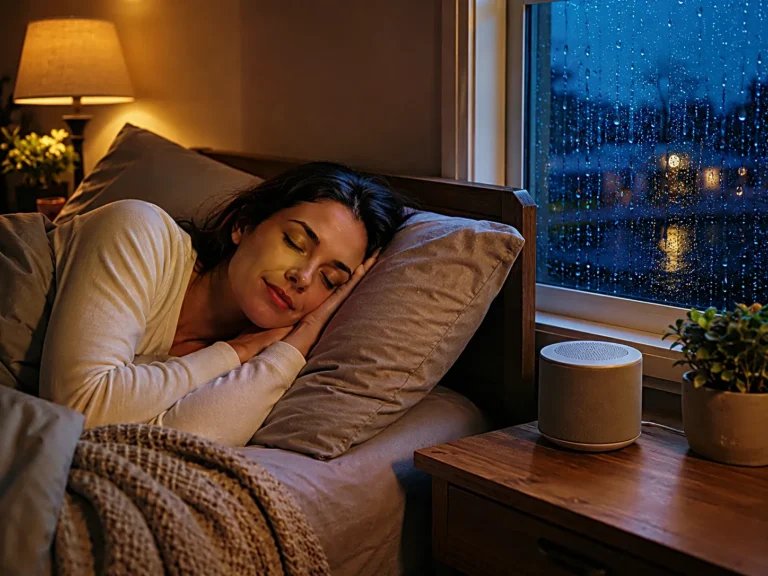
Some sleep sounds feel light.
Some feel deeper.
That difference matters more at night than it does during the day. When the room is dark and the mind is tired, a sound that feels too bright can become hard to ignore. A sound that feels lower and softer may be easier to leave in the background.
That is why brown noise for sleep has become useful for some people. It does not feel like music. It does not sound like rain outside the window. It has a deeper texture than white noise, and for certain rooms, that deeper texture can make the night feel less sharp.
Not everyone needs it.
But if white noise feels too bright, brown noise may be worth testing.
Why Brown Noise for Sleep Can Feel Deeper
Brown noise for sleep feels deeper because it has more low-end weight than white noise.
That is the simplest way to understand it. White noise can feel bright and even. Brown noise feels lower, warmer, and heavier. It does not have the same sharp edge that some people hear in white noise.
At night, that can make a real difference.
A bright sound can keep calling attention to itself. Even when the volume is low, the texture may feel too close to the ear. Brown noise often feels more grounded. It can sit under the room instead of sitting on top of it.
The goal is not to make the sound dramatic. The goal is to make the room feel steadier.
A good sleep sound should not be impressive. It should become forgettable.

Brown Noise Works Best When the Room Feels Too Sharp
Some rooms feel quiet but not calm.
The air conditioner may hum. A pipe may click. Traffic may pass outside. A neighbor may move upstairs. Even without loud noise, the room can feel full of small edges.
Brown noise can help soften that feeling. It creates a low and steady background that may make tiny sounds feel less separate. Instead of hearing silence and then interruption, the room has one continuous layer underneath it.
That layer can make the night feel less empty.
This is why brown noise may work better for people who do not want detailed sound. Rain has texture. Music has movement. Podcasts have words. Brown noise is simpler than all of those.
It gives the room weight without giving the mind a story.
Brown Noise and White Noise Feel Different at Night
Brown noise and white noise for sleep are often grouped together, but they do not feel the same.
White noise is more even across frequencies. To some people, that feels clean and simple. To others, it can feel thin, sharp, or too bright, especially through a phone speaker or headphones.
Brown noise feels lower. It may sound softer because the high edge is less noticeable. That does not mean it is always better. It means the listening experience is different.
White noise may be useful when you need direct coverage for small background sounds. Brown noise may feel better when white noise makes the room feel tense.
If you are testing both, do not judge them at daytime volume. Sleep sounds need to be tested quietly, in the room where you actually sleep. A sound that feels fine at a desk can feel too strong beside a bed.
Choose one sound, lower the volume, and give your ears time to stop noticing it.

Rain Sounds Still Feel More Natural for Some People
Brown noise can feel deep and steady, but it does not feel natural in the same way rain sounds do.
Rain sounds for sleep create a sense of place. They can make a bedroom feel like a protected room beside weather. There is movement, but the movement feels familiar. For many people, that natural texture is part of the comfort.
Brown noise is different. It is less like a scene and more like a background layer. That can be a strength if rain feels too detailed. It can also feel too artificial if you want something that resembles the outside world.
This is the practical difference.
Rain sounds may help when silence feels empty.
Brown noise may help when the room feels sharp.
White noise may help when small interruptions need more direct coverage.
None of them is the universal answer.
The best choice is the one that lets the room disappear first.
When Brown Noise Can Feel Too Heavy
Brown noise is not automatically calming.
For some people, the lower sound can feel too heavy. It may make the room feel closed in, especially if the volume is too high or the speaker has strong bass. What feels soft to one person may feel dense to another.
That is why brown noise should start low.
It should not rumble through the room. It should not feel like a machine is running beside the bed. It should not make the air feel heavy. If the sound has too much pressure, it may create the opposite of rest.
A useful brown noise track should feel smooth, not powerful.
If brown noise feels too heavy, try lowering the volume first. If it still feels uncomfortable, rain sounds or softer white noise may fit better.
Sleep sound is not about choosing the deepest option. It is about choosing the least demanding one.
How to Use Brown Noise Without Making It Too Heavy
The first setting to check is volume.
Brown noise can become overwhelming when it is played too loud. Because it has a deeper feel, it may seem comfortable at first but become tiring later. A low volume is usually safer for sleep.
The second setting is speaker placement. If the speaker is too close, the low texture may feel concentrated. Moving it farther away can make the sound feel more like part of the room.
Headphones need more caution. Brown noise through headphones can feel intense because the sound sits directly around the ears. If you use headphones for sleep, keep the volume low and avoid anything that creates pressure or discomfort.
A timer can also help. Some people only need brown noise while falling asleep. Others prefer a steady sound all night. Both can work, but the sound should never become another thing you have to manage from bed.
The easier setup is usually the better one.
Brown Noise Can Be Useful When the Mind Keeps Scanning the Room
At night, the mind can start scanning.
It listens for small changes. It checks the room. It notices the next sound before you want to notice anything at all. This can happen even when the room is technically quiet.
Brown noise may help by giving that scanning mind less contrast to work with. The room does not move from silence to interruption. It stays under one steady layer.
That layer does not have to be loud. It only needs to be consistent enough that small sounds feel less separate.
This is where brown noise can be helpful. Not because it makes sleep happen, but because it may make the room feel less reactive.
For some people, that is enough to make bedtime feel easier.
Brown Noise Should Not Become a Search Problem
There is a quiet trap with sleep sounds.
You can spend too much time searching for the perfect one.
Brown noise, white noise, rain noise, pink noise, fan sounds, deep sleep sounds, soft sleep sounds. Each label promises a slightly different solution. But the search itself can keep the mind active.
A better approach is simpler.
Choose one brown noise track. Use it at low volume. Try it for a few nights. Notice whether you stop thinking about the sound. If you do, it may be doing its job. If you keep adjusting it, analyzing it, or comparing it with other sounds, it may not be the right fit.
The best sleep sound is not the one you admire.
It is the one you forget.
A Deeper Sound Is Useful Only If It Feels Easier
Brown noise for sleep can feel deeper than white noise. That deeper feeling may help when white noise feels too sharp or when silence feels too empty.
But deeper is not always better.
Some nights need rain. Some rooms need white noise. Some people need silence. Brown noise is one more option, not a rule.
Use it when it makes the room feel softer. Skip it when it makes the room feel heavy. Keep the volume low. Let the sound stay behind the night instead of becoming the night.
Rest usually does not need more sound.
It needs less effort.
And for some people, brown noise is simply the sound that asks for less.
Related FAQ
It belongs before the work becomes complicated. white noise for studying should make it easier to start, continue, or recover from a session without adding more mental noise.
It belongs before the work becomes complicated. background noise for work should make it easier to start, continue, or recover from a session without adding more mental noise.
It should earn its space. On a small desk, brown noise machine needs to reduce friction without adding clutter, cable mess, or another maintenance task.
Comfort usually decides whether the setup is used consistently. Specs matter, but small room sound should first fit the body, room, and work session.
Check the actual friction first: sound, light, posture, screen distance, or visual clutter. rain sound volume helps only when it solves the part of the workspace that is breaking focus.
Before You Go
Paid links- Advertisement -