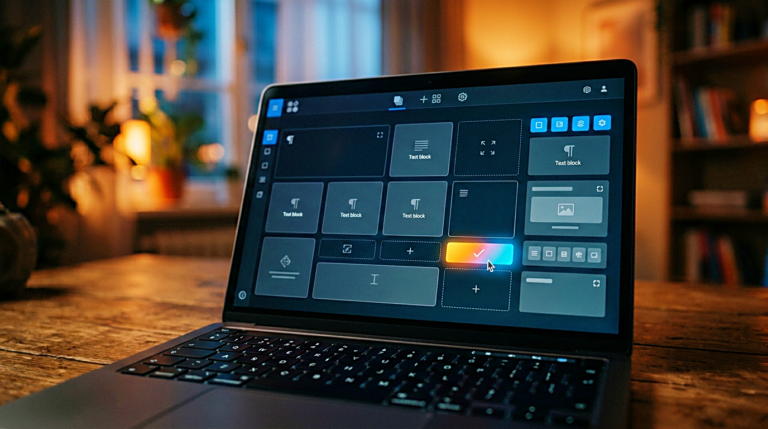
A content calendar looked like the answer.
The blank month was waiting. There were empty boxes for Monday, Wednesday, Friday, and maybe one more post on the weekend. It felt responsible to fill them in. A title here, a topic there, a few ideas copied from old notes, and suddenly the month looked organized.
At first, that felt useful.
Then the calendar started to feel heavier than the work itself.
Some ideas no longer felt right. Some titles were too vague. Some posts needed images that were not ready. Some topics looked good on the calendar but did not fit the site’s direction. The month was full, but the next post still felt unclear.
That is where many creators get stuck.
The problem is not always a lack of ideas. It is often the way the calendar is built. A content calendar should not be a place to decorate the month with possible posts. It should help a creator know what to write next and why that post belongs on the site.
A full calendar is not the same as a useful calendar
A full calendar can look productive.
It gives the creator a sense of control. Every week has a plan. Every slot has a title. Every topic seems to have a place. From the outside, the system looks serious.
But a full calendar can still be weak.
If the ideas are not connected to search intent, site direction, reader problems, or the creator’s real publishing pace, the calendar becomes another list of unfinished promises. It looks organized, but it does not make the next post easier to write.
For solo creators, that matters. There is no team to absorb a bad plan. If the calendar is too ambitious, the creator feels behind. If the topics are too random, the site loses shape. If the schedule is too strict, the work starts to feel like a task board instead of a publishing rhythm.
A useful content calendar should do less at first.
It should make the next decision easier.
The next post matters more than the full month
Before filling the whole month, it helps to choose the next post clearly.
That sounds small, but it changes the calendar. A creator does not publish the whole month at once. The work happens one post at a time. One idea becomes a title. One title becomes a draft. One draft becomes an article. One article becomes part of the site.
When the next post is unclear, the calendar becomes decoration.
The creator may spend time moving titles around, changing dates, and building a plan that looks better than it feels. But when it is time to write, the same hesitation returns. Which post should come first? Which one fits the site now? Which one helps the reader most? Which one is realistic this week?
A content calendar should answer those questions before it fills the month.
A content calendar for creators works best when it makes the next post obvious, not when it fills every empty date.
That is the standard I would keep.
The calendar should begin with reader problems
A good content calendar does not begin with random topics.
It begins with repeated reader problems.
For a creator website, those problems may be simple. The reader wants to choose better tools. They want to publish with less hesitation. They want to organize drafts. They want to understand SEO without turning the article into a keyword list. They want a workflow that still works when they are tired.
Those problems are stronger than topic ideas because they can produce many useful posts. One problem can become a checklist, a workflow guide, a mistake article, a comparison, a buying guide, or a quiet standard for choosing what to do next.
If the calendar starts with topics only, the site can become scattered. One day it is AI tools. Another day it is productivity. Another day it is a random app. Another day it is a broad writing tip. Each post may be fine alone, but the site does not build a clear shape.
A calendar built around problems is different.
It gives the site a center.

The topic should fit the site before it fits the date
A date can make a topic feel urgent.
But the date should not be the main reason a post exists.
This is a common trap. A creator sees an empty calendar slot and starts looking for something to fill it. The question becomes “What can I post on Thursday?” instead of “What should this site publish next?” That small shift can weaken the whole content system.
A post should fit the site before it fits the date.
If the site is about creator tools, workflows, focus, and publishing systems, the calendar should keep returning to those areas. A topic may be interesting, but if it does not support the site’s direction, it may not belong in the next slot.
This does not mean every post has to sound the same.
It means every post should feel connected to the same larger world. The reader should be able to move from one article to another without feeling like they entered a different website.
A content calendar protects that consistency.
It keeps the creator from filling the month with ideas that only looked good for a moment.
Search intent should shape the order of posts
A calendar is not only about dates.
It is also about order.
Some posts should come before others because they explain the foundation. Some posts should come later because they need related articles around them. Some posts are broad and can support many future posts. Others are narrow and work better after the site already has a clear cluster.
For example, a broad post about content creation workflow can come before a narrower post about a publishing checklist. A post about blog post structure can support a later post about SEO checks. A post about AI productivity tools can prepare the reader for a post about a creator tool system.
This is where search intent helps.
If the reader is searching for a broad workflow, they may want a guide that explains the whole path. If they are searching for a checklist, they may be closer to publishing and need a practical final check. If they are searching for a specific tool, they may need a decision standard rather than another long explanation.
The calendar should respect those stages.
It should not only ask what topic is next.
It should ask what the reader is ready to understand next.
A smaller calendar is easier to trust
A content calendar can become too large very quickly.
A creator may plan thirty posts in one sitting. The ideas feel fresh, the energy is good, and the month looks full. But a few days later, the plan starts to feel distant. The creator no longer remembers why some posts were chosen. Some titles feel weak. Some topics seem too broad. Some dates feel unrealistic.
That is why a smaller calendar is often better.
For solo creators, a two-week plan can be more useful than a full month. Four to six planned posts may be enough. The calendar stays close to the current direction of the site. The creator can still adjust based on what was published, what felt strong, and what the next article needs.
A smaller calendar also reduces guilt.
The goal is not to prove that the creator has many ideas. The goal is to make publishing easier to continue. A calendar that feels possible is better than one that looks impressive and quietly becomes impossible.
A useful calendar should create movement, not pressure.
The calendar should separate ideas from commitments
Not every idea deserves a date.
This is another place where a content calendar can become heavy. When every idea is placed on the calendar too early, the creator turns possibilities into commitments. Then the calendar feels full, but not stable.
A better system separates ideas from scheduled posts.
The idea list can stay open. It can hold rough topics, title fragments, keyword notes, image directions, and small observations. It is allowed to be messy because it is not a promise yet.
The calendar should be more selective.
Only the posts that are ready to move forward should receive a date. That means the topic fits the site, the search intent is clear, the title direction is close enough, and the creator knows why the post should come next.
This separation makes the calendar calmer.
Ideas can keep growing without turning into pressure. Scheduled posts can stay focused because they have already passed a simple decision point.
The title should be tested before the date is fixed
A topic can look good until it needs a title.
That is why title testing should happen before the calendar becomes final. If a creator cannot write a clear working title, the topic may not be ready for the schedule yet. It may still need a sharper angle, a clearer reader problem, or a more specific promise.
The title does not need to be perfect.
But it should be strong enough to guide the draft. It should include the main topic naturally. It should tell the reader what the post helps them see or decide. It should not be so broad that the article tries to cover everything.
This step saves time later.
A weak title can make the writing process slower because the article does not know what to become. A clear working title acts like a small editor. It keeps the post close to the reader’s reason for clicking.
Before fixing the date, I would ask one question.
Can this topic become a title that I would actually write?
If not, it belongs in the idea list, not the calendar.
The image direction should be considered early
Images do not need to be finished before a post is scheduled.
But the image direction should be possible.
This matters for a visual creator site. A topic may be strong, but if the visual direction is unclear, the final publishing step can become slow. The creator may finish the draft and then spend too much time trying to find or make an image that belongs.
A simple image note can help.
For each scheduled post, the calendar can include one visual direction: quiet desk, laptop with notes, creator reviewing a draft, checklist on paper, screen with workflow board, night workspace, or calm publishing setup. The image does not need text. It only needs to support the article’s feeling and topic.
This keeps the post from becoming disconnected at the end.
When the title, topic, and image direction are aligned early, the article feels more complete before writing even begins.
A content calendar should not only plan words.
It should also leave a small place for the page the reader will see.

The publishing rhythm should match real energy
A calendar should be honest about energy.
This is easy to overlook. A creator may plan as if every week will be the same. But some weeks are full. Some drafts are harder. Some images take longer. Some posts need more thinking before they become clear.
If the calendar ignores that, it becomes a source of pressure.
A better publishing rhythm starts with what the creator can repeat. One strong post a week may be better than three rushed posts. Two focused posts may be better than five scattered ones. The right rhythm is not the fastest one. It is the one that can continue without breaking the quality of the site.
The calendar should also leave space for updates.
As the site grows, older posts may need better images, cleaner meta descriptions, improved titles, or stronger structure. If every date is filled with new posts, there is no room to make the site better.
A good content calendar plans publishing.
A better one also protects maintenance.
The calendar should leave a trail after publishing
The calendar should not end when the post goes live.
After publishing, the creator should be able to look back and understand what happened. Which topic was published? What was the final title? What slug was used? What image files were added? What category was chosen? What should come next?
This trail becomes useful as the site grows.
It helps avoid repeating the same idea too closely. It helps future planning. It helps updates. It helps the creator see which topics are building a cluster and which ones are drifting away from the site’s direction.
A calendar without a publishing trail is only a plan.
A calendar with a trail becomes part of the content system.
That difference matters for solo creators because memory is not a reliable system. The more posts a site has, the harder it becomes to remember why each one was created and how it should connect to the next.
The calendar should carry that memory.
A good calendar makes tomorrow easier
A content calendar does not need to be complicated.
It does not need a large dashboard, color-coded categories, ten status labels, or a full month of perfect topics. Those things can look useful, but they can also become another project before the writing starts.
A good calendar does something quieter.
It helps the creator know what the next post should be. It keeps ideas separate from commitments. It checks whether the topic fits the site. It makes space for search intent, title direction, image direction, and real publishing energy.
That is enough.
The point is not to control the whole month.
The point is to make tomorrow’s writing less uncertain.
A creator can always adjust the plan. Topics can move. Titles can change. Dates can shift. But the calendar should still protect the main path: what problem the site is answering, what post should come next, and what the reader will get from it.
A full calendar can look productive.
A clear calendar helps the work continue.
For a solo creator, that matters more.
Related FAQ
content publishing checklist helps when it makes the next article easier to plan, publish, or connect internally. The value is not the tool itself, but the clarity it adds to the site structure.
post launch checklist helps when it makes the next article easier to plan, publish, or connect internally. The value is not the tool itself, but the clarity it adds to the site structure.
It should become its own article when the reader has one clear question that cannot be answered well inside another post. Otherwise, it may work better as a section or FAQ.
It matters because a post can look complete while still missing its job. blog post outline helps check whether the article actually gives the reader a reason to keep reading.
It should become its own article when the reader has one clear question that cannot be answered well inside another post. Otherwise, it may work better as a section or FAQ.
Before You Go
Paid links- Advertisement -