The Illusion of Productivity
The setup is familiar. You open your laptop, put on your headphones, and hit play on a 24/7 Lofi Hip Hop stream. The chill beats wash over you. You feel aesthetically productive. Ready to conquer the chapter.
But let’s look at the brutal reality. An hour passes. You suddenly realize you have read the exact same paragraph about microeconomics four times. You understand the individual words. Yet, the actual meaning slips right through your fingers.
You rub your eyes. You feel a heavy fog in your mind, convinced you are just exhausted or that the subject is simply too difficult.
You are completely wrong. Your intelligence is fine. The music is the problem.

The Biology of Pattern Recognition
We need to talk about cognitive bandwidth. Even if the music has no lyrics, it still has a fundamental structure. A melody. A chord progression. A beat.
The human brain is the most advanced pattern-recognition machine on Earth. When you play an instrumental track, your auditory cortex cannot simply “ignore” it. Subconsciously, it actively tracks the rhythm. It anticipates the next snare hit. It processes the melody.
This background processing quietly steals up to 30% of your working memory. It hijacks the exact cognitive energy you desperately need to solve a complex math equation or comprehend legal jargon, and wastes it on tracking a drum loop. You are forcing your brain to multitask. And biologically speaking? The human brain is terrible at multitasking.
The Acoustic Eraser (The Cure)
If you want to read, analyze, and memorize at the highest possible level, you must strip away the rhythm.

You don’t need a melody. You need an acoustic eraser. Enter Deep Brown Noise.
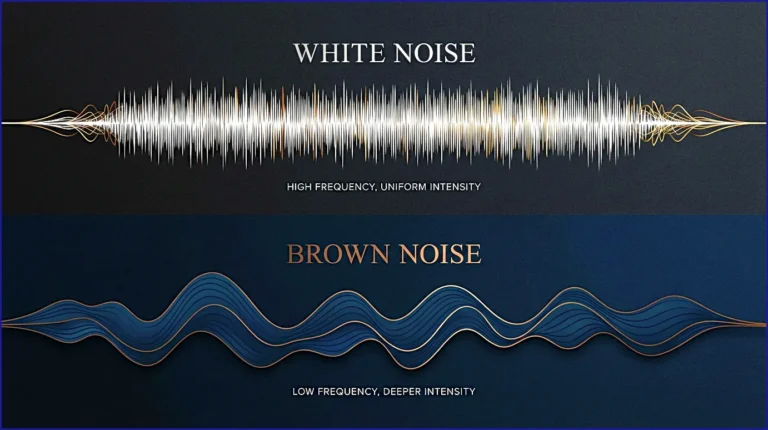
It has no pattern. No beat to predict. No melody to follow. Within minutes of listening, your brain realizes there is zero linguistic or musical data to decode. It completely stops analyzing the audio. The heavy, continuous frequency effortlessly masks the distracting sounds of the library, but it demands absolutely zero cognitive processing in return.
Your working memory returns to 100% capacity. This is the biological secret to studying for four hours straight without burning out.
Most premium headphones are built for phone calls. Not cognitive isolation. Throwing money at popular brands is a costly illusion. You need a fortress, not just a speaker.
→[Read: The $400 Mistake – Why premium gear might be ruining your focus]
Related FAQ
The quiet mistake is buying for the ideal desk instead of the real room. A useful setup starts with how the space sounds, feels, and behaves during actual work.
It should earn its space. On a small desk, noise cancelling headphones for focus needs to reduce friction without adding clutter, cable mess, or another maintenance task.
It belongs before the work becomes complicated. background noise for work should make it easier to start, continue, or recover from a session without adding more mental noise.
Check the actual friction first: sound, light, posture, screen distance, or visual clutter. rain sounds for studying helps only when it solves the part of the workspace that is breaking focus.
Comfort usually decides whether the setup is used consistently. Specs matter, but headphones for sleeping should first fit the body, room, and work session.
Before You Go
Paid links- Advertisement -