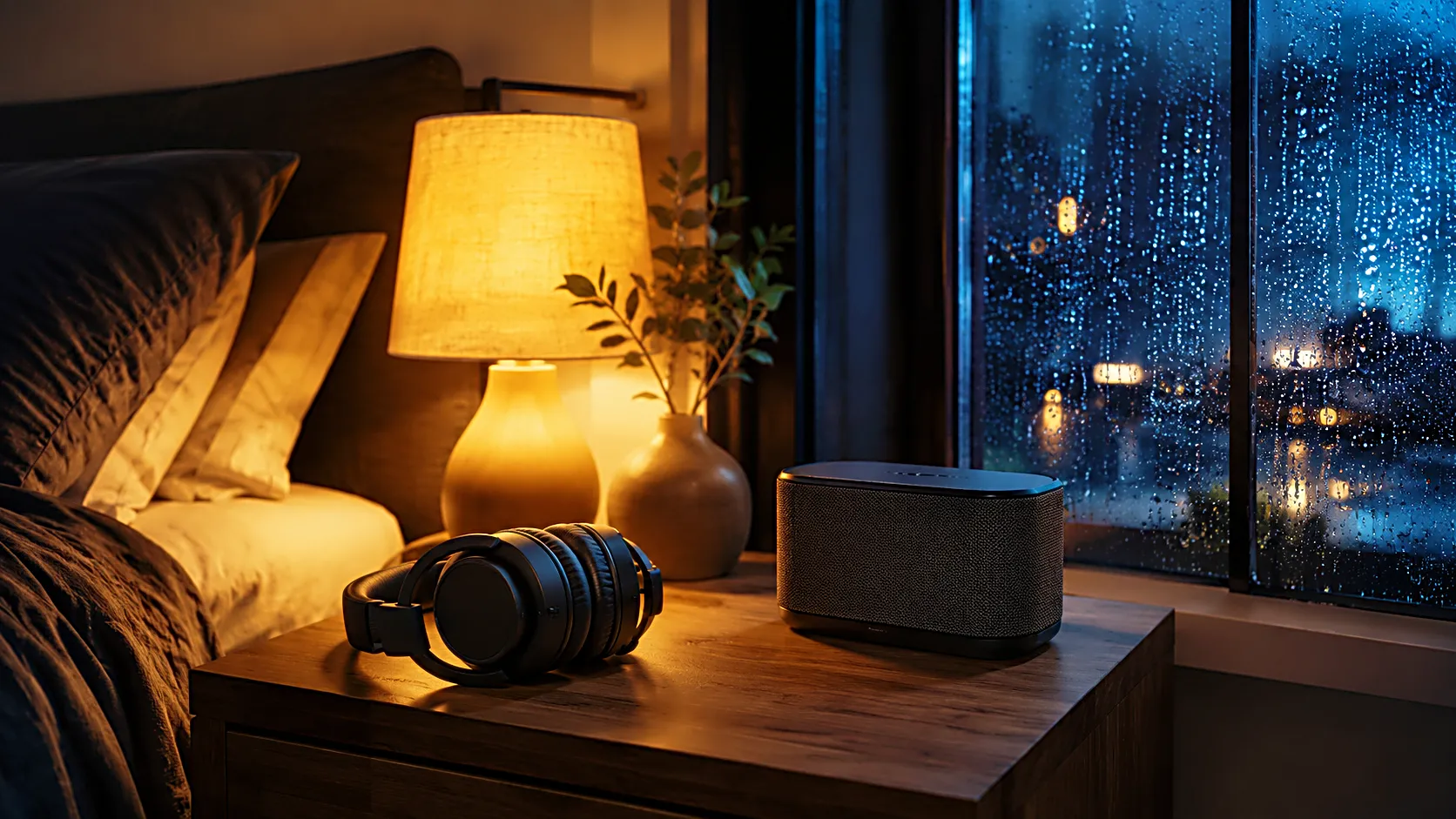
Rain sounds can feel different depending on where they come from.
A phone beside the pillow. A speaker across the room. Headphones close to the ear.
Same rain. Different room.
That difference matters more than people think.
The real question is not sound quality
Most people ask: which sounds better?
For sleep, that is not always the best question.
A better question is this: which setup helps me forget the sound?
For sleep, the sound should support the room. It should not become something you keep adjusting. The best setup is usually the one that feels comfortable, stable, and easy to leave alone.
Headphones and speakers can both work. But they solve different problems.
When headphones make sense
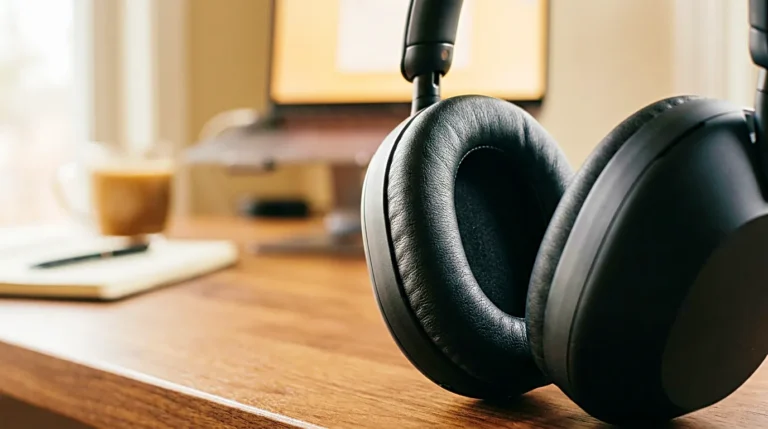
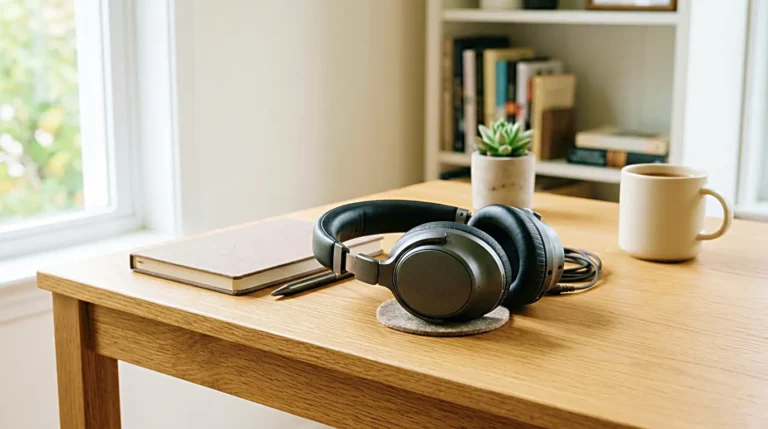
Headphones are useful when you need privacy.
Maybe the room is shared. Maybe outside noise is close. Maybe a speaker would disturb someone else. In those cases, headphones can place the rain directly around you.
That can feel comforting. Especially if the sound is soft and steady.
But headphones also have limits. Some people feel pressure around the ears. Some notice cable movement. Some cannot sleep comfortably on their side. Others wake up because the device shifts during the night.
Headphones may be better for short rest sessions, naps, travel, shared rooms, and evening wind-down before sleep.
For full overnight use, comfort becomes the main issue. Not audio quality.
When speakers make sense
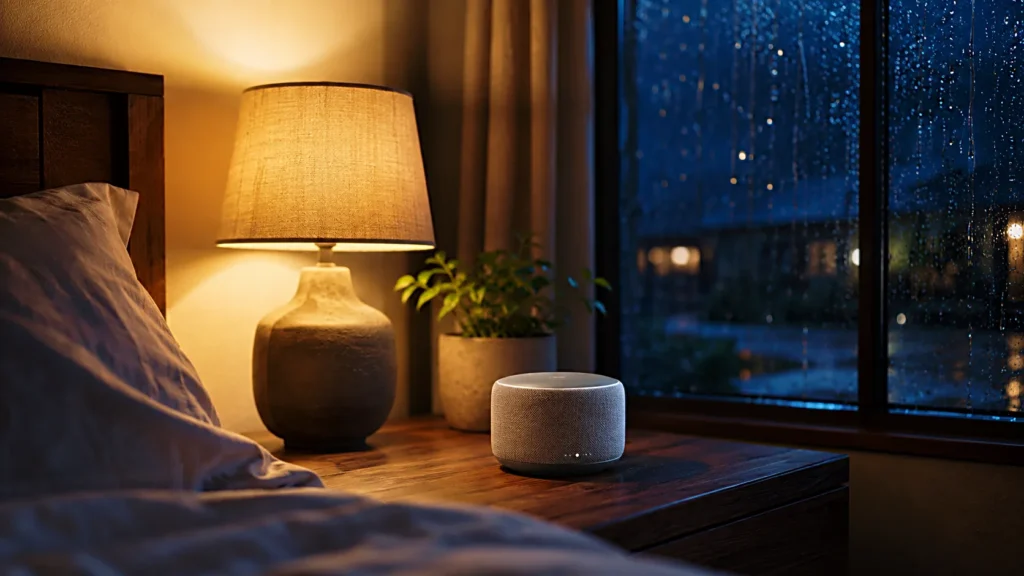
Speakers make the room feel more natural.
The rain is not inside your ears. It is in the space. It sits near the window, desk, or bedside table. This often matches the CalmSori feeling better: rain outside, peace inside.
A small speaker can also be easier to leave alone. No pressure on the head. No battery case in the bed. No ear discomfort after a few hours.
The downside is that speakers do not isolate you as much. If outside noise is sharp, the speaker may need to be louder. If someone else shares the room, it may not be practical.
Speakers are usually better for bedroom routines, desk focus sessions, long background listening, and people who dislike wearing devices in bed.
They work best when placed slightly away from the pillow. Not too close. Not too loud.
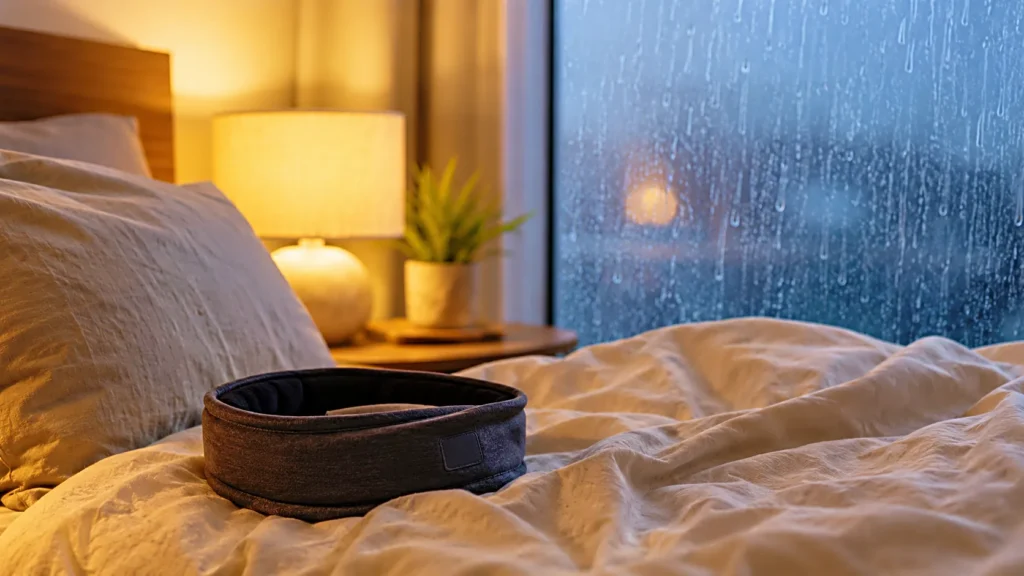
What about sleep headphones?
Sleep headphones sit between the two.
They are designed to be softer than regular headphones, often with a headband or flat speaker design. For some people, they are more comfortable than earbuds. For others, they still feel too warm or restrictive.
The only way to judge them is by comfort over time. Not by a product photo.
Ask: Can I lie on my side? Does it feel warm after 30 minutes? Can I control the volume easily? Will it stay comfortable if I wake up at 4AM?
If the answer is no, even good sound will not matter much.
Sound quality for rain is different from music
Rain sounds do not need powerful bass. They do not need sharp treble either.
For sleep, the best sound is smooth. Gentle high frequencies. No harsh hiss. No booming low end. No sudden volume jumps. The sound should feel like a soft layer behind the room.
If headphones make the rain feel too close, lower the volume. If a speaker makes the rain feel too distant, move it slightly closer.
Small changes matter. You are not building a studio. You are building a room you can rest in.
A practical way to choose
Start simple.
If you already have a small speaker, try it first. Place it across the room or near the bedside window area. Keep the volume low for a few nights.
If your room is shared or noisy, try soft headphones or sleep headphones.
If both work, use them for different moments. Speaker for the bedroom. Headphones for travel or shared space. Phone speaker only when testing.
That is a practical way to choose without buying too much too soon.
A quieter buying standard
The best product is not the one with the biggest sound.
It is the one you stop noticing.
For rain sounds, comfort beats power. Smoothness beats loudness. Routine beats novelty.
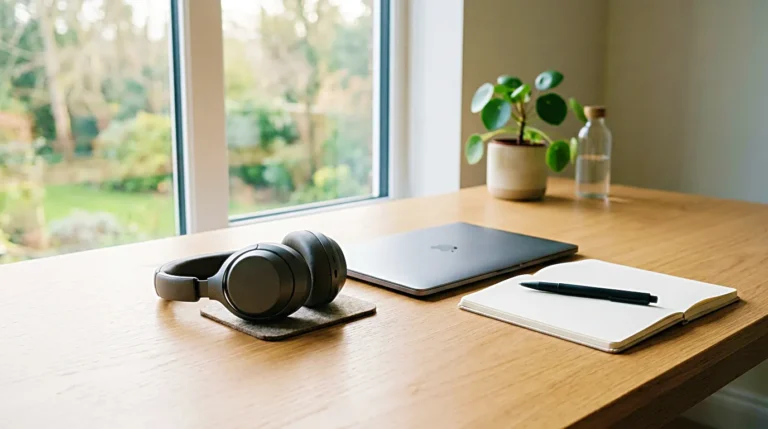
For solo sleep in a quiet room, start with a small speaker. For shared rooms or travel, use comfortable sleep headphones. For focus work, a desk speaker or light headphones both work depending on how much separation you need.
That is enough.
Rain should not become another decision. It should help the room disappear.
Read more: What Makes a Speaker Good for Rain Sounds? · Sound Picks · Best Picks
Related FAQ
Price matters, but comfort and fit decide whether Bose headphones will be used every day. A cheaper item that solves the real problem can be better than a premium product that does not fit the setup.
Avoid buying from a list before defining the problem. budget headphones should be chosen after the room, desk, workflow, and budget are clear.
Check the real use case first. headphone stand should solve a repeated work, focus, recording, or rest problem before specs or discounts decide the purchase.
Check the real use case first. headphones for sleeping should solve a repeated work, focus, recording, or rest problem before specs or discounts decide the purchase.
It is a good topic when it connects to focus, creator workflow, desk comfort, sound, or rest. The guide should help the reader choose more calmly.
Before You Go
Paid links- Advertisement -