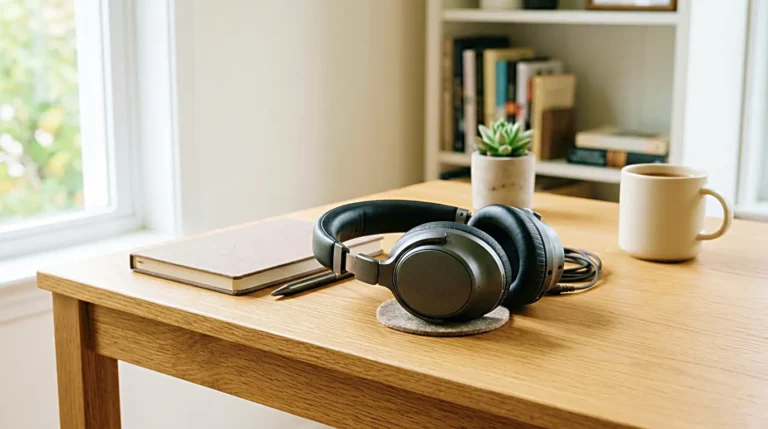
Noise cancelling headphones for work sound like an easy decision.
The room is noisy. The work needs focus. The headphones promise quiet.
That promise is attractive because work noise rarely feels like one big problem. It arrives in pieces. A conversation nearby. A chair moving. A phone alert. A laptop fan. A meeting starting in the next room. None of it is dramatic, but all of it keeps pulling attention away.
Noise cancelling headphones can help.
But work is not the same as travel, music, or sleep. A headphone that blocks sound well may still feel wrong after three hours at a desk. A model that feels great for music may be uncomfortable during calls. A strong noise cancelling mode may lower the room but make the workday feel too sealed.
For work, the best quiet is not always the strongest quiet.
It is the kind of quiet you can actually use all day.
Work Headphones Should Start With the Type of Noise
Before choosing noise cancelling headphones for work, the first question is not the brand.
It is the noise.
Work noise comes in different forms. Steady noise is one kind. Voices are another. Sudden interruptions are another. Home noise, office noise, café noise, and travel noise do not behave the same way. A headphone that works well in one environment may feel less useful in another.
Steady background noise is usually easier to reduce.
Air conditioning, distant traffic, fans, and low room hum are the kinds of sounds noise cancelling headphones often handle well. They make the room feel flatter. The sound does not disappear completely, but it becomes less demanding.
Voices are different.
The mind is built to notice speech. Even when the volume is lower, words can still pull attention. That is why work noise cancelling headphones should be judged by the kind of distraction you face most often, not only by the strongest noise blocking claim.
The right headphone starts with the room you actually work in.
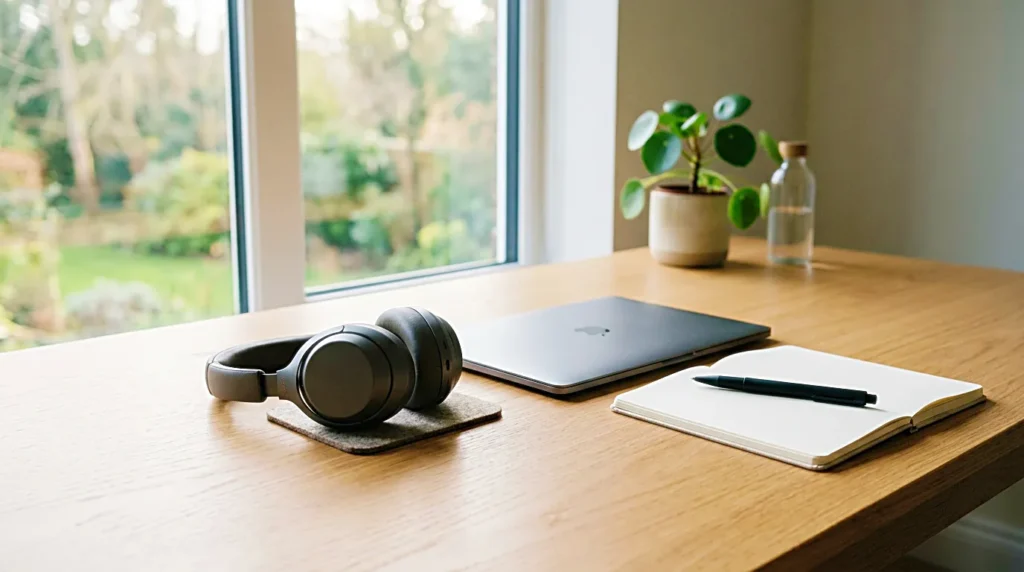
Office Voices Are Different From Background Noise
Office voices can break focus faster than steady sound.
The problem is not always loudness. It is meaning. When people talk nearby, the brain tries to follow parts of the conversation. A few words are enough to interrupt writing, reading, editing, or planning.
Noise cancelling headphones can reduce office voices, but they may not remove them fully.
That does not mean they are useless. Reducing sharpness can still help. A voice that felt close may feel farther away. A busy office may feel less crowded. The work may become easier to restart after a small interruption.
But the expectation should be realistic.
If your main problem is nearby speech, you may need more than active noise cancelling. Low-volume brown noise, soft rain sounds, or instrumental background audio can sometimes help cover the remaining speech layer. Some people also use transparency mode between deep work sessions so the day does not feel too closed.
For office work, the goal is often not silence.
The goal is fewer moments where the room takes over.
Comfort Decides Whether You Can Wear Them All Day
Noise cancelling headphones for work are not tested in five minutes.
They are tested across the day.
A headphone can feel comfortable at first and become heavy later. The ear pads can feel soft and then warm. The clamp can feel secure and then tiring. The headband can feel fine for one meeting and distracting after the second one.
This is why comfort should sit near the top of the buying decision.
Strong noise cancelling does not matter if you keep taking the headphones off. Premium sound does not matter if pressure builds around the ears. A large earcup may block better, but it can also feel bulky during long writing or editing sessions.
For work, the best headphone is the one you can stop thinking about.
That does not always mean the lightest model. It means the pressure, weight, heat, and controls do not keep asking for attention. If the headphone becomes another thing to manage, it has failed part of its job.
Work headphones should protect focus without becoming the new distraction.

Calls Change the Buying Decision
Calls make work headphones more complicated.
If you only need focus, noise cancelling and comfort may be enough. But if you spend time in meetings, the microphone matters. So does sidetone, call clarity, connection stability, mute control, and how the headphones handle switching between a laptop and phone.
A good work headphone should make calls feel less awkward.
The microphone should not make your voice sound distant. The controls should be easy to find without looking. The connection should not jump between devices at the wrong moment. The mute button should be reliable enough that you do not think about it during a meeting.
This is where some music-focused headphones become less ideal for work.
They may sound excellent, but the microphone may be average. They may block noise well, but the call controls may feel too hidden. They may have touch gestures that are convenient for music but annoying during meetings.
If calls are part of your workday, do not judge headphones only by noise cancelling strength.
Judge them by how calmly they handle the workday.
Transparency Mode Matters More Than It Seems
Full noise cancelling is useful, but work often needs awareness too.
That is where transparency mode matters.
In an office, you may need to hear someone calling your name. At home, you may need to hear a doorbell, family member, or small room change. In a shared workspace, you may want less noise without feeling completely sealed off.
A good transparency mode lets the headphone become more flexible.
You can use stronger noise cancelling for deep work, then switch to a more open setting for lighter tasks. You can lower the room without losing the room completely. That flexibility can matter more than maximum isolation.
Workdays change hour by hour.
A headphone with only one strong quiet mode may feel good for focused writing and too heavy for everything else. A headphone with adjustable noise control can fit more parts of the day.
The right kind of quiet is not fixed.
It should move with the work.
Pressure Sensation Can Make Strong Noise Cancelling Feel Heavy
Some people feel a pressure sensation with noise cancelling headphones.
It can feel like the ears are sealed, the room is too closed, or the head is slightly compressed. This does not happen to everyone. It also differs by model. But for work, it matters because the headphone may stay on for hours.
A pressure feeling that is acceptable for travel may feel tiring at a desk.
This is one reason the strongest noise cancelling headphone is not always the best work headphone. If you are sensitive to pressure, adjustable noise cancelling may be more useful than maximum cancellation. A lighter setting can still reduce the room while feeling easier to wear.
There is also a mental side.
Too much isolation can make some work feel heavier. The outside noise drops, but internal tension becomes easier to notice. For focused tasks, that may help. For general work, it can feel too closed.
The best work setup should lower noise without making the day feel trapped.
Work From Home Headphones Need a Different Standard
Work from home creates a different kind of noise.
It may not be office chatter. It may be household movement, deliveries, neighbors, kitchen sounds, children, pets, construction, or a room that changes throughout the day. The noise is less predictable.
Noise cancelling headphones can help, but the standard changes.
At home, comfort and awareness often matter more. You may need to hear part of the room. You may need to switch quickly between focus, calls, and everyday interruptions. You may not need the strongest blocking all day.
This is also where speakers can sometimes be better.
If the room is quiet enough, soft desk speakers with rain sounds or brown noise may create a calmer workspace without putting pressure on the head. Headphones are useful when privacy or noise control matters. Speakers are useful when the room only needs a softer background.
Work from home does not always need full isolation.
Sometimes it needs a gentler room.
Controls Should Not Interrupt the Work
Small controls can become large problems during work.
A touch panel that reacts too easily. A voice prompt that speaks too loudly. A power button that is hard to find. An app that asks for too much attention. A headphone that keeps switching devices when you do not want it to.
These things sound minor until they interrupt a work session.
Good work headphones should be easy to operate without thought. Volume, noise cancelling level, transparency mode, mute, and power should feel clear. The less you need to manage the headphone, the more useful it becomes.
This is especially important for deep work.
When attention is finally settled, you do not want to open an app just to change one setting. You do not want to check whether the microphone is muted. You do not want to wonder why audio moved from the laptop to the phone.
Work tools should reduce decisions.
Headphones are no exception.
When Noise Cancelling Headphones Are Worth It for Work
Noise cancelling headphones are worth it when noise is a repeated work friction.
If the same sound keeps breaking your concentration every day, they may help. If office noise makes writing hard, they may help. If home noise makes calls tiring, they may help. If you travel or work in changing environments, they may be more useful.
But they are less necessary when the main problem is unclear work.
If the task is vague, a headphone will not define it. If the browser has too many open tabs, noise cancelling will not organize them. If notifications keep interrupting you, app settings may matter more. If your workday lacks structure, a focus timer may help before new gear.
Noise cancelling headphones solve an environment problem.
They do not solve every productivity problem.
That distinction keeps the purchase honest.
What to Check Before Buying Noise Cancelling Headphones for Work
Before buying, check five things.
First, identify the noise type. Steady background noise and nearby voices need different expectations.
Second, check comfort for long sessions. Weight, clamp, ear heat, and pressure matter more at work than they may seem in a short test.
Third, check call performance. If meetings are part of your day, microphone quality and mute control are not side features.
Fourth, check noise control flexibility. Full noise cancelling, transparency mode, and adjustable levels make the headphone easier to use across different tasks.
Fifth, check whether headphones are the right tool at all. A quieter desk setup, soft speaker audio, fewer notifications, or a clearer work block may solve part of the problem without new gear.
Buying noise cancelling headphones for work should not start with the biggest promise.
It should start with the actual interruption.
The Right Work Headphones Make Focus Easier to Return To
The right noise cancelling headphones for work do not make a workday perfect.
They make focus easier to return to.
That is a smaller promise, but it is more useful. The room feels less sharp. Voices feel less close. Calls feel easier to handle. Deep work gets a quieter starting point. The day asks for a little less attention.
That is enough for many people.
But the headphone still has to fit the work. It has to be comfortable. It has to handle calls. It has to let the right amount of the room in. It has to reduce noise without becoming another object to manage.
Strong quiet can be impressive.
Usable quiet is better.
And for work, that is usually the kind of quiet that lasts.
Related FAQ
Test it in the actual routine it was bought for. A useful product should make work, focus, recording, or rest easier without needing constant adjustment.
Check the real use case first. headphone stand should solve a repeated work, focus, recording, or rest problem before specs or discounts decide the purchase.
Often, yes. Room size, desk depth, lighting, noise, and how long the item is used can matter more than a general top rating.
It is a good topic when it connects to focus, creator workflow, desk comfort, sound, or rest. The guide should help the reader choose more calmly.
Check the real use case first. headphones for sleeping should solve a repeated work, focus, recording, or rest problem before specs or discounts decide the purchase.
Before You Go
Paid links- Advertisement -