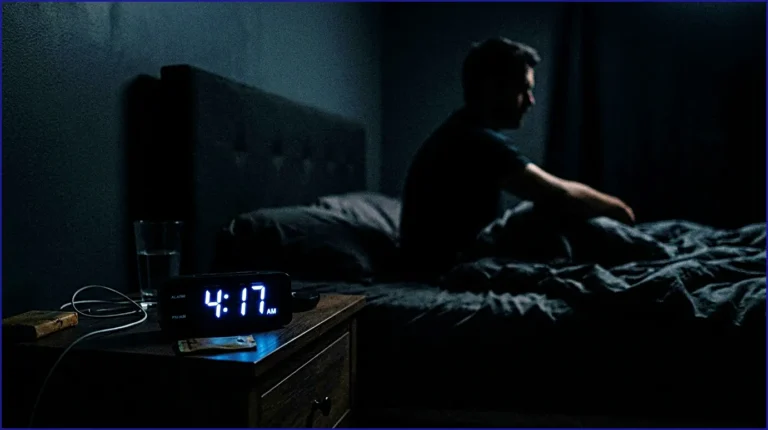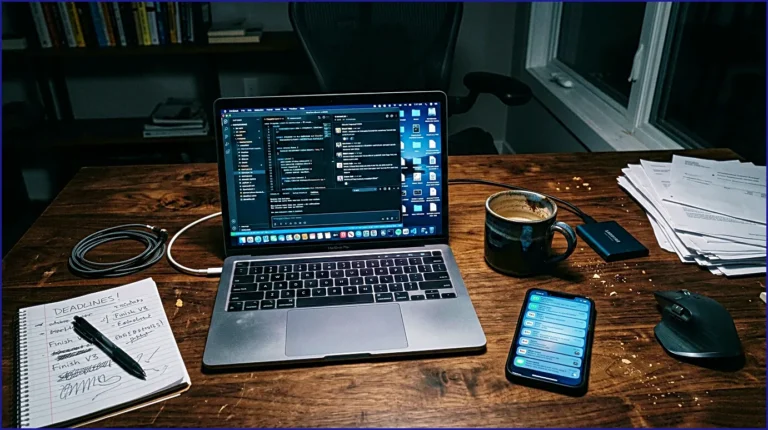
The timer was ready. The desk was not. The tab was still open, the phone was next to the keyboard, and a half-finished drink sat near the mouse. There was also one small thing on the desk that had nothing to do with the work. It did not look like a problem. It was just there.
Then the timer started. For the first few minutes, nothing really happened. The screen was open, the chair was in place, and the work was technically ready. But the mind kept touching everything except the task. One more tab. One more message. One more small adjustment.
That is the quiet problem with deep focus at home. It does not always fail because the work is hard. Sometimes it fails because the first five minutes are too loose.
The room starts working before you do
At home, there is no clear beginning. A library has one. A classroom has one. Even a coffee shop has a small signal when you sit down, open your laptop, and decide that this table is now your place. Home is different. The room already belongs to everything else. It is where you rest, scroll, eat, think, and sometimes work. So when you try to focus deeply in the same space, your mind does not immediately understand what mode to enter.
A timer can measure a focus session, but it cannot create the feeling that the session has started. If the space still feels like a place for checking, drifting, and switching, the first minutes will be spent negotiating with the room. Deep focus at home begins before the work begins.

The first five minutes decide the shape of the session
Many people try to fix focus by making the session longer. One hour. Ninety minutes. A full morning block. But long focus often breaks in the first few minutes, not because the goal is too big, but because the start is too unclear. The mind enters the session without a clean edge, and every small object becomes a possible exit.
A notification is not just a notification. It is a door. A browser tab is not just a tab. It is a second room. A messy desk keeps offering small decisions before the real work even starts.
Deep focus at home often depends less on the length of the session and more on how cleanly the first five minutes begin. This is the part worth fixing first. Not the perfect productivity method. Not another timer. Just the first five minutes.
A timer cannot fix a messy starting line
A timer feels serious. It gives the work a shape and says that something has begun. But it does not remove friction by itself. If the first thing you do after starting the timer is close tabs, move objects, check your phone, find the file, and decide what the task actually is, then the timer is measuring setup time, not focus time.
The setup should happen before the session. The task should already be visible. The file should already be open. The desk does not need to be beautiful. It only needs to be quiet enough not to keep asking for attention. This does not need to become a ritual, because a ritual can become another way to delay. The point is to remove the first few reasons to escape.
Start by removing one visible decision
A deep focus session does not need a completely clean room. If the room has to be perfect before work starts, focus becomes fragile. One misplaced object can feel like a reason to delay. A better rule is simpler: remove one visible decision.
That could be the phone, an open shopping tab, a notebook from another project, or a cup sitting near the screen. The object itself is not the issue. The decision attached to it is. Should I check that message? Should I finish that other thing first? Should I clean this later? Each small question takes a little space from the work.
When one visible decision disappears, the desk becomes quieter. Not empty. Just quieter.
The task should be smaller than the session
Another reason the first five minutes fail is that the task is too vague. “Write.” “Study.” “Edit.” “Work on the project.” These are not bad goals, but they are too wide for the first minute. A wide task gives the mind too many entrances, and when there are too many entrances, it often chooses none.
Before starting a focus session, the first action should be clear enough to do without thinking. Open the draft and rewrite the first paragraph. Read three pages and mark only the confusing parts. Sort the notes into three groups. The first action does not need to finish the work. It only needs to open the door.
A vague task asks for motivation. A clear first action asks for movement.
Sound should make the room less distracting
Sound can help at home, but it can also become another thing to manage. Music may feel motivating at first, then the melody starts pulling attention. A playlist search turns into a second task. One song feels too bright, another feels too emotional. The sound becomes interesting, and interesting is not always helpful for deep focus.
For focus, sound does not need to be impressive. It should make the room less distracting without becoming the thing you follow. Soft rain, low room tone, brown noise, or quiet ambient audio can work because they soften the edges of the room. The goal is not to create a dramatic mood. The goal is to help the task stay in front.
The best focus background often disappears after a few minutes. If the sound makes you think about the sound, it may be too present.
The phone should not be near the first movement
The phone is not only distracting when it rings. It is distracting because it is reachable. A phone near the keyboard changes the first five minutes. Even when it stays silent, the hand knows it is there. That possibility is enough to weaken the start.
For deep focus at home, the phone does not always need to be in another room. But it should not be next to the mouse, beside the notebook, or face up within reach. A few steps of distance can be enough. The point is not discipline. It is friction. When checking the phone requires standing up, the decision becomes clearer. Most of the time, it will not feel worth it.
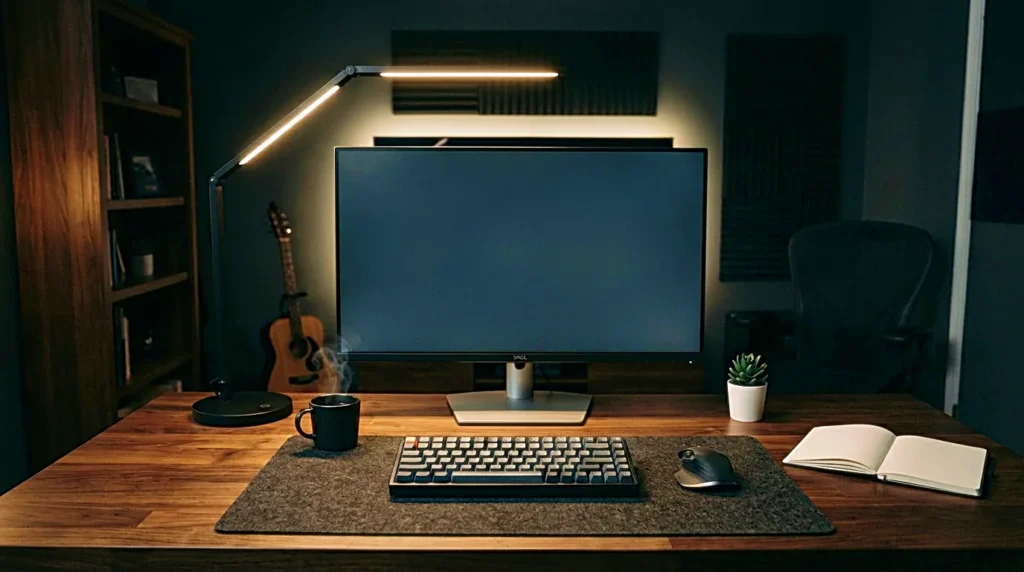
The desk only needs one active zone
A home desk often carries too many roles. Work zone. Eating zone. Charging station. Planning space. Sometimes all at once. This is why deep focus can feel heavy before it starts. The desk is not only holding objects. It is holding unfinished contexts.
One simple adjustment is to make the area directly in front of you belong to the current task. Not the whole desk, not the whole room. Just the center line between your eyes, your hands, and the screen. Place the current document there. Keep only what this session needs nearby. Move everything else slightly out of the center.
Deep focus often returns through small physical signals. The mind sees what is centered and understands what matters next.
A good start should feel almost boring
There is a quiet pressure to make focus feel special. Perfect lighting. Perfect sound. Perfect plan. Perfect app. That pressure makes the start too heavy. When focus depends on too many conditions, it becomes easy to postpone.
A better start should feel almost boring. The file is open. The phone is away. One distracting object is gone. The first action is clear. The sound is quiet enough to forget. That is enough. The session does not need to feel inspiring at the beginning. It only needs to be easy to enter.
The first five minutes can become the real habit
A full deep work habit can feel difficult to build, but a five-minute starting habit is different. It is small enough to repeat and practical enough to matter. Some days, focus will not stay for long. Home is not a controlled environment, and the mind does not become steady just because a timer says so.
But the first five minutes can reduce the number of things pulling against you. Before the timer starts, the room gets one small adjustment. The desk loses one decision. The task becomes clear enough to touch. Then focus has a place to land.
Related FAQ
It can help when it makes the first minutes of work easier and reduces repeated distractions. It should support a calmer desk, not become another thing to adjust all day.
It belongs before the work becomes complicated. deep work environment should make it easier to start, continue, or recover from a session without adding more mental noise.
It can help when it makes the first minutes of work easier and reduces repeated distractions. It should support a calmer desk, not become another thing to adjust all day.
Comfort usually decides whether the setup is used consistently. Specs matter, but small room sound should first fit the body, room, and work session.
It can help when it makes the first minutes of work easier and reduces repeated distractions. It should support a calmer desk, not become another thing to adjust all day.
Before You Go
Paid links- Advertisement -