
The False Savior
It hits you at exactly 3:00 PM. The screen starts to blur. Your motivation flatlines. Staring at a simple email suddenly feels like trying to read a foreign language.
You know the script. You get up, walk to the breakroom, and pour yourself another cup of coffee. Or you crack open an energy drink. You sit back down, waiting for the chemical surge to save your afternoon.
But it doesn’t work. Your heart beats faster, your hands might even jitter slightly, but your brain remains entirely foggy. You are physically wired, yet cognitively exhausted.
You have been treating the wrong symptom.

You Are Not Tired. You Are Overstimulated.
The 3 PM crash is rarely a lack of physical energy. It is a symptom of severe sensory and decision fatigue.
Since 9 AM, your prefrontal cortex has been processing hundreds of micro-decisions. It has been filtering out the hum of the air conditioner, the chatter of your coworkers, the ping of Slack notifications, and the glare of fluorescent lights.
By 3 PM, your brain’s cache is simply full. It is overheating. Pouring caffeine onto an overheated, overstimulated brain is like stepping on the gas pedal of a car that is stuck in the mud. The engine screams, but you don’t move forward. You just burn out faster.
The Cortisol Reset (The Cure)
You do not need stimulation. You need a sensory reset. You need to close the open tabs in your brain and lower your cortisol levels.
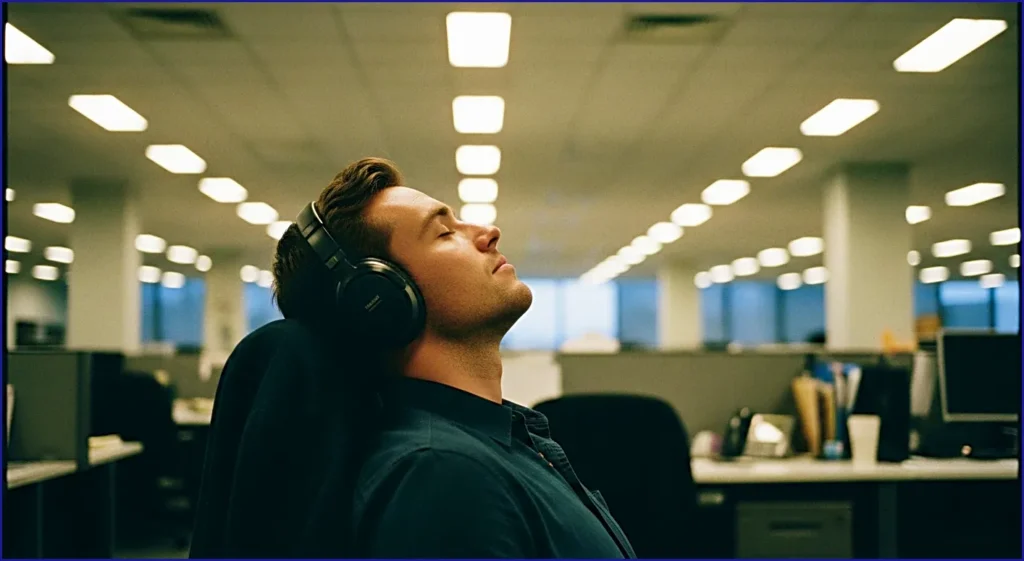
The most effective way to achieve this is not through ingestion, but through acoustic isolation. When the 3 PM crash hits, put on your noise-canceling headphones. Do not play a podcast. Do not play lyrical music.
Play a deep, continuous ambient soundscape—like a distant thunderstorm or a low-frequency drone. This predictable, non-demanding acoustic blanket immediately signals to your amygdala that the threat (the stress of the workday) is paused. It flushes the sensory cache.
Just 15 minutes of deep acoustic resting is more restorative to your cognitive function than a double shot of espresso.
Most premium headphones are built for phone calls. Not cognitive isolation. Throwing money at popular brands is a costly illusion. You need a fortress, not just a speaker.
→[Read: The $400 Mistake – Why premium gear might be ruining your focus]
Related FAQ
The quiet mistake is buying for the ideal desk instead of the real room. A useful setup starts with how the space sounds, feels, and behaves during actual work.
It belongs before the work becomes complicated. recovery after screen work should make it easier to start, continue, or recover from a session without adding more mental noise.
It should earn its space. On a small desk, noise cancelling headphones for focus needs to reduce friction without adding clutter, cable mess, or another maintenance task.
Comfort usually decides whether the setup is used consistently. Specs matter, but headphones for sleeping should first fit the body, room, and work session.
It belongs before the work becomes complicated. deep work environment should make it easier to start, continue, or recover from a session without adding more mental noise.
Before You Go
Paid links- Advertisement -