Most people guess.
They tap the volume button a few times, decide it feels “about right,” and drift off — or try to. But there’s an actual number behind that guess, and it matters more than most sleepers realize.
The recommended range is 47 to 53 decibels.
Why Volume Is the Variable Nobody Talks About
Rain sounds work through a mechanism called auditory masking.
External noise — a passing car, a neighbor’s TV, a hallway conversation — triggers a low-level alert response in the brain. Even sounds you don’t consciously register can delay sleep onset. Rain sounds layer over that noise and flatten it into something the brain reads as neutral.
That’s the function. Volume is what determines whether the function works.
Below 40dB, the masking effect weakens. The rain becomes background texture rather than a genuine buffer. Above 60dB, the sound itself becomes a stimulus — your brain stays engaged with it instead of letting go. The sweet spot is narrow, and most people land outside it.
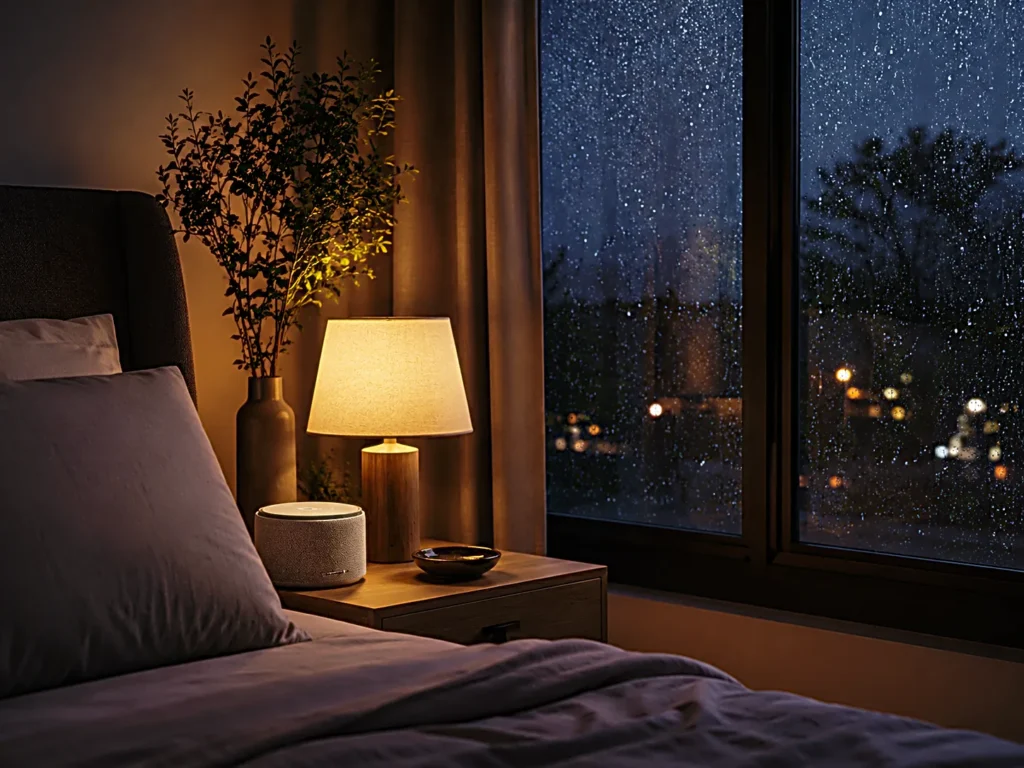
Speaker vs. Earbuds: Same Setting, Different Result
Device type changes everything.
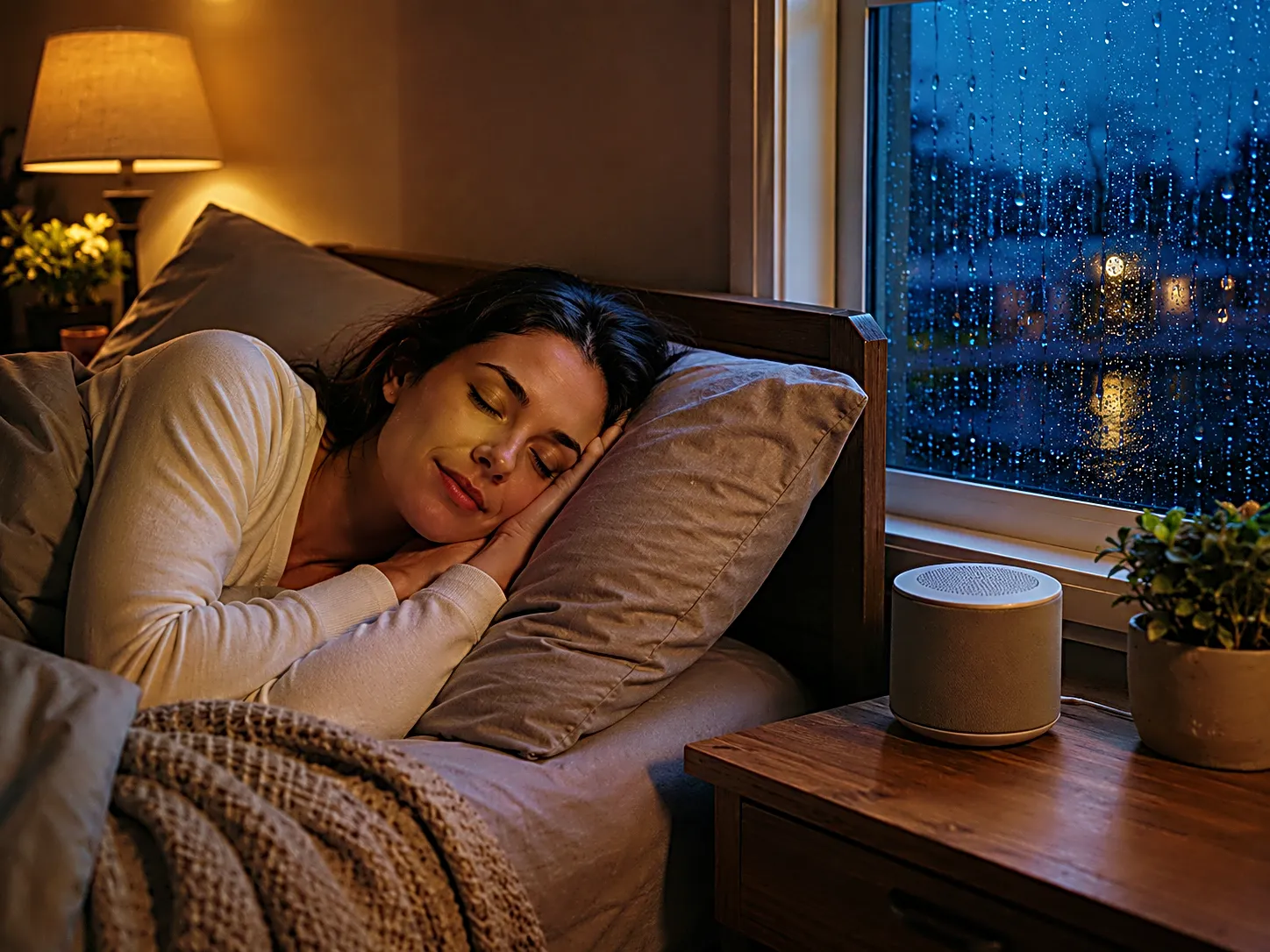
With a Bluetooth speaker placed 1.5 to 2 meters from the bed, 30 to 40 percent of maximum volume usually lands in the right range. With earbuds, the same percentage hits louder — direct ear contact eliminates distance attenuation entirely. Drop it to 20 to 25 percent and reassess.
Sleeping with earbuds in also carries a long-term hearing cost that compounds quietly. A small bedside speaker is the cleaner habit.
One more variable: most phones and laptops don’t display actual decibel output. A free SPL meter app takes 30 seconds to run and removes the guesswork entirely.
Rain Sounds vs. White Noise: Which Works Better for Sleep?
Both mask environmental noise. The difference is what happens beyond that.
White noise is effective at acoustic masking but stays neutral on the nervous system. Rain sounds do the masking work and actively support the parasympathetic nervous system — the rest-and-digest state the body needs for sleep. Rain sound is considered a form of pink noise — gentler than pure white noise, making it easier to sustain for longer periods.
For light sleepers in noisy environments, white noise is a reliable tool. For most people trying to wind down at the end of the day, rain sounds carry an additional layer that white noise doesn’t — one that moves the nervous system rather than just covering it.

Where to Find Rain Sounds Worth Using
Not all rain recordings are equal. Heavily compressed audio or looping tracks with obvious seams pull the brain back to the surface.
YouTube and Spotify carry long-form rain recordings — search for “rain sounds 8 hours” and filter for tracks with consistent texture and no abrupt cuts. For app-based options, Rain Rain and Rain Sounds HQ both offer free tiers with multiple rain types and built-in sleep timers. A free SPL meter app alongside either one gives you volume confirmation without guesswork.
calmsori.com also has a free Focus Room with ambient rain tracks built for extended listening — no account required.
Set It, Then Let It Go
The volume question has a second half: what happens after you fall asleep.
Rain sounds left running all night deliver hours of acoustic input your sleeping brain doesn’t need. A 45-minute sleep timer covers the critical window — the transition from wakefulness into the first sleep cycle. After that, silence does the work.
47 to 53dB. Timer on. That’s the setup.
The rest takes care of itself.
Related FAQ
Check the actual friction first: sound, light, posture, screen distance, or visual clutter. rain sound volume helps only when it solves the part of the workspace that is breaking focus.
Check the actual friction first: sound, light, posture, screen distance, or visual clutter. rain sounds for studying helps only when it solves the part of the workspace that is breaking focus.
speakers for rain sounds is worth considering when the current setup creates a repeated problem that cannot be fixed by placement, volume, lighting, or a simpler routine.
It belongs before the work becomes complicated. background noise for work should make it easier to start, continue, or recover from a session without adding more mental noise.
It can help when it makes the first minutes of work easier and reduces repeated distractions. It should support a calmer desk, not become another thing to adjust all day.
Before You Go
Paid links- Advertisement -