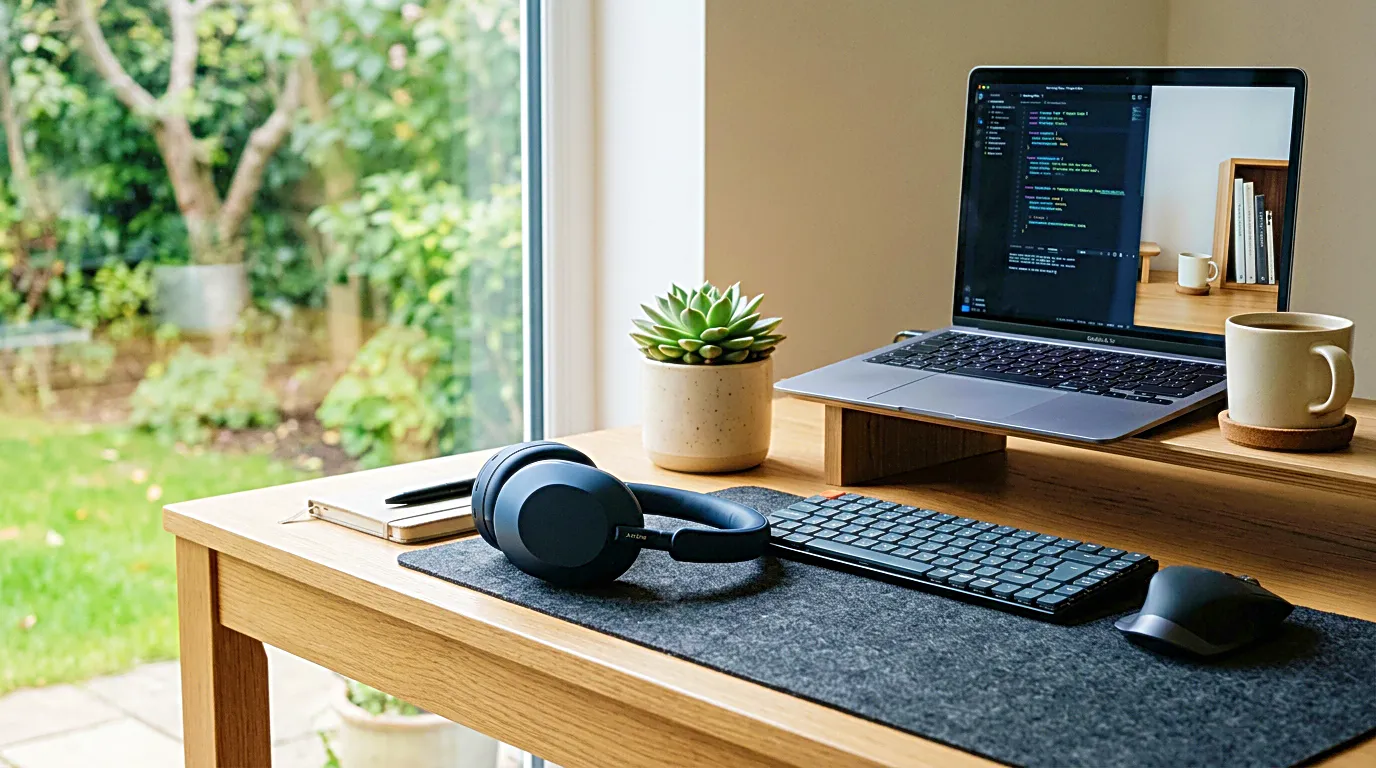
The room was not loud enough to complain about. A car passed outside, the refrigerator hummed for a few seconds, and someone moved in the next room. None of it was dramatic. Still, the work kept breaking into pieces.
That is the kind of noise that makes people search for noise cancelling headphones for focus. Not always construction noise. Not always a crowded office. Sometimes it is the small, ordinary sound that keeps reminding the mind there is a room around the task.
At first, the obvious question seems to be which headphones block the most noise. Stronger active noise cancellation sounds like the clean answer. Better specs, better focus. Higher price, quieter room. The comparison feels simple until the headphones stay on for two hours and the ears start to feel warm, the headband presses a little too much, or the sound profile becomes tiring.
For focus, the best headphones are not always the ones with the strongest noise cancellation. They are the ones you can keep wearing long enough for the work to settle.
Strong noise cancellation can still feel wrong for long work
Active noise cancellation is useful because it removes part of the room before the work even begins. Low background noise becomes softer. Air conditioners, traffic, computer fans, and distant voices lose some of their edge. For people who work from home, study at a desk, or write in a shared space, that reduction can make a real difference.
The problem is that focus does not happen in a spec sheet. It happens while the headphones are touching the head, covering the ears, playing sound, and staying there through a full session. A pair of noise cancelling headphones may test well and still feel too heavy after an hour. Another pair may block slightly less noise but disappear more easily because the clamp force is softer, the ear cups breathe better, and the weight does not keep asking for attention.
This is why comfort has to come early in the decision. If headphones for concentration become something you notice every few minutes, they have already started to compete with the task. The room may be quieter, but the body has a new distraction.
Noise cancelling headphones for focus should reduce the room without becoming the next thing you have to manage.
That is the first filter I would use before looking at battery life, app features, or microphone quality.
The kind of noise matters more than the loudest noise
Not every noise needs the same kind of headphone. A person working near traffic has a different problem from someone studying beside family conversation. A creator editing at night has a different problem from a remote worker joining calls during the day.
Noise cancelling headphones are usually strongest against steady low frequency sounds. Air conditioners, fans, engine rumble, and distant traffic tend to soften well. Voices, sudden sounds, keyboard clicks, dishes, and sharp household noise can be harder to erase completely. That does not mean active noise cancellation is useless for those situations. It means the expectation has to be realistic.
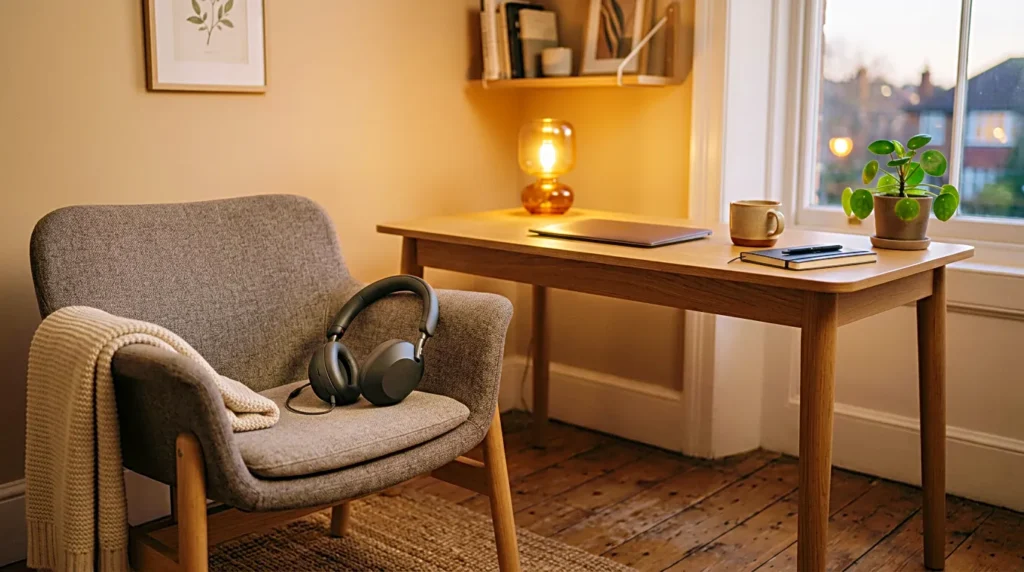
For work from home headphones, the goal is often not silence. Silence can even feel strange if the room disappears too aggressively. The better goal is fewer interruptions. If the headphones make the environment soft enough that you stop checking every small sound, they are doing their job.
A study session needs the same kind of honesty. Study headphones do not have to create a sealed studio. They only need to make the desk feel stable enough for reading, writing, reviewing, or problem solving. Once the sound around the task becomes less interesting, attention has a better chance to stay where it belongs.
Comfort decides whether the focus session can continue
Comfort is easy to underestimate because it is hard to compare in a chart. Battery life has a number. Bluetooth version has a number. Noise cancellation has a marketing phrase. Comfort lives in the slower part of the experience.
The first thing to notice is pressure. Some headphones grip firmly because they need a seal around the ears. That can help noise cancellation, but it can also create fatigue during long sessions. A strong clamp may feel secure for ten minutes and annoying after ninety. For people who wear glasses, pressure near the temples can matter even more.
Heat is another part of the decision. Closed back noise cancelling headphones can feel warm because they cover the ears completely. That may be fine in a cool room, but less comfortable during long work sessions, summer study blocks, or editing sessions under warm lighting. Soft ear pads are not automatically better if they trap too much heat.
Weight also changes the experience. A heavier pair can feel premium in the hand and tiring on the head. A lighter pair may feel less dramatic at first, but it can be easier to forget during repeated focus sessions. For deep work, forgetting the headphones is often more valuable than admiring them.
Comfort is not a luxury detail. It decides whether the tool stays in use after the first week.
Sound quality should support attention, not entertain it
Many people compare headphones through music first. That makes sense. Music reveals bass, clarity, vocals, detail, and energy. But headphones for focus need a slightly different standard.
A powerful sound can be enjoyable and still too active for work. Strong bass may feel exciting, but it can pull attention forward. Bright treble can make details feel crisp, yet it may become tiring during long listening. A wide, dramatic soundstage can be impressive, but focus often prefers something calmer.
For writing, studying, coding, reading, or planning, the sound should support the room rather than dominate it. Ambient music, brown noise, soft rain sounds, white noise for focus, and low instrumental tracks usually work better when the headphones do not make them feel too sharp. The audio should have enough clarity to feel pleasant, but not so much character that it becomes the main event.
This is where equalizer settings can help. Some noise cancelling headphones let you reduce bass, soften treble, or save a calmer sound profile. That matters more than it looks. A headphone that can become less exciting may be better for focus than one that sounds impressive all the time.
The best sound for concentration is often the one that fades into the work.
Transparency mode matters when focus happens at home
Strong noise cancellation is not always the right mode. At home, there are times when hearing a little of the room is useful. A delivery may arrive. Someone may call your name. A timer may ring in another space. Complete isolation can make focus feel uneasy if the room still needs part of your awareness.
That is where transparency mode, ambient mode, or aware mode becomes practical. These features let outside sound pass through while the headphones remain on. The quality varies a lot, but the idea is useful for home offices, shared apartments, and study spaces where full isolation is not always comfortable.
For focus, transparency mode is not only about safety. It can also reduce the pressure of wearing headphones. Some people feel better when the room does not vanish completely. Others use transparency mode between focus blocks so they do not have to remove the headphones every time they pause.
A good pair of work from home headphones should make it easy to move between quiet and awareness. If switching modes is slow, hidden in an app, or awkward to control, the feature becomes less useful during real work.
The smoother the transition, the less attention the tool takes from the session.
Battery life matters less than charging friction
Battery life is still important. Nobody wants headphones to die in the middle of a focused writing block, a study session, or a video call. Long battery life is especially helpful for people who work all day at a desk or move between devices.
Still, the number alone does not tell the whole story. Charging friction matters too. If the headphones use a cable you never have nearby, the battery feels shorter. If a quick charge gives several hours of use, a lower total number may be less annoying. If the headphones clearly show battery level on your devices, you can avoid surprises before work starts.
For creators, freelancers, and students, the real question is not only how long the headphones last. It is whether they are ready when the session begins. A pair with excellent battery life but poor charging habits can still become another small failure point in the workflow.
The same applies to automatic power off, case storage, and multi device behavior. Little details decide whether headphones become part of the routine or another device that needs attention before work can start.
The more often you reach for them without thinking, the more useful they become.
Microphones and calls can change the choice
Some people only need headphones for concentration. Others need the same pair for work calls, online classes, voice notes, video meetings, and quick recordings. In that case, microphone quality becomes part of the decision even if focus is still the main reason for buying.
Noise cancelling headphones do not always have great microphones. A pair can block noise well for the listener while sounding thin, compressed, or unstable to the person on the other side of a call. Wind, room echo, keyboard clicks, and background voices can still affect the microphone.
For remote work headphones, this matters. If a pair is used for calls every day, poor microphone quality creates a different kind of friction. You may focus well alone, then struggle every time a meeting begins. That split can make the headphones feel less complete.
A dedicated microphone may be better for creators who record often. But for everyday work from home use, a clear enough built in microphone can make one pair of headphones easier to keep in the routine. The decision depends on where the headphones will spend most of their time.
Focus first, but not at the cost of daily function.
The app should not make simple things harder
Headphone apps can be useful. They can adjust noise cancellation strength, change EQ, update firmware, set touch controls, switch modes, and manage connected devices. A good app makes the headphones more flexible.
A bad app makes them feel unfinished.
For focus, the most important controls should be available without opening the phone too often. Noise cancellation, transparency mode, volume, play and pause, and device switching should feel easy enough that you do not break the session to manage them. If changing one setting turns into opening the app, checking a notification, and drifting into something else, the headphones have created a new doorway.
This is especially important for people trying to reduce phone distractions. A pair of headphones that constantly sends you back to the phone can quietly work against the reason you bought them.
The best app is not the one with the most screens. It is the one you rarely need after the setup is done.
The right headphones fit the way you actually focus
There is no single best pair of noise cancelling headphones for everyone. A student in a library, a freelancer in a small apartment, a creator editing videos at night, and a remote worker taking calls all need different balances.
A person who studies for long hours may care most about light weight and low heat. Someone working near traffic may need stronger active noise cancellation. A creator who edits sound may care about a calmer, more accurate sound profile. A remote worker may need better microphone quality and smooth device switching. Someone using rain sounds, brown noise, or ambient audio may prefer comfort and soft playback over dramatic bass.
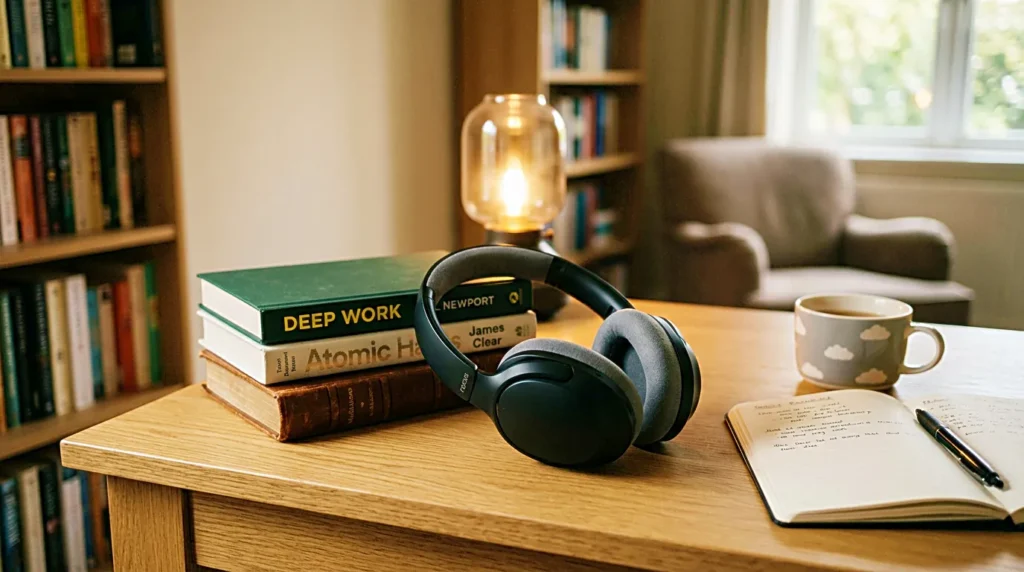
This is why the search for the best headphones for work should start with the session, not the spec. How long will they stay on? What kind of noise is actually breaking focus? Will they be used for calls? Are they worn with glasses? Will the room be hot? Does the phone need to stay away during work? These questions make the choice clearer than a feature list alone.
Noise cancelling headphones can make a focus routine easier, but only when they match the way the work really happens.
Specs help after the session is clear
Once the session is clear, the specs become more useful. Active noise cancellation tells you how much room noise may soften. Battery life tells you how long the headphones can stay with the work. Comfort details tell you whether long sessions are realistic. Bluetooth and multi device support tell you how easily they fit into a laptop and phone setup. Microphone quality tells you whether they can handle calls.
The order matters. Specs are not useless. They are just easier to read after the real need is named.
For Sound Picks, this is the standard I would keep. Do not start with the loudest marketing claim. Start with the room, the session, and the kind of focus the headphones are supposed to protect. Then the right features become easier to recognize.
Noise cancelling headphones for focus are not only about blocking sound. They are about making the work easier to stay with. If the headphones are comfortable, calm, ready, and simple to use, they have already done more than a louder spec sheet can promise.
Related FAQ
Check the real use case first. headphone stand should solve a repeated work, focus, recording, or rest problem before specs or discounts decide the purchase.
Check the real use case first. headphones for sleeping should solve a repeated work, focus, recording, or rest problem before specs or discounts decide the purchase.
Price matters, but comfort and fit decide whether Bose headphones will be used every day. A cheaper item that solves the real problem can be better than a premium product that does not fit the setup.
Often, yes. Room size, desk depth, lighting, noise, and how long the item is used can matter more than a general top rating.
Test it in the actual routine it was bought for. A useful product should make work, focus, recording, or rest easier without needing constant adjustment.
Before You Go
Paid links- Advertisement -